
Add us as your preferred source on Google to see more of our content in Search.
 Add to Preferred Sources
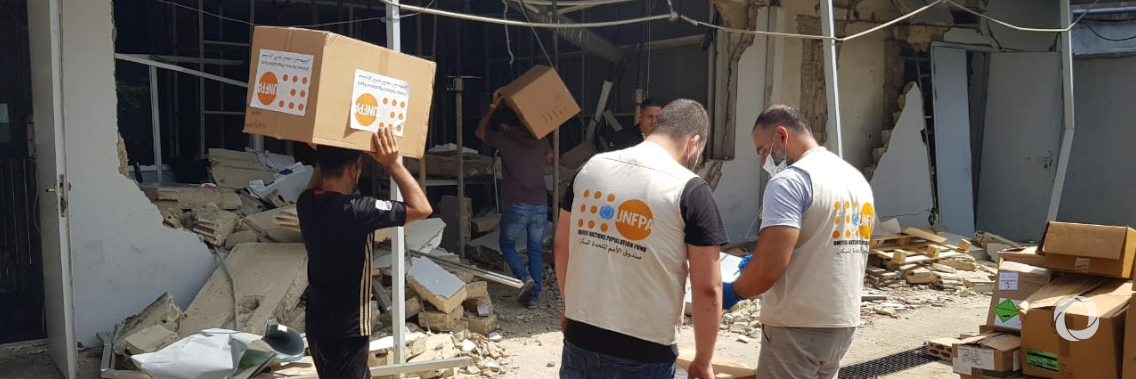
UNFPA is on the ground in Lebanon’s capital providing medical assistance, distributing hygiene supplies, and providing other critical support in affected areas – including prioritizing women’s reproductive health needs.
UNFPA is working with partner organizations – including the Akkarouna Association, Amel Association, Al Makassed Association, Lecorvaw, Acted, Lemsic, Al Mithaq Association, and INTERSOS – to scale up its efforts on the ground.
UNFPA aims to meet the needs of some 81,000 women of reproductive age, who are among the 300,000 who were displaced due to the catastrophe. An estimated 3,900 women who are currently pregnant will be in need of antenatal, obstetric, and neonatal care services in the coming months.
“No one has paid attention to women’s basic needs,” said Ms. Kchour, a social worker from Amel Association, who visited women door-to-door to provide assistance.
The Primary Health Care Network Central Drugs Warehouse was seriously damaged, along with more than 80 primary health care centres, according to partners. Preliminary assessments show that some 15 hospitals have been significantly impacted, with at least three partially or totally inoperable.
The crisis comes atop the existing COVID-19 pandemic, which had already infected thousands in Lebanon. In the immediate aftermath of the blast, disaster response needs superseded protective measures, such as social distancing. As a result, COVID-19 cases are expected to increase, with a record peak of 309 cases seen on 11 August. Now, the mass exodus of people to small crowded areas could further exacerbate the spread of the virus.
UNFPA is also prioritizing services to prevent gender-based violence and provide support to survivors. Women’s and girls’ vulnerability to violence had already increased due to COVID-19 restrictions. Blast-related displacements, disrupted services, economic hardships, and rising stresses could worsen the risk of violence and exploitation.
UNFPA is appealing for $19.65 million to support these life-saving measures in the coming months.
Original source: UNFPA