
Add us as your preferred source on Google to see more of our content in Search.
 Add to Preferred Sources
Assessments and emergency aid in Lebanon, violence against protesters in Belarus and ‘green shoots of hope’ in COVID-19 pandemic. Here is what you missed from last week’s headlines in the international development sector:
UN and partners continue needs assessments and emergency aid in Lebanon
The UN and partners continue to conduct needs assessments and deliver emergency assistance to people most in need in Lebanon following last week’s Beirut blasts.
The World Food Programme (WFP) has prepared 150,000 food parcels for distribution to families affected by the economic crisis and COVID-19 lockdown measures. In addition, WFP will scale up its cash assistance programme in Lebanon tenfold to reach up to 1 million people, including residents directly affected by the blast.
The UN Refugee Agency (UNHCR) has distributed hot meals for 30,000 people, along with food kits for 700 people. Non-food items and hygiene kits has also provided.
Partners of the UN Population Fund (UNFPA) have distributed dignity kits to an estimated 2,000 adolescent girls and women. Forty front-line social workers have been trained to provide psychosocial support to women affected by the Beirut blast.
The UN Children’s Fund (UNICEF) is supporting 720 children and adults with psychosocial support through face to face sessions, phone calls, and door-to-door visits to families.
UN rights chief condemns violence against protesters in Belarus
UN High Commissioner for Human Rights Michelle Bachelet condemned the violent response of the Belarusian authorities to the peaceful demonstrations held across the country in the aftermath of the presidential election and called for people’s grievances to be heard.
Following the announcement of contested preliminary results from Sunday’s election, largely peaceful protests erupted throughout Belarus, prompting a heavy crackdown by the security forces. Police were reported to have used unnecessary and excessive force against largely peaceful protestors, firing rubber bullets, using water cannons and throwing stun grenades. Reports indicate that police officers beat protestors, including after they were detained. At least 250 people have been injured, and one protester died, in unclear circumstances.
“I remind the Belarussian authorities that the use of force during protests should always be exceptional and a measure of last resort, clearly differentiating between any violent individuals and peaceful protesters, against whom force should not be used. State authorities must allow and facilitate the exercise of the rights to freedom of expression and of peaceful assembly and not repress it. People have the right to speak up and express dissent, even more in the context of elections, when democratic freedoms should be upheld, not suppressed,” said the UN Human Rights Chief.
WHO chief points to ‘green shoots of hope’ in COVID-19 pandemic
Although COVID-19 cases are on track to hit 20 million worldwide this week, and 750,000 deaths, the head of the World Health Organization (WHO) has pointed to “green shoots of hope” amidst the global crisis while urging both governments and people everywhere to work to suppress the new coronavirus.
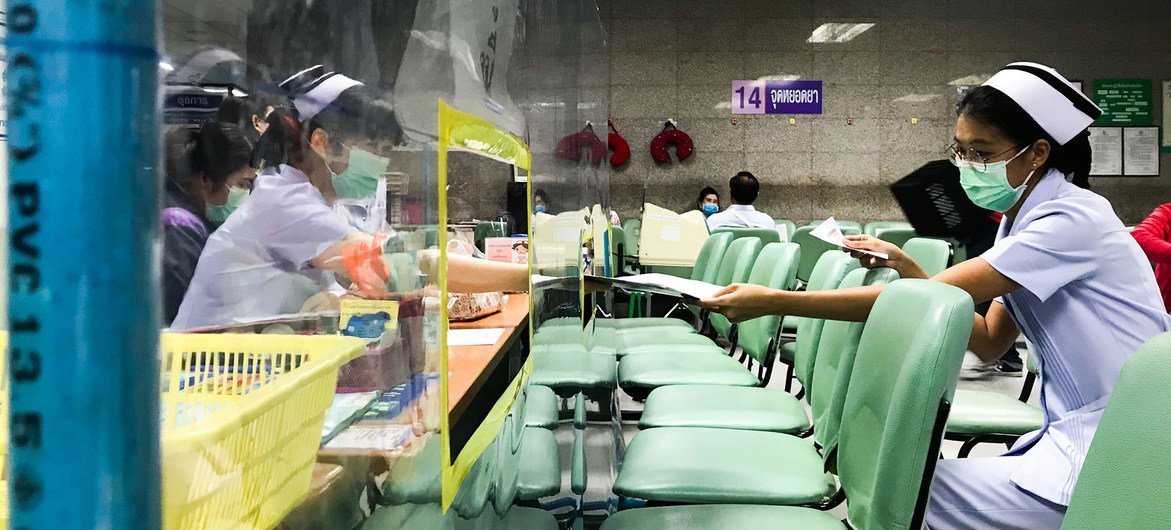
“I know many of you are grieving and that this is a difficult moment for the world”, WHO chief Tedros Adhanom Ghebreyesus said in his latest briefing to journalists.
“But I want to be clear, there are green shoots of hope and no matter where a country, a region, a city or a town is – it’s never too late to turn the outbreak around.”
Tedros underlined two elements for addressing the pandemic effectively, namely that “leaders must step up to take action and citizens need to embrace new measures.”
DevelopmentAid Editorials
Steps governments can take to foster e-commerce
As the pandemic measures have halted commercial activities that require physical contact, some businesses have moved online in order to continue operating. As a result, e-commerce worldwide has spiked in the first quarter of 2020 as customers turned to the digital realm for their purchases. Meanwhile, governments around the world have stepped up to both enable and regulate this sudden transition.
The health crisis has exacerbated already existing threats
The pandemic has disrupted people’s lives and the smooth well-functioning of institutions across African countries, putting pressure both on security and sustainable development. The persistence of armed conflicts, ruthless attacks and intercommunal violence undermine peace and make it more difficult to tackle the consequences of the virus. The new realities shaped by the coronavirus have exacerbated the drivers of conflict, impacting respect for human rights and the rule of law and raising the levels of femicide.
Luc Vocks: The Tenderwell App can reduce by half the time it takes to prepare a tender
In 2019, over US$155 billion was allocated for international development. Big donors operate with big money and two of the most important aspects of spending it are transparency and competitiveness in the tendering process.
Here’s what else has happened
WTO: The WTO Secretariat has published a new information note warning of possible increases to trade costs due to COVID-19 disruptions. The note examines the pandemic’s impact on key components of trade costs, particularly those relating to travel and transport, trade policy, uncertainty, and identifies areas where higher costs may persist even after the pandemic is contained.
WHO: The World Health Organization (WHO) said that six months after first sounding the international alarm over COVID-19, the UN agency is now intensely focused on shepherding global vaccine candidates through the necessary trials, and guaranteeing rapid, fair and equitable access to them for all countries.
ADB: The Asian Development Bank (ADB) has approved a $400 million policy-based loan to support reforms by the Philippine government aimed at raising the productivity and competitiveness of the country’s agriculture sector and significantly reducing poverty in rural areas.
UNICEF: UNICEF is providing vital assistance to 40,000 displaced people who have fled violence in the South Kivu highlands, eastern Democratic Republic of the Congo (DRC).
Reports
Impact of COVID-19 on agribusiness and the food industry in African and Asian markets
As the COVID-19 pandemic has unfolded, concerns over ensuring food security have been voiced in many countries around the world. While the crisis has immediate effects on food and agricultural supply chains, the negative impact of the COVID-19 pandemic is not limited to short-term disruptions in supply and demand.
Find the survey report here.
Access to handwashing facilities key for safe reopening of schools during coronavirus
Nearly 820 million children worldwide do not have basic handwashing facilities at school, putting them at increased risk of COVID-19 and other transmittable diseases, according to a report published by the World Health Organization (WHO) and the UN Children’s Fund, UNICEF.
Read the full report: Progress on Drinking Water, Sanitation, and Hygiene in Schools.
Events
Webinar | How to Search for Jobs and Open Tenders for Individuals
? 25 August 2020 ? 16:00 (CET)
Webinar
DevelopmentAid.org is recognized as the biggest job board in the global aid sector. However, we offer many other ways to identify opportunities for individual consultants, as well as other types of useful information.
Join this webinar to learn all about the various job and project search tactics and find out how to save your own time in the process.
Webinar | Building Back Better: Financing for Development in the Era of COVID-19 and Beyond
? 31 August 2020 ? 13:00– 15:00 (Bangkok Time)
Webinar
The COVID-19 pandemic and the consequent emergency measures, such as lockdowns and travel restrictions, have put public health systems under severe stress and caused hundreds of millions around the world to lose their livelihoods. The economic consequences have been unprecedented, with most economies in the region expecting a contraction in GDP along with a rise in poverty and inequality.
Webinar | Building Back Better: Accelerating Digital Connectivity and Leveraging Innovation
? 19 August 2020 ? 12:30 – 14:00 (Bangkok Time)
Webinar
Asia and the Pacific is a key driver of a technological revolution that is profoundly transforming the way we live, work, and relate to one another. At the same time, the region is also one of the most digitally divided, with less than 14 percent of the population connected to affordable and reliable high-speed Internet.