
Add us as your preferred source on Google to see more of our content in Search.
 Add to Preferred Sources
Weeks after a horrific explosion devastated the Lebanese capital, Beirut, views of smouldering wreckage are being steadily replaced by scenes of collective action. Community members and partner organizations are providing health care and meeting other basic needs, such as food and water, in addition to repairing badly damaged homes.
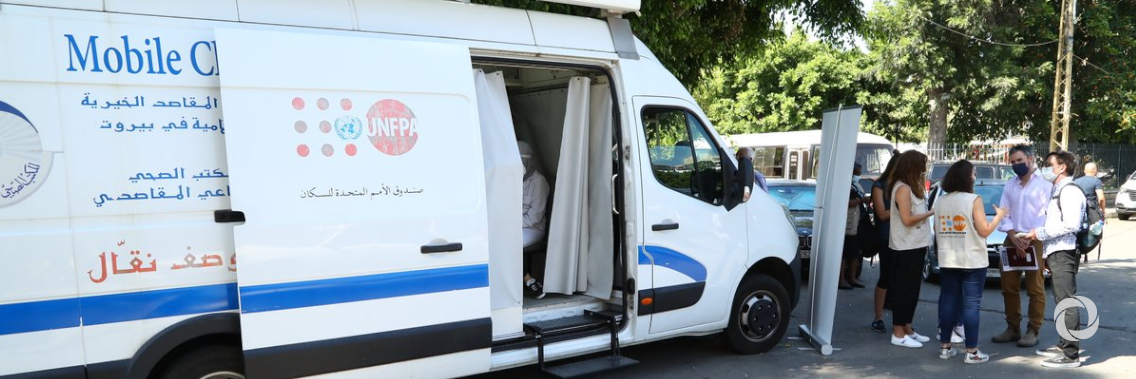
As part of these efforts, UNFPA is working with Al Makassed and Amel associations to run mobile medical units that provide life-saving medical care and reproductive health services to affected women.
“After the explosion, a lot of help was sent to downtown, Gemmayze and Mar Mikhael. With our mobile medical units, we move where there is a need,” said Mohammad Al Zayed, a health coordinator with Amel Association.
The two mobile units are particularly important for women who cannot afford to pay for consultations or medicine at clinics, and for those living in areas where health services have been disrupted or eliminated by the blast. Each of the mobile units includes a doctor, nurse, pharmacist, paramedic, midwife, and, sometimes, pediatrician.
The explosion and its aftermath crippled the city’s healthcare system. It left three of Beirut’s main hospitals and half its clinics inoperable. UNFPA and its partners were among the first on the scene, with their mobile units addressing immediate and basic needs.
UNFPA is also partnering with a local NGO to support people living with HIV.
The two mobile medical units were supported by the Government of Canada, a longtime partner, and UNFPA’s largest humanitarian donor in 2019. With Canada, UNFPA was able to immediately reallocate funds to supply and deploy the medical units and personnel. Now, UNFPA and its partners are planning longer-term support for the affected communities.
Original source: UNFPA