
Add us as your preferred source on Google to see more of our content in Search.
 Add to Preferred Sources
More research is needed into factors that increase the risk of severe COVID-19 disease among children and adolescents, the head of the UN World Health Organization (WHO) has said, adding that while children may have largely been spared many of the most severe health impacts, they have suffered in other ways.
Joining the heads of the UN Children’s Fund (UNICEF) and the UN Educational, Scientific and Cultural Organization (UNESCO), at a press conference, WHO Director-General Tedros Adhanom Ghebreyesus outlined that since the start of the COVID pandemic, understanding its effects on children has been a priority.
“Nine months into the pandemic, many questions remain, but we are starting to have a clearer picture. We know that children and adolescents can be infected and can infect others. We know that this virus can kill children, but that children tend to have a milder infection and there are very few severe cases and deaths from COVID-19 among children and adolescents,” he said.
According to WHO data, less than 10 percent of reported cases and less than 0.2 percent of deaths are in people under the age of 20. However, additional research is needed into the factors that put children and adolescents at an increased risk of severe COVID-19 disease and death.
In addition, the potential long-term health effects on those who have been infected remains unknown.
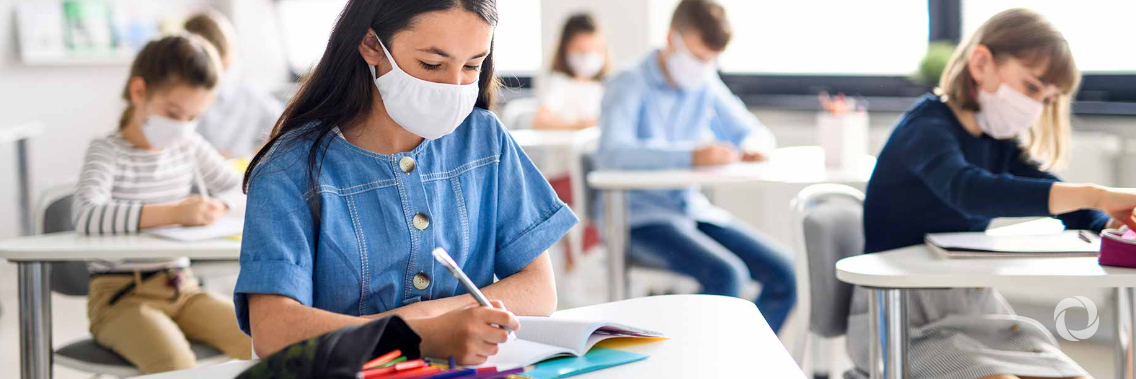
Referring to closure of schools around the world, which has hit millions of children, impacting not only their education but also a range of other important services, the WHO Director-General said that the decision to close schools should be a last resort, temporary and only at a local level in areas with intense transmission.
The time during which schools are closed should be used for putting in place measures to prevent and respond to the transmission when schools reopen.
“Keeping children safe and at school is not a job for schools alone or governments alone or families alone. It’s a job for all of us, working together. With the right combination of measures, we can keep our kids safe and teach them that health and education are two of the most precious commodities in life,” added Mr. Tedros.
Although children have largely been spared many of the most severe health effects of the virus, they have suffered in other ways, said Director-General Tedros, adding that closure of schools hit millions of children globally.
Given different situations among countries: some, where schools have opened and others, where they have not, UNESCO, UNICEF and WHO, issued updated guidance on school-related public health measures in the context of COVID-19.
Based on the latest scientific evidence, the guidance provides practical advice for schools in areas with no cases, sporadic cases, clusters of cases, or community transmission. They were developed with input from the Technical Advisory Group of Experts on Educational Institutions and COVID-19, established by the three UN agencies in June.
Original source: UN News