

Add us as your preferred source on Google to see more of our content in Search.
 Add to Preferred Sources
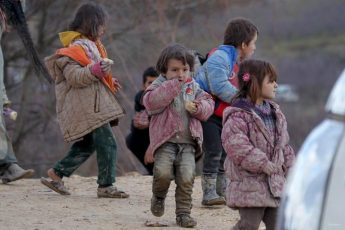
With millions displaced within Syria and in neighbouring countries, the United Nations has appealed for $8 billion this year to deal with one of the world’s worst humanitarian crises, looking to Gulf states as well as traditional European donors.
Qatar and Kuwait have joined the European Union, Norway and the United  Nations as organisers of the latest international effort following conferences in Berlin, London and Helsinki to raise funds as the conflict continues unabated. The EU has already pledged €1.2bn for 2017. Other governments will come under pressure to make good on promises made in February 2016 at the London conference, which raised $11bn over four years. But those promises were made before Russia’s devastating bombing campaign in the Syrian city of Aleppo last year, destroying hospitals, homes and schools and worsening the humanitarian needs of 13.5 million people within Syria. Five million Syrians have now fled into Turkey, Lebanon, Jordan, Iraq and the European Union since anti-government protests in 2011 descended into the conflict between rebels, Islamist militants, government troops and their foreign backers. It was not clear how much would be pledged in Brussels.
EU officials stressed the gathering of prime ministers, foreign ministers and ambassadors from some 70 countries would also seek to support the UN-backed peace process that has been overshadowed by the escalating war.
“It is obvious that Europe cannot simply pay for the reconstruction without a political solution in Syria. At the same time, we can do a lot with humanitarian aid. At the moment we see access is very, very limited, which is unacceptable,” Dutch Foreign Minister Bert Koenders.
In a joint EU statement on Monday, ministers blamed Syria for “deliberate restrictions” on EU aid trucks and condemned “the use of starvation of civilians as a method of warfare.”
 US and Russian support for the UN-led process has also waned. The United States and Russia initially backed the peace talks in Geneva, but Moscow is now sponsoring separate talks with regional powers Iran and Turkey. Neither Turkey nor Russia were confirmed for the Brussels conference, diplomats said, although Moscow may send an envoy. UN mediator Staffan de Mistura will address the conference. Washington under President Donald Trump is also at odds with European governments on the future of Syrian President Bashar al-Assad. The European Union says Assad must leave office as part of a political transition.
In a departure from the Obama administration’s public stance on Assad’s fate, the United States is no longer focused on making Assad leave power, according to the US ambassador to the United Nations.
“The European Union believes it would be impossible to go back to the same situation as seven years ago.After six and a half years of war, it is not possible to believe that the future of Syria can be as it was in the past,” EU foreign policy chief Federica Mogherini.
Source: EURACTIV. Read full article.
4 April, 2017.