
New Study Reveals Agrobiodiversity Investments as Triple Win for Health, Environment and Food System Sustainability

Add us as your preferred source on Google to see more of our content in Search.
 Add to Preferred Sources
The first comprehensive scientific analysis of how agrobiodiversity can make our vulnerable food system more resilient, sustainable and nutritious has been carried out by leading agrobiodiversity research centre Bioversity International and was released yesterday, September 26th.
The 200-page guide provides solid evidence that investments in agrobiodiversity also play a critical yet overlooked role in tackling wider global targets such as reducing poverty and malnutrition, reversing environmental degradation and combatting climate change. It demonstrates that agrobiodiversity can be a more mainstream approach to sustainable development.
“Agrobiodiversity – the edible plant and animal species that feed each and every one of us – holds the key to future food security. But we are failing to protect it, and tap into its potential to transform our food system for the better,” comments Ann Tutwiler, Director General of Bioversity International.
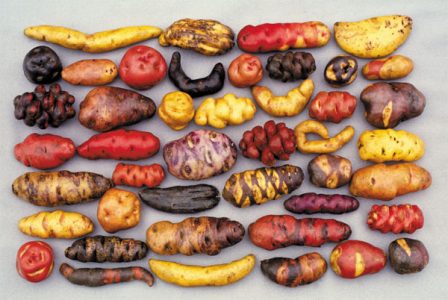 Of the estimated 7,000 edible plant species, just 30 are used to feed the world. Tens of thousands of alternatives exist that can grow in difficult environments, have high nutrient content and have potential to increase their yields. However, almost 80 percent of land areas dedicated to cereals only grow wheat, maize and rice. Traditional crops and varieties represent just 2 percent of material stored in genebanks worldwide. Overreliance on too few varieties and species is leaving the food system unnecessarily exposed to shocks and stresses, as well as neglecting a high-impact solution to major health, environmental and food security challenges, according to the review.
“Until now, no single study has provided the evidence to showcase the extraordinary impact that investing in agrobiodiversity can have on improving food systems and advancing sustainable development at the same time. This new guide provides evidence on the practices that work for those ready to take action, and should convince more businesses and policymakers that agrobiodiversity is a triple-win investment” Tutwiler adds.
The guide details a range of affordable, nutrient-rich foods that can alleviate the burden of malnutrition affecting two billion people, such as the vitamin A-rich To’o banana and the darkina fish, which is high in iron and calcium. It highlights the potential for heat and drought tolerant traits to be found in traditional crop varieties, at a time when climate change is expected to reduce the yield of major crops like wheat by six percent with each degree Celsius increase. Furthermore, it argues that biodiversity-based practices such as intercropping trees with vegetables and rotating crops can significantly boost carbon and nitrogen content in the soil, to replenish the 33 percent of the world’s farmland that is degraded.
Entitled Mainstreaming Agrobiodiversity in Sustainable Food Systems, the scientific review is rich with data, case studies and suggested indicators to track progress on four key issues: healthy diets, production, seed systems and conservation.
“Agricultural biodiversity represents a revolutionary approach to food systems and nutrition and is progressively taking shape as a critical resource to help all countries achieve several of the Sustainable Development Goals,” comments Pierfrancesco Sacco, Italian permanent representative to the FAO.
The guide lays the foundation for an Agrobiodiversity Index, a tool under development to help companies and countries to compare multiple strategies for investing in resilient and sustainable supply chains and product lines, through interventions in agrobiodiversity. Leading agribusinesses such as Syngenta and Sainsbury’s, as well as countries such as Italy, Peru and Ethiopia have expressed interest in using the index, which is expected to launch in late 2018.
“The world is changing. Global warming, extreme weather and volatile prices are making it harder for farmers and growers to produce the foods our customers love,” comments Beth Hart, Head of Agriculture at Sainsbury’s. “Which is why we are committed to working with our suppliers, farmers and growers in the UK and around the world to optimize the health benefits, address the impact and biodiversity of these products and secure a sustainable supply. We believe that participating in the development of the Agrobiodiversity Index will help us achieve this goal.”
Original source: Bioversity International
Published on 26 September 2017