
Add us as your preferred source on Google to see more of our content in Search.
 Add to Preferred Sources
Maintaining levels of humanitarian aid is a comparatively inexpensive way to save lives and protect refugees and their host communities facing a “pandemic of poverty” resulting from the COVID-19 pandemic, the UN High Commissioner for Refugees said.
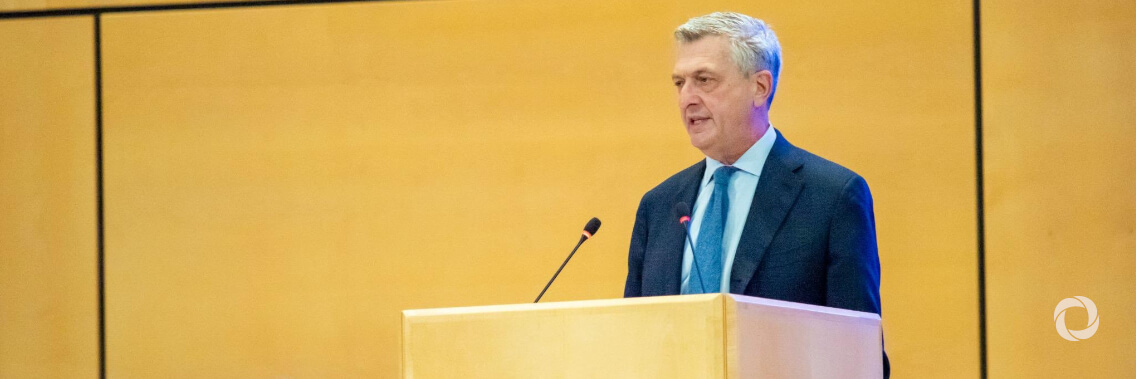
The economic and financial consequences of the coronavirus are affecting all countries, including those whose contributions form the backbone of UNHCR, the UN Refugee Agency’s yearly income, Filippo Grandi told UNHCR’s annual Executive Committee gathering in Geneva.
But maintaining aid and especially humanitarian budgets will be a “relatively inexpensive way to save lives, protect the vulnerable, and help them live in dignity and security,” Grandi said.
“It will mitigate the instability likely to rise from growing pockets of marginalization, which will be much more costly to address later,” he added.
Despite the UN Secretary-General’s call for a global ceasefire early in the pandemic, Grandi said conflict, violence, discrimination, human rights violations, and political crises have continued, pushing the total number of forcibly displaced people to almost 80 million – double the figure of 10 years ago.
Fresh displacement in the past year included 600,000 forced from their homes in the Central Sahel and more than 140,000 people uprooted in Yemen, where the threat of famine looms for 24 million people. In Central America, meanwhile, 100,000 Nicaraguans have sought safety abroad, most of them in Costa Rica.
While governments worldwide have taken tough measures to stop the spread of the virus, often closing borders, Grandi urged States to ensure such restrictions “remain temporary and non-discriminatory, and respect …. international human rights obligations.”
Over 110 States have found ways to keep asylum systems functioning while taking necessary public health precautions. Grandi cited the example of Uganda which, while already hosting more than 1.4 million refugees, nevertheless re-opened its borders to allow 3,000 people fleeing deadly militia violence in the Democratic Republic of Congo to cross and find refuge.
While human displacement continues predominantly to affect countries with few resources, some refugees have continued to move towards the global north; often alongside migrants seeking opportunities for a better life.
“People will continue to flee unless the root causes of their flight are solved,” the High Commissioner cautioned. “Reducing search and rescue capacity, or impeding those who engage to save others, or pushing back people without due process, will not stop people from moving, it will only lead to more deaths and the further erosion of refugee protection.”
Against the backdrop of rising displacement and COVID-19, Grandi stressed that humanitarian aid alone would not suffice. The inclusion of refugees, the internally displaced, and stateless people in national responses is also needed.
Inclusion must also apply to social services, safety nets, and measures to counter food insecurity, and support refugees and their hosts in regions with large displaced populations. Also vital, is access to education and the right to work.
As climate change threats grow, Grandi urged the development of better forecasting and predictive analytics to enable targeted responses before displacement occurs.
While most refugees prefer to return home, resettlement to third countries remains a vital alternative, at least for the most vulnerable. Grandi expressed “deep disappointment” with the overall levels of resettlement places available. In 2019, just over 100,000 refugees were resettled; less than one-quarter of one percent of the world’s refugees, in a constantly declining trend.
Amid COVID-related travel restrictions, some countries have managed to keep their doors open. Grandi commended Canada, the largest resettlement country last year, and a champion of innovative approaches.
Grandi said that the vulnerabilities highlighted by the pandemic must be an incentive to “pursue solutions to forced displacement, even if favourable circumstances are rare.”
Finally, he praised UNHCR staff who stayed and delivered vital assistance in difficult places as the pandemic took hold, and refugees, displaced and stateless people who came together with host communities to keep each other safe.
Original source: UNHCR