
Add us as your preferred source on Google to see more of our content in Search.
 Add to Preferred Sources
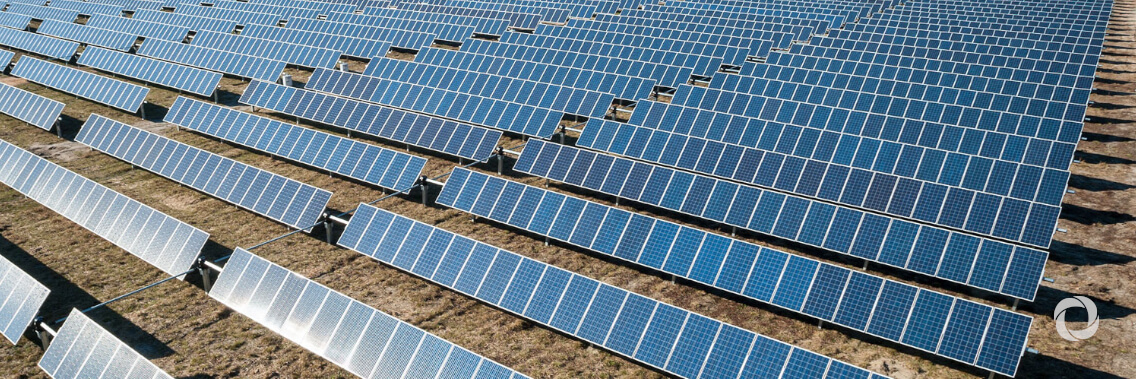
Supporting the largest renewable energy project in Greece and the largest solar energy project in south-eastern Europe to date, the European Bank for Reconstruction and Development (EBRD) is investing €75 million in the successful Eurobond tap issuance by Hellenic Petroleum (HELPE), a leading Greek energy group.
The total funds of €100 million raised will enable HELPE to finance the construction of 18 solar photovoltaic (PV) plants with a total installed capacity of 204 MW in Kozani, Western Macedonia, the country’s most coal-dependent region.
The solar park will be built close to existing coal-fired power plants that are being phased out and is expected to reduce CO2 emissions by 320,000 tonnes annually.
HELPE aims to develop 600MW renewable energy capacity by 2025 in order to diversify its energy portfolio and reduce its environmental footprint by 50 percent until 2030.
Harry Boyd-Carpenter, EBRD Head of Energy for Europe, the Middle East, and Africa, said: “We are very proud to support HELPE in developing what will be the largest solar park in south-eastern Europe. Greece has a very ambitious decarbonisation plan and it will therefore need many projects of this scale to replace its existing lignite capacity. We are very happy to be part of this milestone project, led by such a strong sponsor, and support the transition of Western Macedonia towards new greener economic activities.”
The investment comes under the Greek Renewable Energy Framework and is aligned with the EBRD’s Green Economy Transition (GET) approach, the Bank’s strategy for helping the economies where it invests build low-carbon and resilient economies.
It is also aligned with the objectives of the Bank’s Just Transition Initiative, which aims to address the shift from fossil fuel-dependent economies towards climate-resilient and low-carbon economies. It is anticipated that 300 short-term jobs will be created during the construction of the solar park as well as dozens of direct and indirect jobs during operations, most of which will come from the local community.
The investment supports Greece’s commitment to decarbonise its electricity sector through rapid growth in renewable energy and the implementation of technology-neutral, market-based renewable energy auctions, which enhance the competitiveness and sustainability of the renewables sector. Greece is aiming to close all its existing coal-fired power plants by the end of 2023 and to mothball one plant currently under construction by 2028.
Original source: EBRD