
Add us as your preferred source on Google to see more of our content in Search.
 Add to Preferred Sources
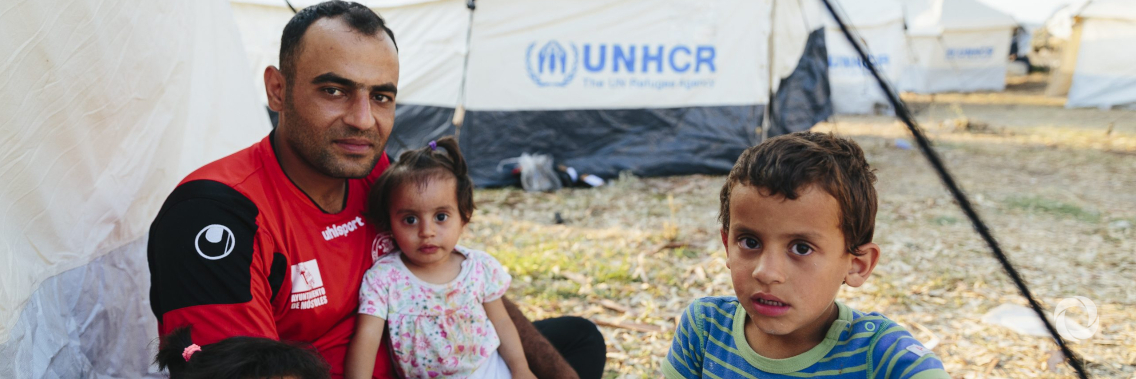
Four weeks after the fires destroyed Moria Reception and Identification Centre on Lesvos, UNHCR, the UN Refugee Agency, is reiterating its call that urgent action and improvements are needed to avoid further deterioration of living conditions for some 7,800 refugees and asylum-seekers currently sheltered in the emergency site in Kara Tepe.
Colder weather and the onset of winter will only bring more hardship for the people there. There are critical gaps in drainage, water, sanitation, hygiene, and health services that need to be addressed without any delay.
Heavy rains have exacerbated the situation for residents in the emergency site. Some have seen their tents flooded with water. UNHCR conducted protection monitoring visits to assess the situation in the site following the heavy rainfalls and prioritised tarpaulins for people whose tents were affected by the rain. Refugees themselves also found other interim solutions such as digging water channels and trenches around their tents to prevent flooding as proper drainage throughout the site is lacking.
Moria Reception and Identification Centre was devasted by fires on 9 September forcing some 12,000 men, women, and children on to the streets. The Greek authorities swiftly mobilized the Hellenic Army and humanitarian partners to establish an emergency shelter facility. Significant efforts have been made by national authorities and aid agencies working on Lesvos. However, living conditions in the emergency site remain in urgent need of improvement.
UNHCR and other humanitarian partners have alerted the Greek authorities to safety hazards and risks in the emergency site, requiring their immediate action. The area is prone to flooding and the current tented site is not equipped to provide necessary protection against the elements and low temperatures.
At the request of the Greek authorities and in support of the government-led humanitarian response, UNHCR is delivering gravel to help lessen the risk of flooding in tented and common areas.
With the onset of more rains and harsh weather, UNHCR urges immediate action on all Greek Aegean islands. On Samos, where almost 4,500 people continue to stay in inadequate and overcrowded conditions, most sleep in summer tents or makeshift shelters in the woods, outside the reception centre meant to accommodate only 650. Suffering of these people can be avoided, through winter preparations and more transfers to adequate accommodation.
At a time of heightened needs for appropriate housing for asylum-seekers in Greece, UNHCR is particularly concerned about the announced plans to close down facilities on Lesvos island, that have been dedicated to shelter hundreds of the most vulnerable families, women, and children.
Until more comprehensive and dignified solutions are secured, UNHCR calls on the Greek authorities to ensure that such initiatives are in place to provide protection and address the specific needs of particularly vulnerable refugees.
Original source: UNHCR