
Add us as your preferred source on Google to see more of our content in Search.
 Add to Preferred Sources
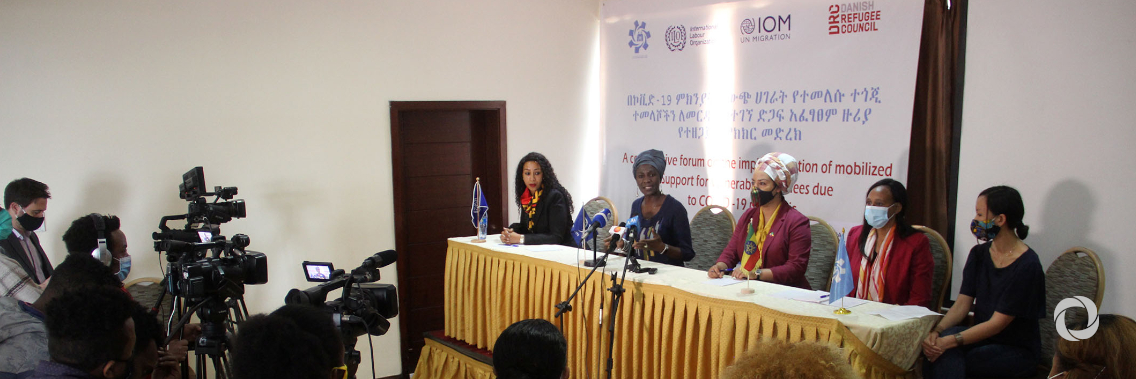
The International Organization for Migration (IOM), signed a Memorandum of Understanding (MoU) with the Government of Ethiopia to strengthen return and reintegration assistance to thousands of Ethiopian migrants returning home due to COVID-19. This is particularly crucial as the pandemic continues to deepen the already challenging economic and social situation faced by returnees.
The USD 1 Million Dollar project will provide cash grants and other forms of support to over 8,000 returning migrants. The grants will enable returnees to provide food, clothing, and other essential items for themselves.
Nearly 34,000 migrants have returned to Ethiopia since the outbreak of COVID-19. Many have arrived with nothing other than the clothes on their backs, and were in need of medical attention, and basic humanitarian items. Some were also in need of psychosocial support after having gone through traumatic experiences during their journeys.
Priority will be given to vulnerable migrants including victims of trafficking, those disabled, people with medical conditions, and single-headed households.
More than 550,000 Ethiopian migrants are expected to return from Gulf countries, due to COVID-19, according to the Government, posing an enormous challenge for Ethiopia.
The new funds from the agreement will also improve ‘referral mechanisms’ that link returnees with available government assistance programmes, resources, and service providers more effectively.
“The advent of COVID-19 has resulted in additional challenges for migrants, many of whom have lost their jobs and ability to support their families through remittances,” said Maureen Achieng, Chief of Mission, IOM Ethiopia.
The agreement is aligned with IOM’s Regional Migrant Response Plan (2018-2020), a USD 84 million appeal launched in August to provide life-saving assistance to an estimated 235,000 vulnerable migrants in the Horn of Africa and Yemen. Under the plan, IOM and other partners have adapted alternative methods for reintegrating returnees, given the COVID-19 context.
Original source: IOM