
Add us as your preferred source on Google to see more of our content in Search.
 Add to Preferred Sources
Despite being particularly important during the COVID-19 pandemic, drinking water and sanitation have become a luxury in many regions of the world. Billions of people are the victims of persistent inequalities in access to water, sanitation, and hygiene (WASH) facilities in an existing reality that has been exacerbated by the current devastating crisis. Stark differences persist in both the number of people with access to safe water as well as in the improvements made to the quality of facilities over a period of time. Ensuring universal access to WASH in line with the Sustainable Development Goal 6: Ensure access to water and sanitation for all (SDG) target will require tailored interventions and investments that focus on reducing the existing inequalities.
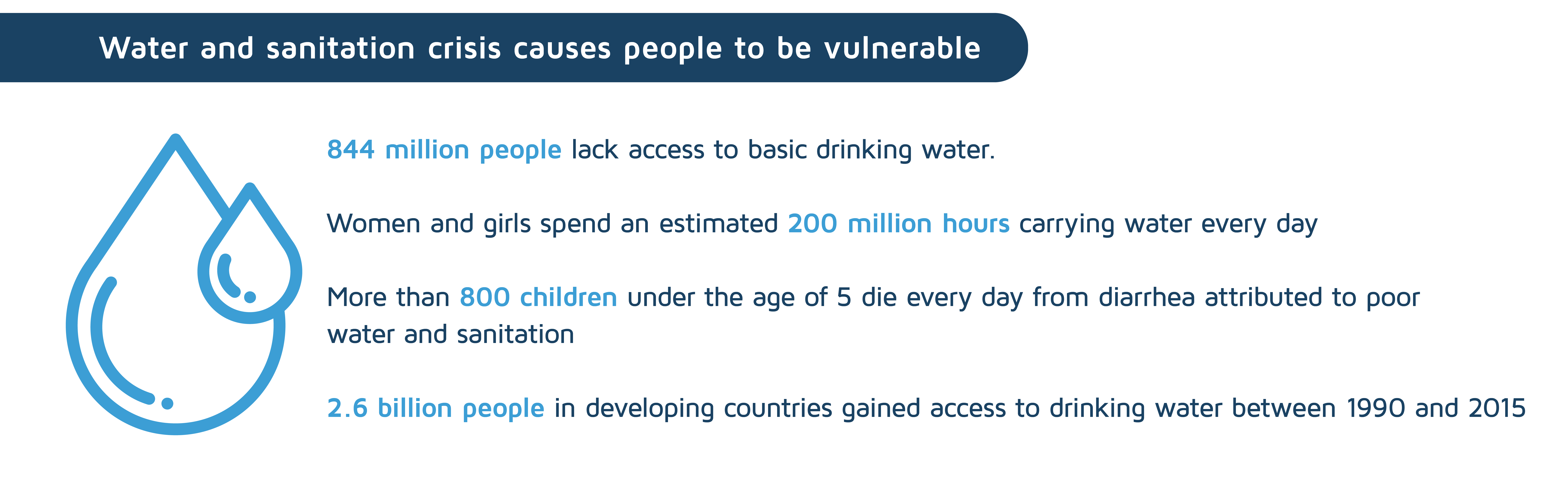
Despite the substantial gains achieved in some regions over the last few years, 2.2 billion people still lack access to safely managed water supply, with most of these living in Africa’s poorest regions. Already vulnerable people do not enjoy their right to access drinking water and sanitation or improved safer facilities.
Stark disparity in accessing to water and sanitation
People in rural areas face tougher inequalities in accessing water than those living in urban regions. The drinking water coverage rate in urban areas of Burundi rose to 90% while the increase in rural areas peaked at 57% according to the latest data provided by WHO and UNICEF. The significant difference between access to water supply services and sanitation infrastructure in urban and rural areas do not represent the reality faced by Burundi people alone, similar discrepancies are being observed in many other developing countries across the world.
The pandemic has revealed the scant sources of safe water in rural areas where only 25 million people have limited access to drinking water from sources that are far away from their homes. The realities in Brazilian urban areas are not encouraging either, where around 15 million people suffer from lack of access to drinking water that is protected from contamination. In the case of sanitation, Brazilians do not enjoy adequate affordable facilities either with over 100 million people without access to sanitation services not shared with other homes and which have, with proper sewage standards. Almost 2.3 million people are forced to practice open defecation. Over €4 billion are needed to elude the existing gaps by expanding water supply coverage by 99% and sanitation by 92% by 2033.
Investing in the safest forms of drinking water and sanitation facilities
The realities that people live in emphasis the need to increase investment in proper infrastructure, assess existing interventions, and improve monitoring access to WASH facilities. Around 20 million people in Africa have gained access to clean drinking water for the first as a result of the African Development Bank (AfDB) projects carried out in the region since 2005 that include over 400 operations across the continent with a total project cost of US$8.2 billion. While over 750 million Africans face lack of access to improved sanitation, the AfDB has invested another US$6.2 billion to ensure equitable access to the safest forms of drinking water and sanitation facilities. Addressing the WASH challenges could become an even more difficult mission in Africa due to the climate change crisis that affects the continent.
Accelerated progress in delivering improved water and sanitation services in line with SDG targets will be necessary in the actual reality created by the pandemic. The World Bank’s Water Supply and Sanitation Project will ensure that one million people in Zhejiang, China, can access improved sanitation services by the end of 2020 making Zhejiang as the first province in China to introduce rural sewage standards.
Millions of people face inadequate WASH facilities
Unsafe water and sanitation are the day to day reality for the two million people living in the Gaza strip who suffer from a constant shortage of water. More than 96% of household water that is obtained from the aquifer is polluted but residents are forced to use it for bathing and washing. People are compelled to buy the water needed for drinking and cooking despite the severe financial hardship they are experiencing. Furthermore, they often have to store water in containers on their rooftops to ensure a supply on the days when the supply is cut.
Depriving people of safe WASH facilities makes them even more vulnerable to the pandemic and other infections. About a million people died from diseases such as typhoid and diarrhea in 2019 and these regrettable deaths could have been prevented with safe water and sanitation. UNICEF helps countries around the world to build national WASH capacity and systems and thus, in 2019, 18 million people gained access to drinking water services, while 15.5 million people accessed basic sanitation facilities in 2019.
Persisting discrimination in accessing WASH
The persisting inequalities in access to safe water and sanitation particularly affect women and girls, who are more likely to drop out of school when sanitation and menstrual hygiene facilities are not available. Many of these are forced to use unacceptable sanitary methods to collect menstrual fluid such as rags, dirt, or newspaper. Amnesty International warns that girls could become victims of rape and other forms of sexual violence while attempting to use public toilet blocks or going out at night for open defecation.
Most of the time, women are responsible for the burden of collecting and carrying the water with a woman in rural Africa typically walking 6 kilometers a day carrying an average weight of 40 pounds (approx. 18 kg) of water.
Delivering safe water and sanitation could change people’s destinies but many governments face challenges in covering this basic need. Without clean accessible water, people are locked in poverty and disgrace. The pandemic appears to brought about the impetus for the significant progress needed to achieve the United Nation’s Sustainable Development Goal 6 that aimed to provide universal and equitable access to water and sanitation by 2030.
To stay informed about the latest global development news, subscribe to the DevelopmentAid Newsletter and gain access to the latest information. Discover available funding opportunities and ongoing international projects on developmentaid.org.