
Add us as your preferred source on Google to see more of our content in Search.
 Add to Preferred Sources
A “generational catastrophe”. That is what UN Secretary-General António Guterres called the unprecedented education crisis looming over millions of learners across the planet, in his UNESCO-led Policy Brief. The COVID-19 pandemic has created the most severe disruption to global education systems in history, forcing more than 1.6 billion learners in more than 190 countries out of school at the peak of the crisis. It threatens the future of a generation with 24 million children and youth at risk of dropping out.
This pandemic has brought to light already-existing challenges to education that have not adequately addressed for far too long. It has highlighted alarming inequalities within and across countries that must be tackled urgently in order to guarantee everyone’s fundamental right to quality education.
From financing education to reopening schools safely, the world must immediately set priority actions for the recovery and strengthening of education systems around five themes considered key to the COVID-19 response.
Globally, the share of education in public budgets has remained constant at about 14.5% for the past two decades. With the economic impact of COVID-19, government capacity to raise revenues will be seriously tested, while education is expected to continue to face stiff competition from other sectors. The financial downturn will put increasing pressure on national education budgets and aid to education at a time when higher funding is required for the recovery.
According to UNESCO’s estimates based on data from the IMF and the UNESCO Institute for Statistics (UIS), even if the budget share allocated to education remains stable, public spending could drop by 8% (US$210 billion) and aid to education could fall by 12% (US$337 billion).
The 2019 Global Education Monitoring Report estimated that annual spending on education was at US$4.7 trillion worldwide: Governments account for 79.3% of total spending, households for 20.4% and donors for 0.3% globally (12% in low-income countries).
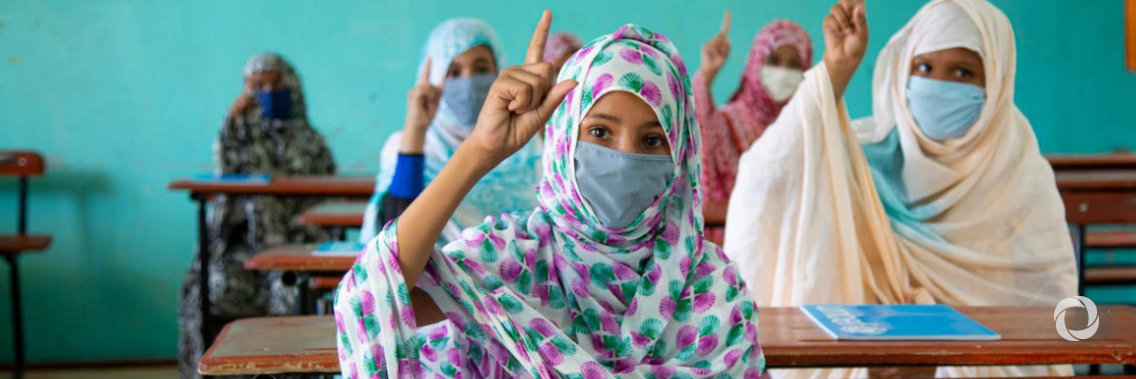
Countries across the globe are gradually reopening or planning for the reopening of schools after several months of closure to curb the spread of the virus. Protecting the physical and mental health of students, teachers and school personnel and preparing for a potential viral resurgence remain the top concerns. Additional challenges to be addressed include the consequences of prolonged social isolation, both on the education system and on the school community.
The pandemic directly affected 63 million primary and secondary teachers. Almost overnight, schools closed and teachers were required to conduct distance teaching. With no time to prepare and often with limited guidance and resources, teachers had to modify curricula and adapt lesson plans to carry on with instruction using high, low and no-tech solutions. They lectured live, posted lessons online or interacted with students using mobile devices. In countries with poor or no connectivity, teachers used radio and TV, prepared take-home packages, while others visited homes to pick up and drop off students’ work. Teachers have been key to ensuring that learning and communication with students and their families continued while schools were closed. Their role during reopening is just as important.
The impact of this crisis on learning and the conditions of learning has been huge. Restrictions on movement, social isolation, and the sudden change of traditional learning methods have led to increased pressure, stress and anxiety for young people, their families, and communities. That is why education priorities must be reorganized so that learning systems address everyone’s needs to build a ‘new and better normal’.
The impact of COVID-19 on learning continuity has been devastating. Due to global school closures, formal learning either stopped completely or was severely disrupted for the vast majority of the world’s students. Unfortunately, learning disruptions due to the pandemic remain far from being resolved for most learners. Approximately half of the world’s population (some 3.6 billion people) still lack an internet connection.
Most students do not have the appropriate hardware, software, connectivity, and digital skills required to find and use educational content dependent on technology. According to UN estimates, nearly 500 million students from pre-primary to upper-secondary school did not have any access to any remote learning—three-quarters of those lived in the poorest households or rural areas.
Eight months into the crisis, UNESCO estimates that close to 600 million children, youth, and adults) are affected by school closures in 34 countries, while in many others, they face reduced or part-time academic schedules.
UNESCO, together with the Governments of Ghana, Norway, and the United Kingdom, is convening a virtual Global Education Meeting on 20 and 22 October to secure commitments from leaders for the protection of education financing through the COVID-19 recovery, and agree on priority actions for the next year.
Original source: UNESCO