
Add us as your preferred source on Google to see more of our content in Search.
 Add to Preferred Sources
UNHCR, the UN Refugee Agency warns of disastrous consequences in Africa’s Sahel region, unless humanitarian efforts are urgently supported in what has become the world’s fastest-growing displacement and protection crisis.
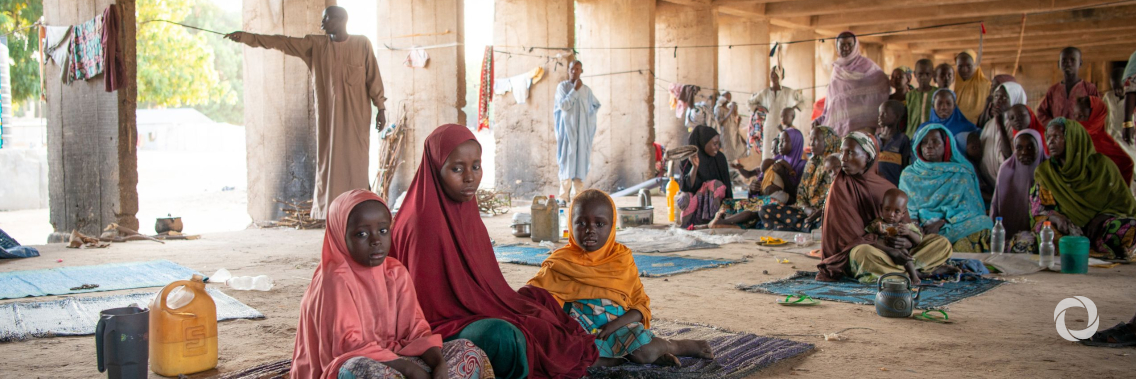
Armed conflict, extreme poverty, food insecurity, climatic changes, and the COVID-19 pandemic converge in the Sahel. Across the wider region, over 2.7 million people have been forced to flee their homes. Shelter, water, sanitation, health, and other basic assistance needs are now immense.
The Central Sahel countries of Burkina Faso, Mali, and Niger are the epicentre of the forced displacement crisis. More than 1.5 million internally displaced people (IDPs) and 365,000 refugees have fled violence in the Central Sahel, including over 600,000 this year alone. The number of IDPs inside Burkina Faso has doubled to over one million in the past year. Burkina Faso, among the poorest countries in the world and one of the most susceptible to climate risks, faces a major internal security crisis which means almost nowhere in the country is safe.
The level of brutality against civilians is ghastly and systemic. Across the region, thousands of women and girls have fallen victim to sexual and gender-based violence.
Attacks on schools in the Sahel are a grim and growing reality. Some 4,000 schools in recent years have been destroyed or closed, affecting tens of thousands of schoolchildren.
Climate risks in the Sahel are also growing as rising temperatures are changing rainfall patterns and increasing the frequency and intensity of floods, droughts, and sandstorms. Recent devastating floods in the region have killed dozens and left hundreds of thousands – many of them displaced and their host communities – in urgent need of shelter, clean water, and health services.
Host governments and local communities are the first responders and have shown remarkable solidarity. But they are at a breaking point and they need immediate resources.
Solutions are urgently needed to address the root causes of displacement and to bolster humanitarian efforts.
Affected States need support to deliver assistance. Governance reforms must be stepped up with the same urgency as lifesaving interventions and adequate resources are essential. Investment is especially needed in urban areas, where many of the displaced have sought safety.
Humanitarian actors are struggling to meet the snowballing needs of displaced communities and their hosts.
UNHCR has dramatically scaled up in the Central Sahel this year.
“We have provided emergency shelter to 81,144 displaced people; reached survivors of sexual and gender-based violence through mobile health clinics; amid COVID-19, our interventions have helped 338,411 people to receive essential healthcare services; and with schools closed, some 12,000 displaced and host community children have continued their education through distance learning.”
In the broader region, the governments of Burkina Faso, Chad, Mali, Mauritania, and Niger have committed to place the protection of displaced people and their host communities at the core of the response. Earlier this week, these governments launched the ‘Bamako Process,’ an intergovernmental platform for concrete and rapid actions to strengthen coordination between security and humanitarian actors and to ensure humanitarian access, protection, and assistance to affected populations.
In the Central Sahel, UNHCR requires continued and sustained financial support. Resources are needed beyond the end of this year for UNHCR and its partners to continue to scale up assistance.
Original source: UNHCR