
Add us as your preferred source on Google to see more of our content in Search.
 Add to Preferred Sources
Increasing temperatures and sea levels, changing precipitation patterns and more extreme weather are threatening human health and safety, food and water security, and socio-economic development in Africa, according to a new report devoted exclusively to the continent.
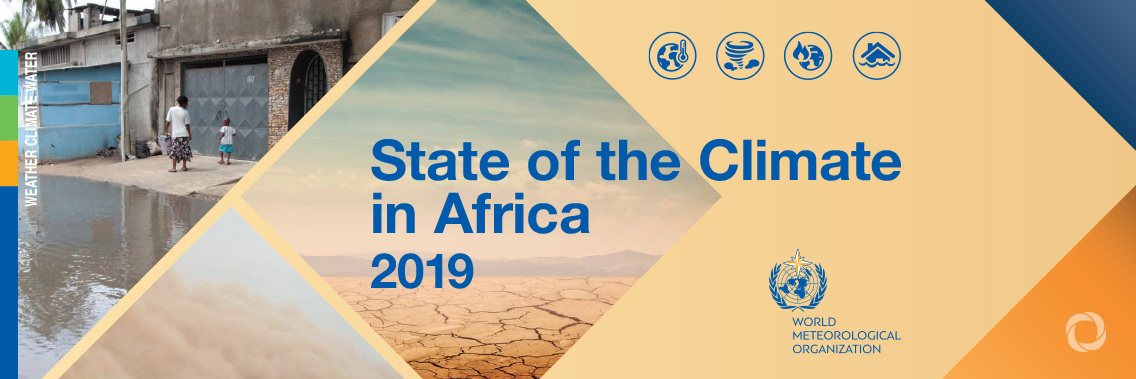
The State of the Climate in Africa 2019 report, a multi-agency publication coordinated by the World Meteorological Organization (WMO), provides a snapshot of current and future climate trends and associated impacts on the economy and sensitive sectors like agriculture. It highlights lessons for climate action in Africa and identifies pathways for addressing critical gaps and challenges.
The report was released to highlight the urgency of climate action in Africa and the current state of capacity. The risks are becoming more severe.
“Climate change is having a growing impact on the African continent, hitting the most vulnerable hardest, and contributing to food insecurity, population displacement, and stress on water resources. “In recent months we have seen devastating floods, an invasion of desert locusts and now face the looming spectre of drought because of a La Niña event. The human and economic toll has been aggravated by the COVID-19 pandemic,” said WMO Secretary-General Petteri Taalas.
Rising temperatures
The year 2019 was among the three warmest years on record for the continent. That trend is expected to continue. African temperatures in recent decades have been warming at a rate comparable to that of most other continents, and thus somewhat faster than global mean surface temperature.
The latest decadal predictions, covering the five-year period from 2020 to 2024, shows continued warming and decreasing rainfall especially over North and Southern Africa, and increased rainfall over the Sahel.
Extensive areas of Africa will exceed 2 °C of warming above pre-industrial levels by the last two decades of this century under medium scenarios as reported in the Intergovernmental Panel on Climate Change Fifth Assessment Report. Much of Africa has already warmed by more than 1 °C since 1901, with an increase in heatwaves and hot days. A reduction in precipitation is likely over North Africa and the south-western parts of South Africa by the end of the century, according to the IPCC.
Rising sea levels and coastal erosion
There is significant regional variability in sea-level trends around Africa. Sea-level increase reached 5 mm per year in several oceanic areas surrounding the continent and exceeded 5 mm per year in the south-western Indian Ocean from Madagascar eastward towards and beyond Mauritius. This is more than the average global sea-level rise of 3–4 mm per year.
Extreme events
The report documents high-impact events in 2019. Tropical Cyclone Idai was among the most destructive tropical cyclones ever recorded in the southern hemisphere, resulting in hundreds of casualties and hundreds of thousands of displaced.
Food security impacts
In the drought-prone sub-Saharan African countries, the number of undernourished people has increased by 45.6% since 2012 according to the Food and Agriculture Organization of the United Nations (FAO).
Agriculture is the backbone of Africa’s economy and accounts for the majority of livelihoods across the continent. Africa is therefore an exposure and vulnerability “hot spot” for climate variability and change impacts.
IPCC projections suggest that warming scenarios risk having devastating effects on crop production and food security.
By the middle of this century, major cereal crops grown across Africa will be adversely impacted, albeit with regional variability and differences between crops.
Health impacts
Increases in temperature and changes in rainfall patterns also significantly affect population health across Africa. Warmer temperatures and higher rainfall increase habitat suitability for biting insects and the transmission of vector-borne diseases such as dengue fever, malaria and yellow fever.
In addition, new diseases are emerging in regions where they were previously not present. In 2017, an estimated 93% of global malaria deaths occurred in Africa. Malaria epidemics often occur after periods of unusually heavy rainfall. In addition, warming in the East African highlands is allowing malaria-carrying mosquitoes to survive at higher altitudes.
Economic impacts
According to the International Monetary Fund, adverse consequences of climate change are concentrated in regions with relatively hot climates, where a disproportionately large number of low-income countries are located.
Climate Action
Africa’s Agenda 2063, which was concluded in 2013, recognizes climate change as a major challenge for the continent’s development.
Africa and the small island developing States are the regions facing the largest capacity gaps with regard to climate services. Africa also has the least developed land-based observation network of all continents.
Africa has made great efforts in driving the global climate agenda. This is demonstrated by the very high levels of ratification of the Paris Agreement – over 90%. Many African nations have committed to transitioning to green energy within a relatively short time frame. Clean energy and agriculture are, for example, prioritized in over 70% of African NDCs. This ambition needs to be an integral part of setting the economic development priorities of the continent.
Read the report: State of the Climate in Africa 2019.
Original source: WMO