
Add us as your preferred source on Google to see more of our content in Search.
 Add to Preferred Sources
Efforts to restore the world’s degraded forests and landscapes must be scaled up to achieve the Sustainable Development Goals (SDGs) by 2030, said FAO in a new publication.
Land and forest degradation are among the world’s most pressing environmental issues. Globally, 25 percent of the total land area has been degraded. To safeguard the future of our planet, major actions are needed to prevent, halt, and reverse the degradation of ecosystems worldwide.
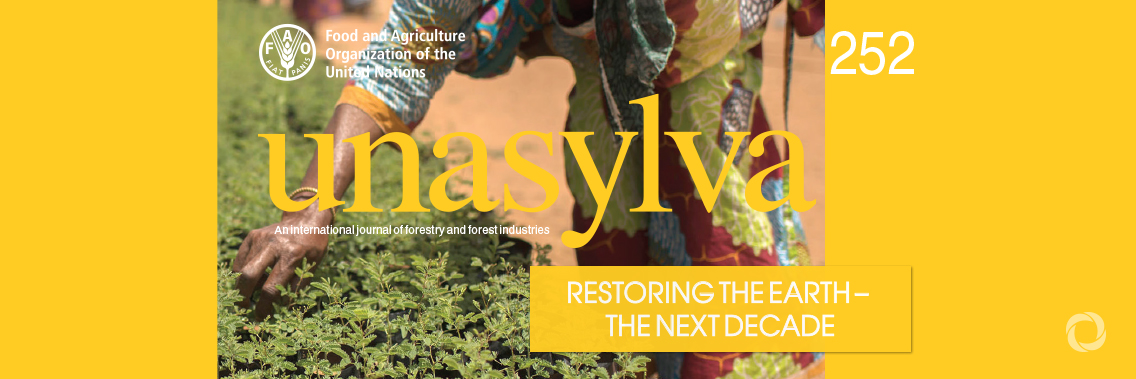
Entitled Restoring the Earth: the next decade, the latest edition also underlines that considerable progress in forest and landscape restoration has been made in the last ten years.
To date, 63 countries and other entities have committed to restoring 173 million hectares – an area half the size of India – and regional responses such as the African Forest Landscape Restoration Initiative (AFR100) and Initiative 20×20 in Latin America are making significant advances.
However, the publication argues that much more needs to be done at the national, regional, and global scale to meet commitments under the Bonn Challenge, which aim to restore 350 million hectares of degraded and deforested lands by 2030, and other international pledges.
“Forest and landscape restoration is about much more than trees: it has social and economic benefits such as improving human well-being and livelihoods, and contributes to many of the Sustainable Development Goals, including mitigating climate change and conserving biodiversity,” said Mette Wilkie, Director, FAO Forestry.
The new edition of Unasylva outlines a series of new restoration initiatives and programmes aimed at increasing funding, empowering local stakeholders, and enhancing technical assistance for forest and landscape restoration.
The publication also presents technical approaches, such as Assisted Natural Regeneration (ANR), to increase the adoption of forest and landscape restoration, and underlines the factors that underpin its implementation.
Among positive stories highlighted is China’s success in reversing centuries of forest degradation and loss thanks to political leadership, multi-stakeholder involvement, and an adaptive management approach.
Unasylva also profiles Northern Kenya’s community conservation movement, which shows that land restoration is most successful when peace, governance, enterprise, and wildlife conservation are also addressed.
Case studies in Brazil, Cambodia, Madagascar, and Sao Tome and Principe meanwhile illustrate the range of options for institutional coordination mechanisms in forest and landscape restoration. Examples from the Niger and Burkina-Faso showcase the importance of local government and the community’s empowerment for planning and financing restoration and sustainable land management.
The publication also outlines actions needed to realize the momentum offered by the upcoming UN Decade on Ecosystem Restoration (2021-2030) to upscale forest restoration across hundreds of millions of hectares.
These include developing comprehensive business cases for governments and private-sector investors, new policies and legislation to support investments in restoration, and protocols for restoration tailored for specific landscapes.
Read the report: Restoring the Earth: the next decade.
Original source: FAO