
UNICEF calls for averting a lost generation as COVID-19 threatens to cause irreversible harm to children’s education, nutrition and well-being
Add us as your preferred source on Google to see more of our content in Search.
 Add to Preferred Sources
UNICEF warned in a new report of significant and growing consequences for children as the COVID-19 pandemic lurches toward a second year.
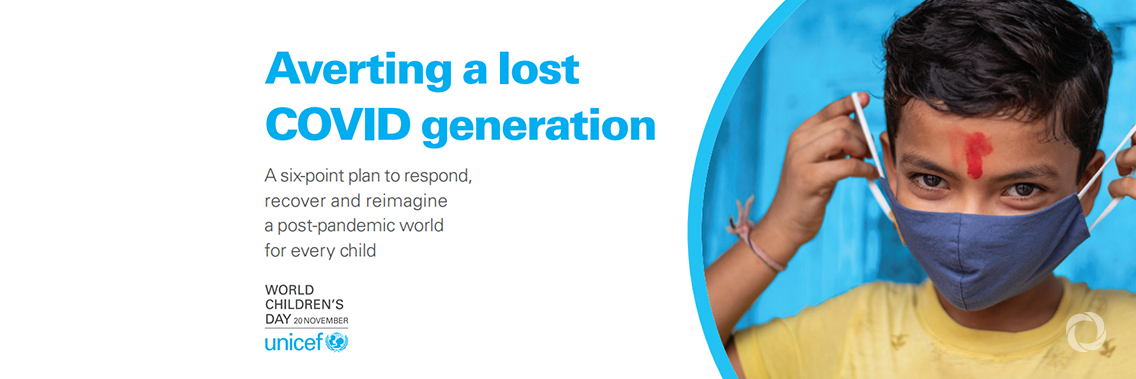
Released ahead of World Children’s Day, Averting a Lost COVID Generation is the first UNICEF report to comprehensively outline the dire and growing consequences for children as the pandemic drags on. It shows that while symptoms among infected children remain mild, infections are rising and the longer-term impact on the education, nutrition, and well-being of an entire generation of children and young people can be life-altering.
“Throughout the COVID-19 pandemic, there has been a persistent myth that children are barely affected by the disease. Nothing could be further from the truth,” said Henrietta Fore, UNICEF Executive Director. “While children can get sick and can spread the disease, this is just the tip of the pandemic iceberg. Disruptions to key services and soaring poverty rates pose the biggest threat to children. The longer the crisis persists, the deeper its impact on children’s education, health, nutrition, and well-being. The future of an entire generation is at risk.”
The report finds that, as of 3 November, in 87 countries with age-disaggregated data, children and adolescents under 20 years of age accounted for 1 in 9 of COVID-19 infections, or 11 percent of the 25.7 million infections reported by these countries. More reliable, age-disaggregated data on infection, deaths, and testing is needed to better understand how the crisis impacts the most vulnerable children and guide the response.
While children can transmit the virus to each other and to older age groups, there is strong evidence that, with basic safety measures in place, the net benefits of keeping schools open outweigh the costs of closing them, the report notes. Schools are not the main driver of community transmission, and children are more likely to get the virus outside of school settings.
COVID-related disruptions to critical health and social services for children pose the most serious threat to children, the report says. Using new data from UNICEF surveys across 140 countries, it notes that:
- Around one-third of the countries analyzed witnessed a drop of at least 10 percent in coverage for health services such as routine vaccinations, outpatient care for childhood infectious diseases, and maternal health services. Fear of infection is a prominent reason.
- There is a 40 percent decline in the coverage of nutrition services for women and children across 135 countries. As of October 2020, 265 million children were still missing out on school meals globally. More than 250 million children under 5 could miss the life-protecting benefits of vitamin A supplementation programmes.
- 65 countries reported a decrease in-home visits by social workers in September 2020, compared to the same time last year.
To respond to this crisis, UNICEF is calling on governments and partners to:
- Ensure all children learn, including by closing the digital divide.
- Guarantee access to nutrition and health services and make vaccines affordable and available to every child.
- Support and protect the mental health of children and young people and bring an end to abuse, gender-based violence, and neglect in childhood.
- Increase access to safe drinking water, sanitation, and hygiene and address environmental degradation and climate change.
- Reverse the rise in child poverty and ensure an inclusive recovery for all.
- Redouble efforts to protect and support children and their families living through conflict, disaster, and displacement.
Read the report: Averting a Lost COVID Generation.
Original source: UNICEF