
Add us as your preferred source on Google to see more of our content in Search.
 Add to Preferred Sources
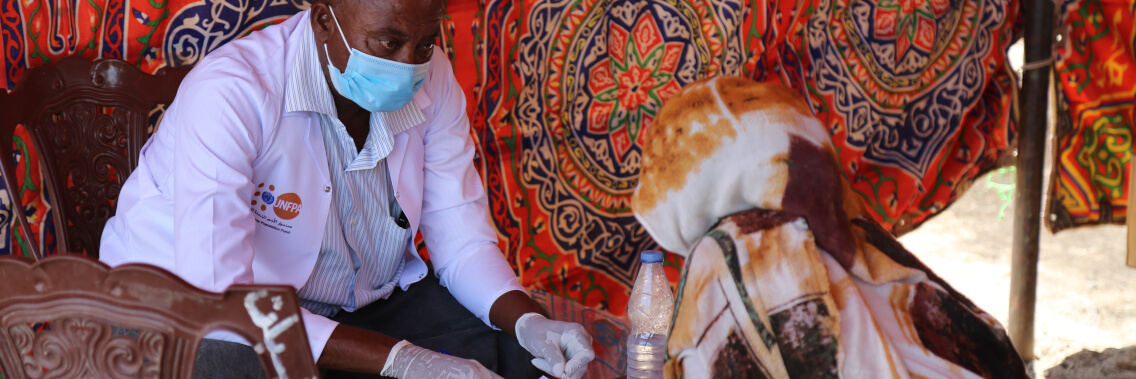
More than 33,000 people have fled into eastern Sudan from the ongoing conflict in Ethiopia’s Tigray Region, according to United Nations officials. The UN Refugee Agency (UNHCR) has begun to relocate refugees from transit centres to a displacement settlement in Um Raquba, where UNFPA is working with partners to provide critical services.
A majority of the relocated refugees are women and children.
Many of the women and girls are fearful for their safety. Vulnerability to gender-based violence often increases during humanitarian crises.
Additionally, refugees lack safe toilets and private shower facilities. Women and girls have resorted to walking some distance from the settlement to relieve themselves in the open, exposing them to potential violence.
UNFPA and partners are stepping in to prevent and respond to gender-based violence. Psychological first aid and trauma counselling are urgently needed. UNFPA is working with UNHCR to integrate these services into programmes for survivors of gender-based violence.
Women’s reproductive health needs are also dangerously unmet. The nearest referral health facility able to provide post-rape treatment or emergency obstetric care is about 40 minutes from Um Raquba.
UNFPA estimates that, of the newly arrived refugees in Sudan, more than 700 are likely to be pregnant, and there may be around 150 survivors of gender-based violence in need of assistance. This estimate is based on the Minimum Initial Service Package for Reproductive Health in Crisis calculations wherein around 2 per cent of women of reproductive age are expected to experience sexual violence.
More than 7,500 refugees are estimated to be women of reproductive age.
UNFPA is working to establish safe spaces for these women and girls, where they can find psychosocial support and referrals to health and other services.
With partners, UNFPA is also working to distribute dignity kits, which contain hygiene supplies such as sanitary napkins, clothing, soap, undergarments and other necessities.
UNFPA is also providing clean delivery kits, which contain basic supplies to facilitate a safe childbirth, including antiseptic cream, a razor to cut the umbilical cord, a sterile sheet for a woman to deliver on, and a blanket to warm the baby. More comprehensive emergency reproductive health kits are being provided to health workers and to clinics that are being set up on-site.
Partners, including the UN Refugee Agency, estimate the number of refugees could rise to 200,000 in the coming six months.
Original source: UNFPA