
Add us as your preferred source on Google to see more of our content in Search.
 Add to Preferred Sources
FAO urges G20 to support farmers, gender-based violence on the rise during lockdowns and most developed countries on track to meet their 2020 emission reduction targets. Here is what you missed from last week’s headlines in the international development sector:
FAO urges G20 to support farmers, protect the vulnerable and invest in innovation
QU Dongyu, Director-General of the Food and Agriculture Organization of the United Nations, called on G20 members to address the impacts of COVID-19 on agri-food systems by boosting farmers productivity, scaling up social protection mechanisms, and investing in digital innovation, among other measures.
“It is essential for the G20 to keep working on preventing this health crisis from becoming a global food crisis,” the Director-General said, adding that “the G20 is a highly important impetus and emergency response on global policy, coordination and leadership to develop an inclusive, resilient and sustainable world by leading responsible investment, enabling policies, innovation and capacity building.”
Speaking at the G20 Leaders’ Summit hosted virtually by the Kingdom of Saudi Arabia, Qu acknowledged the concrete efforts made so far by G20 members to keep food supply chains alive and food trade flowing amid the pandemic, and encouraged countries to continue using trade “to boost farmers’ productivity, income, and sustainability.”
Gender-based violence on the rise during lockdowns
By early April, over half the world’s population was living under lockdown, and women with violent partners found themselves trapped with their abusers and cut off from the support of friends and family. Within months of the outbreak starting, UN Women was warning of a Shadow Pandemic, as all types of violence against women and girls, but particularly domestic violence, intensified.
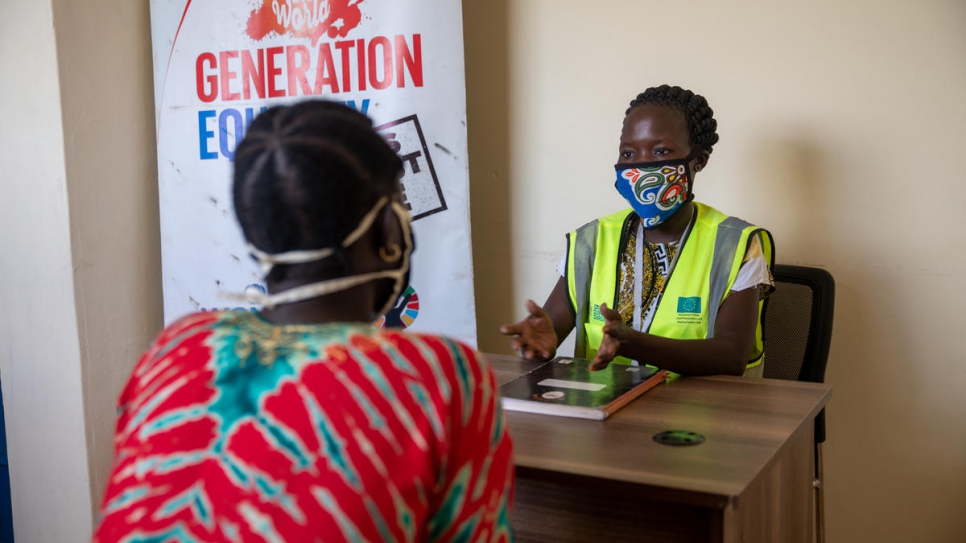
Refugee and displaced women were at greater risk from gender-based violence (GBV) even before COVID-19. The pandemic has heightened their vulnerability.
While data has been slow to emerge, with displaced women often afraid or unable to seek help, some patterns are becoming clear. Colombia’s Ministry of Health reported a nearly 40 percent increase of GBV incidents affecting the country’s Venezuelan population between January and September of this year, compared to the same period last year.
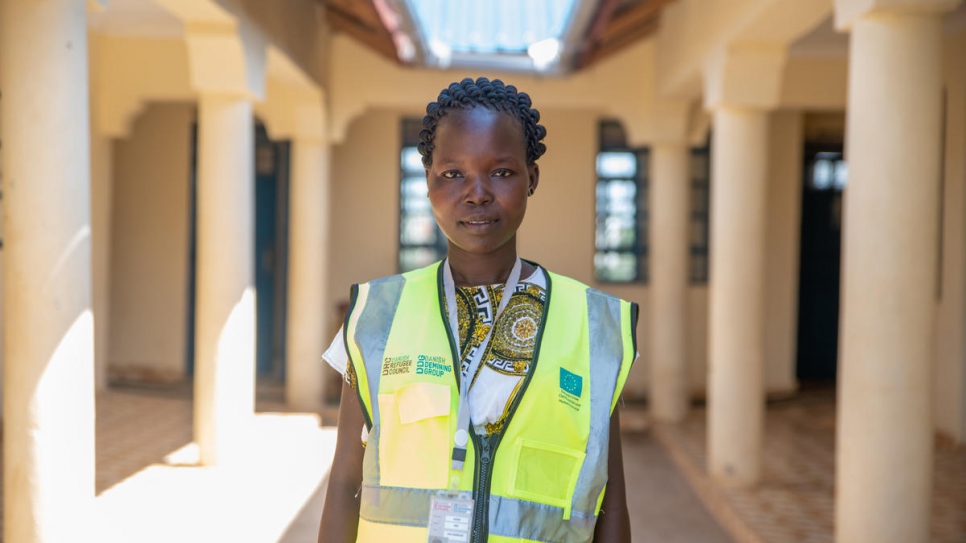
The Global Protection Cluster – a UNHCR-led network of NGOs and UN agencies providing protection to people affected by humanitarian crises – noted in August that gender-based violence was occurring at a higher incidence in 90 percent of its operations, including in Afghanistan, Syria, and Iraq. Meanwhile, nearly three-quarters of refugee and displaced women surveyed recently by the International Rescue Committee in three regions of Africa reported an increase of GBV in their communities.
Most developed countries on track to meet their 2020 emission reduction targets, but more ambition needed by some
A new report released by UN Climate Change reveals that between 1990 and 2018, the greenhouse gas emissions of developed countries decreased by 13%, with emissions falling by just 3.4 % between 2010 and 2018.
The report notes that while most developed countries expect to meet their 2020 emission reduction targets, some need to make a greater effort by implementing mitigation actions or by making use of market-based mechanisms.
The Compilation and Synthesis reports, published every two years, are based on biennial reporting by developed countries under the international assessment and review process under the Convention. The biennial reports include information on GHG emissions and trends, quantified economy-wide emission reduction target, progress made towards achieving quantified economy-wide emission reduction targets, and the provision of financial, technological, and capacity-building support to developing country Parties. The Compilation and Synthesis of fourth biennial reports of developed country Parties covers the period 2017-2018, set against the larger backdrop of emissions since 1990.
With respect to future trends, the report finds that greenhouse gas emissions are projected to increase slightly between 2017 and 2020 and then decrease by 2.2 % between 2020 and 2030. This suggests the need for stronger policies and actions that will effectively change the trajectory of emissions.
DevelopmentAid Editorials
Why do international development projects fail?
The current aid system has grown into an enormous endeavor reaching a total of US$152.8 billion in official development assistance in 2019. However, research shows that a huge portion of aid projects fail or suffer problems, with the figure sometimes amounting to almost a half. This article analyzes what project failure is and looks at the main causes for the failure of international development projects.
Extreme hunger hits refugees in Uganda as COVID-19 spreads and aid is cut
According to the latest report issued by the United Nations Development Program (UNDP), COVID-19 will dramatically increase poverty amongst women and girls.
Children in Nepal are deprived of the right to education due to school closures
The latest data issued by the Integrated Food Security Phase Classification (IPC) shows that more than 90,000 refugees living in refugee camps in Uganda are affected by extreme famine, and over 400,000 of all refugees staying in this African country are suffering because of food insecurity.
Here’s what else has happened
UNICEF: UN Children’s Fund (UNICEF) is working with more than 350 logistics partners, including major airlines, shipping lines, and logistics associations from around the world, to deliver COVID-19 vaccines to over 92 countries, as soon as doses become available, the UN agency said.
KfW: The success in the development of vaccines against COVID-19 and the prospect of their availability in the near future gives hope worldwide. The severely affected, densely populated developing countries and emerging economies, in particular, will need a vaccination – and a great deal of international support in its implementation.
EIB: The European Investment Bank (EIB) will invest €65 million in the modernisation of primary and secondary schools in Serbia to provide new digital equipment, connectivity, and capacity building training for 50 000 school teachers. The investment from the EU bank will support Serbia’s national education strategy, upgrade digital capacities in Serbian schools and contribute to economic and productivity growth, youth employability, and the advancement of the country’s innovative capacity.
UNHCR: the UN Refugee Agency, airlifted 95 tonnes of emergency supplies as nearly 15,000 Ivorians find refuge in Liberia.
CABEI: The Central American Bank for Economic Integration (CABEI), announced the approval of a Non-Reimbursable Financial Cooperation for Emergency Assistance to the Republic of Cuba, for an amount of up to €935,600.00 with the objective of strengthening the efforts to combat health care implemented in the country.
Reports
COVID-19 compounding long-term drought effects in Southeast Asia
A new report released by the United Nations Economic and Social Commission for Asia and the Pacific (ESCAP) and the Association of Southeast Asian Nations (ASEAN) Secretariat is urging Southeast Asian governments to amplify their COVID-19 stimulus packages with much-needed investments in climate action and adaptation, in order to support vulnerable populations exposed to both pandemics and slow-onset disasters.
Read the report: Ready for the Dry Years: Building Resilience to Drought in South-East Asia.
320,000 children and adolescents newly infected with HIV in 2019, 1 every 100 seconds
Approximately every minute and 40 seconds, a child or young person under the age of 20 was newly infected with HIV last year, bringing the total number of children living with HIV to 2.8 million, UNICEF said in a report.
Read the report: Reimagining a resilient HIV response for children, adolescents, and pregnant women living with HIV.
World Trade Report 2020 explores increasing use of policies to foster digital innovation
A growing number of governments have adopted policies aimed at promoting innovation and technological progress for their economies, a trend which has implications for trade flows and the rules that govern global commerce, according to the 2020 edition of the WTO’s World Trade Report. The flagship publication maps out the use of government policies in the digital era and underlines the importance of countries working together to encourage positive global outcomes while minimizing negative spill-overs.
Read the World Trade Report 2020: Government policies to promote innovation in the digital age.
Events
Fourth South Asia Forum on the Sustainable Development Goals | Virtual
? 2-3 December 2020 ? 14.00 – 17.00 (IST)
Virtual
The “Fourth South Asia Forum on the Sustainable Development Goals” will be jointly organized by the United Nations Economic and Social Commission for Asia and the Pacific (UNESCAP) and the Government of Maldives. The Forum will take place on 2-3 December 2020 in virtual meeting format, as part of the preparatory process for the 8th APFSD to be held in March 2021, which in turn contributes towards the HLPF 2021.
International Conference on Emerging Technologies to Combat the COVID-19 Pandemic | Virtual
? 1 December 2020
Virtual
The Asian and Pacific Centre for Transfer of Technology (APCTT) of the United Nations Economic and Social Commission for Asia and the Pacific (ESCAP) in partnership with the Ministry of Science and Technology of the People’s Republic of China and Guangzhou University, China is organizing an International Conference on Emerging Technologies to Combat the COVID-19 Pandemic at Guangzhou, China.
One Voice – To Recovery and Beyond | Virtual
? 1 December 2020 ? 13:00-16:00 (UK Time)
Virtual
In light of the devastating impact of COVID-19 on Travel & Tourism globally, there is an urgent need to come together to recover the hundreds of millions of jobs lost, and livelihoods impacted. While the road ahead may appear uncertain; we anticipate that the challenges along the way can and will be converted into opportunities by the Travel & Tourism sector.