
Add us as your preferred source on Google to see more of our content in Search.
 Add to Preferred Sources
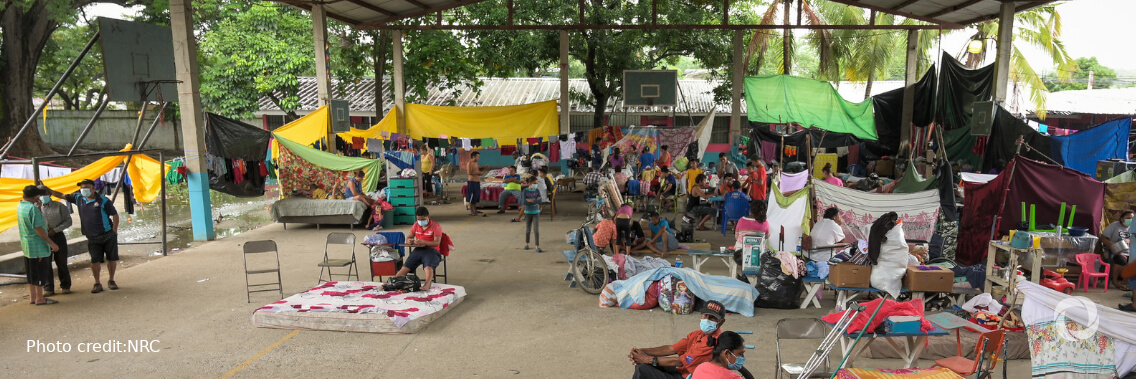
New UN data reveals that of 5.5 million people affected by successive tropical storms Eta and Iota in Honduras and Guatemala last month: 400,000 people remain in ill-equipped temporary shelters, while 140,000 homes were destroyed in the storms. As many as 330,000 remain cut off from emergency assistance by destroyed roads and disrupted communications in Honduras. This crisis has hit a region with humanitarian needs that already vastly exceed available resources.
“The situation is utterly dire. Entire communities have been cut off by floods and landslides. Hundreds of thousands of people are yet to receive humanitarian assistance, thousands are sleeping on the streets and under bridges,” warns Dominika Arseniuk, Norwegian Refugee Council’s Country Director for Central America and Colombia. “People here are being forced to tolerate intolerable conditions in a region consistently neglected by the humanitarian community.”
The most recent storms have compounded the region’s pre-existing humanitarian crises. Six months ago, 5.2 million people were found to be in need of humanitarian assistance across Honduras, El Salvador, and Guatemala due to years of chronic and extreme violence, displacement, food insecurity, and the increasingly adverse impacts of climate change. The region has also become synonymous with highly publicised caravans of migrants and refugees desperately seeking safety and opportunity outside the region. More recently, Covid-19 lockdowns paralysed local economies and over-stretched health systems, all before the tropical storms pushed needs to unprecedented levels.
On the outskirts of San Pedro Sula, one of the largest cities in Honduras, hundreds of displaced families have set up improvised shelters using sticks and plastic sheets, with only pieces of cardboard for mattresses. Others sleep under bridges, and tens of thousands have lost their homes and belongings, leaving them with nowhere to go. Few people have face masks, soap, or clean water to help prevent the spread of Covid-19.
The Norwegian Refugee Council, along with twelve other international organisations, has repeatedly called on the United Nations (UN) to develop a funding plan to support humanitarian response efforts for the region of the North of Central America. Without such a plan, the humanitarian response will remain underfunded and poorly coordinated.
Original source: NRC