
Add us as your preferred source on Google to see more of our content in Search.
 Add to Preferred Sources
After 11 dark months, the end of the COVID-19 pandemic is tantalizingly in sight. In recent weeks, two coronavirus vaccines – one from Pfizer-BioNTech and another from Moderna – were revealed to be more than 90 percent effective in clinical trials.
But if they’re approved by regulators, getting the vaccines into the hands, or arms, of billions, will be a daunting task.
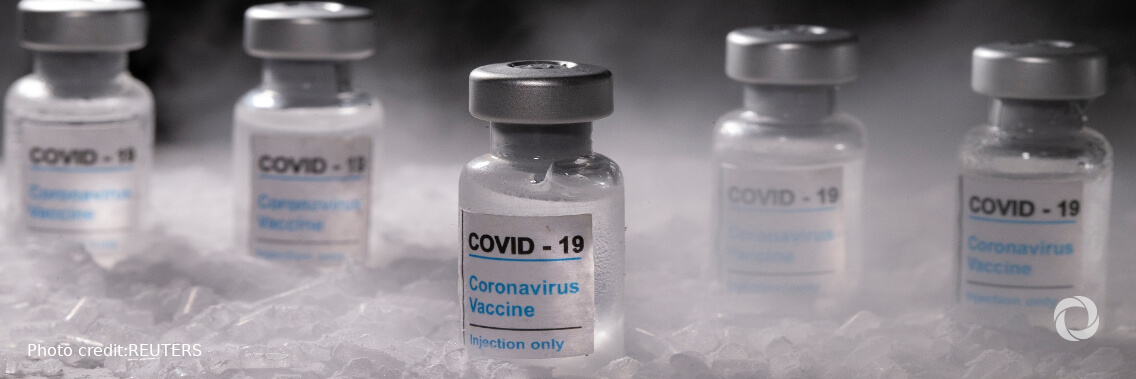
The Pfizer jab requires long-term storage at -70°C while Moderna’s must be kept at -20 °C long term. (Both can last for shorter periods in a regular refrigerator, where temperatures are between 2°C and 8°C.) The Oxford/AstraZeneca vaccine can be stored and transported long term at regular fridge temperatures.
In any of the above scenarios, rolling out COVID-19 vaccines on a global scale will require an enormous expansion in capacity of the global cold chain, the linked system of infrastructure that allows a product to move from its site of production to final destination while remaining appropriately chilled.
“The vaccination against COVID-19 is an inflection point that will determine how cold chains are handled on a global scale for the next two decades,” emphasizes Ligia Noronha, Director of the Economy Division at the United Nations Environment Programme (UNEP).
In many developing countries, the technologies are sparse, and experts believe the demands of a COVID-19 vaccine could finally lead to long-neglected investments in their cold chains. They warn, though, against quick and dirty solutions.
Bottlenecks in developing countries
One place where distribution challenges loom large is Africa.
Universal vaccine access is a challenge in developing economies, due to inadequate refrigerated cold chain networks, especially in rural communities, which have the highest poverty levels. This impacts not just vaccine access, but also food security and livelihoods. Farmers lose anywhere between 30% – 50% of food produced for human consumption due to poor post-harvest practices and lack of cold storage.
To tackle those problems, UNEP is partnering with the governments of Rwanda and the United Kingdom, and a consortium of universities on a new Africa Centre of Excellence for Sustainable Cooling and Cold Chain (ACES). With a hub in Kigali and Living Laboratories anticipated in rural communities throughout Africa, it focuses on developing cutting-edge cold chain solutions. The first phase is well underway with an in-depth cooling needs and gap assessment nearing completion, allocation of the site on the University of Rwanda campus, and initial layout of the facilities.
Rethinking cold chains
Globally, the scale of a coronavirus vaccine rollout means that simply expanding the current vaccination cold chain is not feasible. Child vaccination programmes, for example, typically reach around 115 million infants annually worldwide. Estimates for vaccination levels required to achieve effective global ‘herd immunity’ to COVID-19, by contrast, run as high as 5.5 billion people. And then with two doses required.
A business-as-normal approach would see widespread use of polluting diesel generators to power fridges in places where electricity supply is fragile or non-existent. It could mean the use of climate warming refrigerants such as hydrofluorocarbons that can have a global warming potential hundreds or even thousands of times greater than carbon dioxide.
Experts are also concerned that states will struggle to handle the enormous quantities of solid waste – from glass vials to used needles – that a global vaccination programme will generate.
That’s why many are urging countries to consider the environment and strive for long-term solutions while ramping up their vaccination programmes.
Long-term solutions
As billions of dollars will be invested in storage and handling of the COVID-19 vaccine, experts are exploring how to do this with a mind towards the future.
A key opportunity is to create a new cold chain for the COVID-19 vaccine, part of which at least could, once the current crisis has passed, be used to transport other goods, like agricultural produce.
Globally, a third of food production is lost to wastage between farm and fork. Better cooling could significantly reduce that figure and bring higher incomes for farmers. A UNEP-supported programme in Tamil Nadu state in southern India, for example, works with refrigeration firm Tabreed – to provide sustainable cooling for local mango farmers. A programme like that could work for both COVID-19 vaccines and later as an enduring legacy for farm produce.
Original source: UNEP