
Add us as your preferred source on Google to see more of our content in Search.
 Add to Preferred Sources
Sustainable energy for one billion people by 2030, fund COVAX to reduce COVID vaccination distribution inequity and 9 out of 10 people in poor countries are set to miss out on COVID-19 vaccine next year.Here is what you missed from last week’s headlines in the international development sector:
EIB joins Rockefeller Foundation’s call to action to provide sustainable energy for one billion people by 2030
The Rockefeller Foundation and the European Investment Bank announced the formation of a global coalition aimed at providing sustainable energy for one billion people within this decade.
Organizations joining this call to action also include the African Development Bank, CDC the UK’s development finance institution, International Energy Agency, International Renewable Energy Agency (IRENA), United Nations Development Programme (UNDP), U.S. International Development Finance Corporation, and U.S. Agency for International Development (USAID).
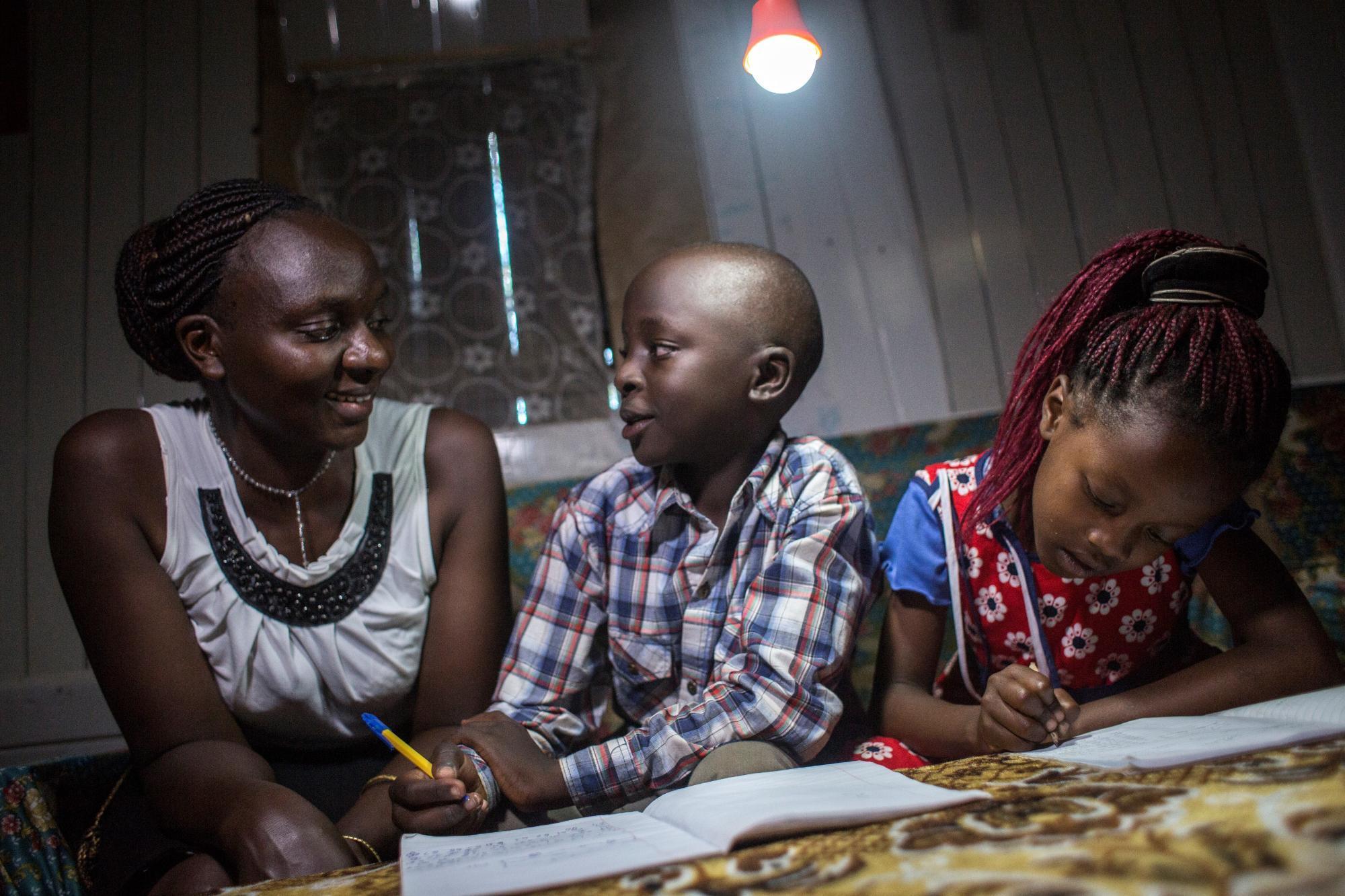
Today one in ten of the world’s people (800 million) lack access to electricity, including half the population of sub-Saharan Africa. Another 2.8 billion people lack access to electricity that is reliable enough to secure their livelihoods or power modern healthcare facilities and schools. The pandemic has only exacerbated the inequality of global energy access.
“In this era of unprecedented crises—including the coronavirus pandemic—we have a responsibility and remarkable opportunity to harness the power that can lead to a more equitable, safer world,” said Dr. Rajiv J. Shah, President of The Rockefeller Foundation, “Our goal is ambitious yet achievable: to bring reliable and sustainable electricity, powered by renewable technologies, to a billion people by the decade’s end. Our success will empower millions of people to participate in a modern economy, growing economic opportunity for us all.”
European Investment Bank Vice-President Ambroise Fayolle, said: “The adverse impacts of climate change and environmental degradation, as well as the Covid-19 pandemic, are undermining the ability of countries to achieve sustainable development, and particularly the most vulnerable. Accelerating high-impact investments to improve access to clean energy is essential to address the climate crisis, fight poverty, and improve public health. That’s why the European Investment Bank is very pleased to join forces with The Rockefeller Foundation and its “Green and Equitable Recovery Call to Action” as a platform to promote the energy transition across Africa, Asia, and Latin America, by unlocking public and private capital flows into distributed renewable energy systems. This great initiative is fully in line with the strategic priorities and orientations of EIB’s Energy Lending Policy and Climate Bank Roadmap”.
The EIB is a global leader providing technical and financial support for secure and affordable renewable energy investment. Between 2015 and 2019, the EIB provided more than €62 billion for renewable energy, energy efficiency, and electricity grid projects worldwide.
Fund COVAX to reduce COVID vaccination distribution inequity – UN chief
With so-called vaccine nationalism spreading “with full speed”, the Secretary-General told a journalists, following the fourth annual African Union-UN conference, that the continent must be “effectively supported” to fight the pandemic everywhere.
The COVAX international vaccine initiative requires $4.2 billion over the next two months to ensure that “sooner rather than later”, World Health Organization (WHO)-approved inoculation can get underway in Africa, UN chief António Guterres said.
While expressing his “hope that we will be able to do it before the second quarter”, he acknowledged that several countries have made “an enormous effort” to ensure vaccinations for their own populations while at the same time, the COVAX financing requirements have yet to be fully met.
During the UN-AU meeting, the UN chief observed that the partnership “has never been stronger” and expressed encouragement over the presidential support of Niger, Tunisia, and Somalia as well as the Security Council.
He commended the AU, African Member States, and the African Commission chair for spearheading a swift and coordinated continental response to the COVID-19 pandemic and for establishing a solid partnership between the World Health Organization (WHO) and the African Centres for Disease Control and Prevention.
9 out of 10 people in poor countries are set to miss out on COVID-19 vaccine next year
Nearly 70 poor countries will only be able to vaccinate one in ten people against COVID-19 next year unless urgent action is taken by governments and the pharmaceutical industry to make sure enough doses are produced, a group of campaigning organizations warned.
By contrast, wealthier nations have bought up enough doses to vaccinate their entire populations nearly three times over by the end of 2021 if those currently in clinical trials are all approved for use. Canada tops the chart with enough vaccines to vaccinate each Canadian five times. Updated data shows that rich nations representing just 14 percent of the world’s population have bought up 53 percent of all the most promising vaccines so far.
The organizations, including Amnesty International, Frontline AIDS, Global Justice Now, and Oxfam, which are part of an alliance calling for a People’s Vaccine, used data collected by science information and analytics company Airfinity to analyze the deals between countries and the eight leading vaccine candidates. They found that 67 low and lower-middle-income countries risk being left behind as rich countries move towards their escape route from this pandemic. Five of the 67 – Kenya, Myanmar, Nigeria, Pakistan, and Ukraine – have reported nearly 1.5 million cases between them.
“No one should be blocked from getting a life-saving vaccine because of the country they live in or the amount of money in their pocket,” said Anna Marriott, Oxfam’s health policy Manager. “But unless something changes dramatically, billions of people around the world will not receive a safe and effective vaccine for COVID-19 for years to come.”
The Pfizer /BioNTech vaccine has already received approval in the UK and vaccinations are beginning this week. It is likely to receive approval from other countries including the US within days. Two further potential vaccines, from Moderna and Oxford in partnership with AstraZeneca, are expected to submit or are awaiting regulatory approval. The Russian vaccine, Sputnik, has announced positive trial results and four other candidates are in phase 3 clinical trials.
DevelopmentAid Editorials
Could the COVID-19 vaccine end the pandemic? | Experts’ Opinions
Since the beginning of the coronavirus pandemic, the entire world has been waiting for news of an effective vaccine. In November 2020, Pfizer and Moderna announced their vaccines had proved to be 94.5% and 95% effective, respectively. This fact was considered as promising by experts but there still remain several unanswered questions.
Conflict victims in Nepal wait for justice
Today, World Human Rights Day is being celebrated globally with the theme of ‘Recover Better-Stand Up for Human Rights’ which calls for an end to discrimination amid the COVID-19 crisis and to ensure the voices of the most affected and vulnerable people are heard which includes the conflict victims in Nepal who are still awaiting truth and justice.
Biden’s presidency may be good news for development aid prospects
The development aid community is viewing the US election results with optimism as Joe Biden, 78, has frequently stressed his willingness to further engage in diplomacy and development aid to bring it to the same level to that which it was when he served as Vice-President. He also promised to rejoin the World Health Organization and restore funding, admitting that the agency was not perfect and that US would resume its leadership role and promote reforms.
Here’s what else has happened
IRENA: The International Renewable Energy Agency (IRENA), and the African Development Bank (AfDB), have agreed to work closely together to advance the continent’s energy transition through joint initiatives that support investments in low-carbon energy projects.
WHO: WHO launches a year-long global campaign for World No Tobacco Day 2021 – “Commit to Quit.” The new WHO Quit Challenge on WhatsApp and publication “More than 100 reasons to quit tobacco” are being released to mark the start of the campaign.
ADB: The Asian Development Bank (ADB) has approved a $200 million loan to support Shaanxi Province in the People’s Republic of China (PRC) to reduce greenhouse gas (GHG) emissions by improving operations efficiency and building green facilities, and enhancing overall safety in the transport and logistics sector.
IFAD: The International Fund for Agricultural Development (IFAD) is joining with the other Rome-based UN agencies (RBAs) – the Food and Agriculture Organization of the United Nations (FAO) and the World Food Programme (WFP) – as well as the G5 Sahel and the Green Climate Fund to revitalize economic activities and food systems in the Group of Five Sahel countries (Burkina Faso, Chad, Mali, Mauritania, and Niger) and in the Republic of Senegal. These efforts will strengthen the resilience of rural communities impacted by conflict, climate change, and the current Covid-19 pandemic.
EIB: The European Investment Bank (EIB) and the Government of Ukraine signed three loans totalling €640 million to foster the sustainable growth of Ukraine and the prosperity of its people. The operations are in line with the priorities of the Government of Ukraine and the European Union to support the long-term social and economic development of eastern Ukraine and integration of the conflict-affected regions as well as the development of sustainable municipal transport and the modernisation of the transport infrastructure in the country.
Reports
Unitaid annual report: Advancing global health in the age of COVID-19
Unitaid is delighted to present its latest annual report, which charts the continuation of the organisation’s groundbreaking work, despite the immense challenges posed by the COVID-19 pandemic.
Read the report: Advancing Global Health in the Age of COVID-19: Unitaid Annual Report 2019-2020.
Green pandemic recovery essential to close climate action gap – UN report
A green pandemic recovery could cut up to 25 percent off predicted 2030 greenhouse gas emissions and bring the world closer to meeting the 2°C goal of the Paris Agreement on Climate Change, a new UN Environment Programme (UNEP) report finds.
Read the Emissions Gap Report 2020.
COVID19 pandemic did not help climate action
As the deadly COVID-19 pandemic brought the world to a standstill, greenhouse gas emissions plummeted by a record amount. Yet, in the grand scheme of climate change, this historic reduction was but a blip with little impact on atmospheric carbon dioxide levels.
Read the World Economic Situation And Prospects: December 2020 Briefing, No. 144.
Events
RewirEdX | Virtual
? 15 -16 December 2020 ? 4 PM to 9 PM (GMT+4)
Virtual
RewirEdX is a virtual conference that will serve as a 1-year countdown to RewirEd Summit.
This will be an opportunity to explore and reflect on the experiences of key stakeholders from the world of education and learning – teachers, school-leaders, parents, students, and Ministry officials among many others.
In a time of great transition, RewirEdX will bring people together to engage in meaningful action-oriented dialogue to rethink and reimagine attitudes towards education.
Together to #ENDviolence Solutions Summit Launch Event | Virtual
? 15 December 2020 ? 8-9:30AM (EST) / 2-3:PM (CET)
Virtual
Violence is an epidemic of abuse that undermines all other investments made in children, with devastating long-term consequences. Despite the scale and impact of violence against children – and the proven evidence-based solutions that exist – we still lack the political commitments and financial investments that are urgently needed to keep children safe at home, online, at school and within communities. And without the proper investment, the effects of violence against children will continue to cost up to 5% of the world’s GDP.
Pacific Forum on Sustainable Development (PFSD) 2020 | Hybrid Meeting Format
? 14- 15 December 2020
Hybrid Meeting Format | Set Location & Virtual
The focus of the 2021 High-level Political Forum (HLPF) is “Sustainable and resilient recovery from the COVID-19 pandemic, that promotes the economic, social and environmental dimensions of sustainable development: Building an inclusive and effective path for the achievement of the 2030 Agenda in the context of the decade of action and delivery for sustainable development”. In line with its theme, the 2021 HLP will review SDGs 1, 2, 3, 8, 10, 12, 13, 16 and 17 in the context of the COVID-19 pandemic. It’s important to note as well that the ESCAP Commission theme for 2021 is “Building back better from crises through regional cooperation in Asia Pacific” which highlights the importance of regional cooperation in responding to COVID-19 and building back better through accelerated implementation of the SDGs.