
Add us as your preferred source on Google to see more of our content in Search.
 Add to Preferred Sources
The UK pledges urgent life-saving aid, vaccination no guarantee of virus eradication and 2020 closes a decade of exceptional heat. Here is what you missed from last week’s headlines in the international development sector:
UK pledges urgent life-saving aid for families hit by coronavirus and hunger around the world
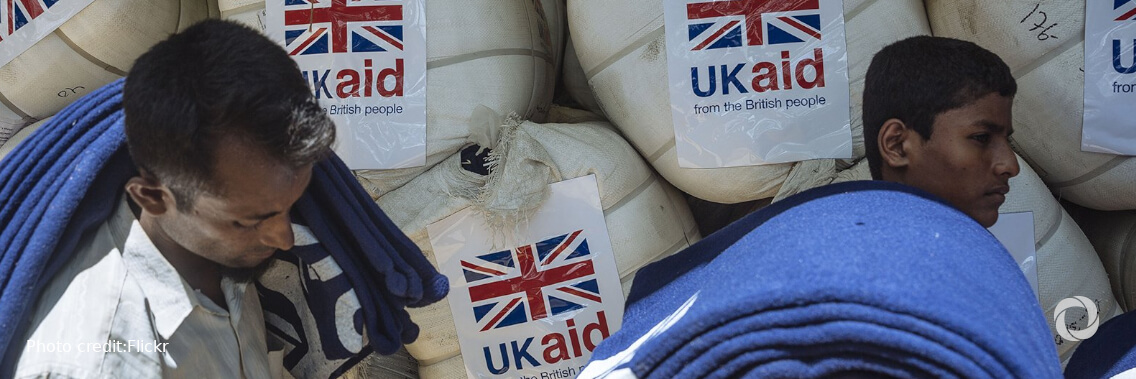
The UK is releasing new emergency aid to help over 1.3 million vulnerable people in some of the world’s most dangerous places, who face daily threats of starvation, conflict, and coronavirus.
Life-saving food, nutrition, water, childhood vaccinations, and shelter will urgently help families caught in some of the largest humanitarian crises, including across the Sahel, Syria, South Sudan, Nigeria, Somalia, Uganda, Zimbabwe, Venezuela, and Mozambique.
Humanitarian crises are getting worse according to UN data published earlier this month, compounded by the pandemic, with 235 million people expected to be in need of urgent assistance next year compared to 175 million people at the start of 2020.
The UN’s Integrated Food Security Phase Classification (IPC)’s survey also shows that there are people in South Sudan and Yemen living in famine-like conditions today.
In September the Foreign Secretary announced a Call to Action to prevent famine and appointed Nick Dyer as the UK Special Envoy on Famine Prevention and Humanitarian Affairs to drive this effort.
“Hundreds of millions of people living in the world’s largest humanitarian crises are struggling to survive, threatened by conflict, starvation, and coronavirus. This extra emergency UK aid will mean people can feed their families and prevent these crises from escalating into widespread famine. We hope to see other donors step up to the plate with some extra funding to prevent these global crises getting worse,” said Foreign Secretary Dominic Raab.
The extra UK aid announced will help continue momentum and pressure other donors to step up with additional financing.
Vaccination no guarantee of virus eradication: WHO officials
In the final World Health Organization (WHO) COVID-19 press conference of the year, senior officials warned that the virus is “not necessarily the big one”, and that there is a real chance of another, more serious pandemic spreading across the world.
“The next pandemic may be more severe”, said Dr. Mike Ryan, head of the WHO Emergencies Program, adding that we need “get our act together” because we live on a fragile planet, and in an increasingly complex society. “Let’s honour those we’ve lost by getting better at what we do”.
The WHO Technical Lead on COVID-19, Dr. Maria van Kerkhove, noted that some of the countries that have coped better with COVID-19 have not necessarily been those with the highest incomes, but those that have lived through other infectious disease outbreaks. Those countries, she said, have used the “muscle memory” of traumatic events to kick their systems into gear, and act to comprehensively tackle the virus.
2020 closes a decade of exceptional heat
As 2020 draws to an end, it closes the warmest decade (2011-2020) on record, according to the World Meteorological Organization. This year remains on track to be one of the three warmest on record, and may even rival 2016 as the warmest on record. The six warmest years have all been since 2015.
The exceptional heat of 2020 is despite a cooling La Niña event, which is now mature and impacting weather patterns in many parts of the world. According to most models, La Niña is expected to peak in intensity in either December or January and continue through the early part of 2021, according to a new WMO summary.
“Record warm years have usually coincided with a strong El Niño event, as was the case in 2016. We are now experiencing a La Niña, which has a cooling effect on global temperatures but has not been sufficient to put a brake on this year’s heat. Despite the current La Niña conditions, this year has already shown near-record heat comparable to the previous record of 2016,” said WMO Secretary-General Prof. Taalas.
WMO will issue consolidated temperature figures for 2020 in the month of January, based on five global temperature datasets. This information will be incorporated into a final report on the State of the Climate in 2020 which will be issued in March 2021, including information on selected climate impacts.
DevelopmentAid Editorials
The COVID-19 pandemic has caused a rise of 40% in the number of people requiring humanitarian aid
An estimated 235 million of people will need humanitarian assistance and protection in 2021 – a nearly 40 percent increase in 2020. This dramatic statistic was revealed by the United Nations which has appealed for US$35 billion of help from donors to tackle humanitarian needs in the forthcoming year.
International development aid has its origins in religious charity work
We are so used to the United States Agency for International Development or the United Nations leading foreign aid efforts that we think that international development aid only started after World War II. However, world hunger, natural disasters, and the violation of human rights are not new issues. So how did the world work to solve these problems before international development aid became an industry? Let’s explore this topic.
Can Malaysia become a high-income country by 2030? Experts’ Opinions
According to the World Bank, Malaysia has the potential to become a high-income nation within 10 years. However, the country would need to undertake some major reforms including the creation of well-paid employment and having more women join the workforce. Could Malaysia play an important role on the stage of high-income countries? Let’s see what several experts have to say.
Here’s what else has happened
The EU Bank: The European Investment Bank (EIB), and the Arab Republic of Egypt have signed a EUR 1.128 billion agreement to support investments in the rehabilitation and expansion of metro and tram systems in Alexandria and Cairo.
Coronavirus: The COVID-19 has created challenges to refugees and migrants during 2020; from a heightened risk of catching the COVID-19 virus in crowded camps to being stranded due to travel restrictions, and becoming the targets of criminal gangs.
France: The French government has charted a new, more ambitious course for its development assistance. Just before the end of the year, France pledged to increase the share of its GDP devoted to overseas aid and to consolidate a fund dedicated to project innovation.
CEB: The Council of Europe Development Bank (CEB) and Sector 6 of the Municipality of Bucharest agreed on a € 21 million loan to support energy efficiency improvements to residential and public education buildings, the construction of new social housing units, and enhanced social assistance facilities for vulnerable groups.
GAVI: Gavi, the Vaccine Alliance welcomes final approval of the United States’ commitment to provide the Alliance with US$ 4 billion in COVID-19 supplemental funding. These resources, which were included in a larger omnibus funding package, will ensure that lower-income economies have equitable access to safe and effective COVID-19 vaccines, helping to end the acute phase of the pandemic.
Bosnia and Herzegovina: United Nations agencies and humanitarian partners have called on authorities in Bosnia and Herzegovina to act urgently to help hundreds of migrants, stranded and without shelter, amid freezing winter temperatures.