
Add us as your preferred source on Google to see more of our content in Search.
 Add to Preferred Sources
In another step towards creating a “digital FAO”, the Food and Agriculture Organization of the United Nations is committing to increasing by 50 percent its delivery of digital financial transfers and vouchers to beneficiaries.
As part of joining the Better Than Cash Alliance, FAO is also pledging to expand its use of digital payments in at least ten more of its Decentralized Offices.
Director-General QU Dongyu set these ambitious targets, while officially joining the Better Than Cash Alliance. The Alliance is a United Nations-hosted partnership of governments, companies, and international organizations that accelerates the transition from cash to digital payments in a way designed to generate savings and boost transparency and efficiency while also reducing poverty and driving inclusive growth.
“We must make sure that farmers and rural population are empowered to participate in and benefit from the digital world,” said the Director-General. “This partnership is a signal of our commitment to leave no one behind. Cash in the digitized form will open numerous doors for people engaged in small-scale agri-food activities and offer great benefits. It is a high road to resilience.”
Under Director-General QU’s leadership, FAO is taking big steps to embrace and produce digital solutions, as they are destined to affect every actor in the global agri-food systems and can be designed to offer opportunities to address the challenges of poverty, hunger, inequality, and climate change.
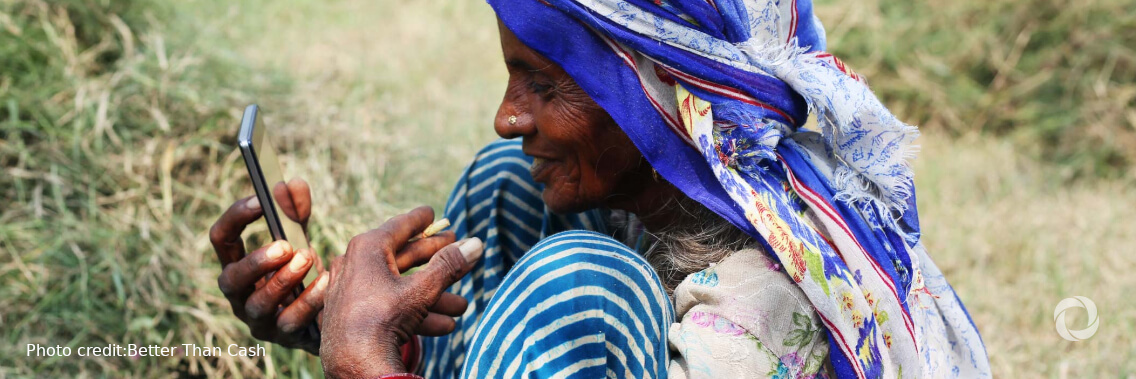
FAO already uses mobile money transfers. One example is in Somalia where its Mobile Money and Livelihood Assistance platform delivers cash directly to beneficiaries’ cell phones, allowing farming families to purchase goods and services they need most in their local markets. Recipients are registered with the use of biometric data, which is evolving into a voice-recognition system, making this a safer, cheaper, and better-targeted means of conveyance than physical delivery and distribution.
Joining the Better Than Cash Alliance represents a step-change in scaling up such efforts on all levels, and participating in an exchange on best practices in a fast-moving sector.
The new partnership holds significant promise, as FAO has already reached more than 19 million people in 58 countries with cash and voucher programmes. In 2019 alone, FAO transferred almost $50 million – a bit under half in digital form – to 2.8 million beneficiaries in 29 countries.
As FAO’s field activities – aiming to strengthen the resilience of rural livelihoods to shocks by supporting productive investment in agriculture – tend to engage vulnerable people living in rural dispersed and remote areas with limited infrastructure access, its digitalization experiences and needs will complement those of other Alliance members.
On the ground
Scaling up digitized financial transfers enables direct contact to beneficiaries, many of whom have no bank account, and avoids the need for physical cash distribution, which entailed transporting banknotes to hard-to-reach areas – especially amid conflicts or in the wake of natural disasters – and engaging agents to act as distributors.
Today, digital payment options continue to grow, accelerating our ability to reach the unbanked while mitigating financial risks. Building broader digital networks allows broader participation, thus intensifying the pace of adoption and transformation of local economies.
Compared with traditional rural finance systems reliant on trust and authority, e-money can bolster programmes aimed at fostering opportunities for women and youth. At the same time, it is quite adaptable to diverse existing community savings and loans institutions such as tontines or hawala, he added.
FAO’s showcase project in Somalia proved invaluable when the COVID-19 emergency disrupted movement. Since March 2020, FAO has transferred the equivalent of $38.1 million to over 187 000 households, providing them the means to acquire food and agricultural inputs to support local food security and supply.
In Mozambique, in 2020, FAO deployed an adapted version of the ecosystem initially developed in Somalia to move an existing voucher system onto a 100-percent digital foundation. Beneficiaries, in particular targeted women farmers, use the vouchers to access seeds and fertilizers.
Digitization adds incentives to suppliers to adapt to the technology, helping consolidate system-wide digital literacy and protect beneficiaries’ personal identifiable information, which in turn can enhance factors of production and marketing opportunities for broader communities. The process can take time but adoption is rapid, and pandemic containment measures appear to have accelerated recognition of the merits of digitization.