
Add us as your preferred source on Google to see more of our content in Search.
 Add to Preferred Sources
New data published by the International Organization for Migration (IOM) this week confirms a nearly three-fourths decline in-migration from the East and Horn of Africa regions towards Gulf Council Countries during 2020.
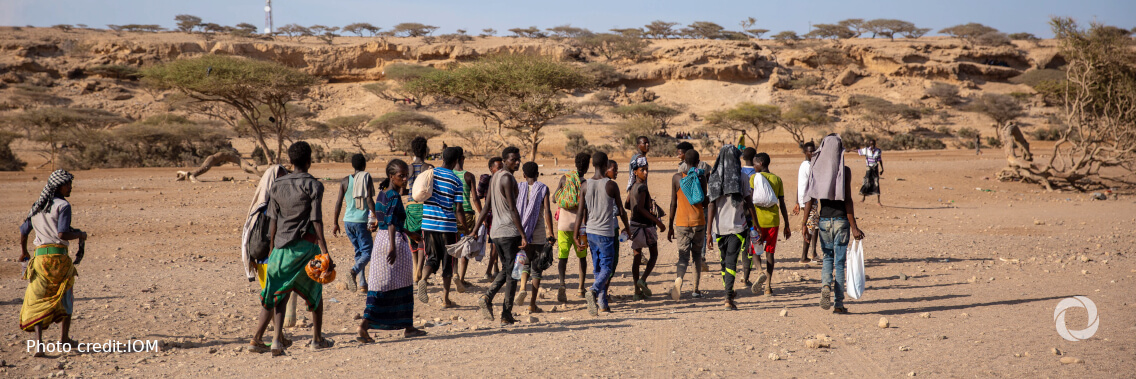
At the Second Scientific Conference on Migration and Displacement conference IOM organized herewith the eight-nation Intergovernmental Authority on Development (IGAD) and the German Corporation for International Cooperation (GIZ), a new study noted that COVID-19 led to a 73 percent drop in migrants from the Horn of Africa travelling to the Gulf countries through Yemen.
These findings are significant, especially because African migration through Yemen to the Gulf of Arabia has been high for the past four years—despite security risks in Yemen, which migrants from the region must cross to reach the Kingdom of Saudi Arabia and beyond. Despite reduced arrivals in 2020—due in part to COVID-19 related restrictions—risks increased with more detention, exploitation, and forced transfers.
Data released by IOM show that the number of migrants crossing via Yemen from the Horn dropped from a high of 138,213 in 2019 to 37,537 in 2020. Forced returns from the Kingdom of Saudi Arabia were also significantly reduced, passing from nearly 121,000 Ethiopian migrants in 2019 to 37,000 in 2020.
“We need to craft policies and programmes informed by evidence. I hope this conference will help expand the evidence base of the benefits of migration, promote an African narrative on migration, and help shine a light on good practices that can help policymakers and practitioners for better migration management,” added Mohammed Abdiker, IOM Regional Director for East and Horn of Africa.
IOM also is working with and supporting IGAD countries to develop and implement integrated regional approaches to responding to the needs of migrants and other vulnerable mobile groups. The goal also is to harness the benefits of migration and to reduce the negative impacts of COVID-19, as nations across the region grapple with the economic blow of the pandemic. These include millions of lost jobs and closed businesses and a decline in cash remittances sent from migrant workers abroad, which support millions across the region.
The World Bank projects that COVID-19 remittance flows to low- and middle-income countries will decline by around 14 percent by 2021 compared to pre-COVID-19 levels. This is expected to have severe financial and social impacts on IGAD countries, including increased poverty and a reduction in access to basic services such as healthcare and education.
Migrants, including IDPs and refugees in the region, are also unable to access medical treatment for COVID-19 and Personal Protective Equipment. They are also at risk of discrimination, stigma, and xenophobia.
Moreover, COVID-19 border closures, which have left thousands of workers stranded, left many workers from the IGAD countries facing exploitation from people smugglers when trying to get home. As of September 2020, some 3,000 migrants were stranded within the East and Horn of Africa, in addition to another tens of thousands of other migrants from the region stranded in Yemen.