
Add us as your preferred source on Google to see more of our content in Search.
 Add to Preferred Sources
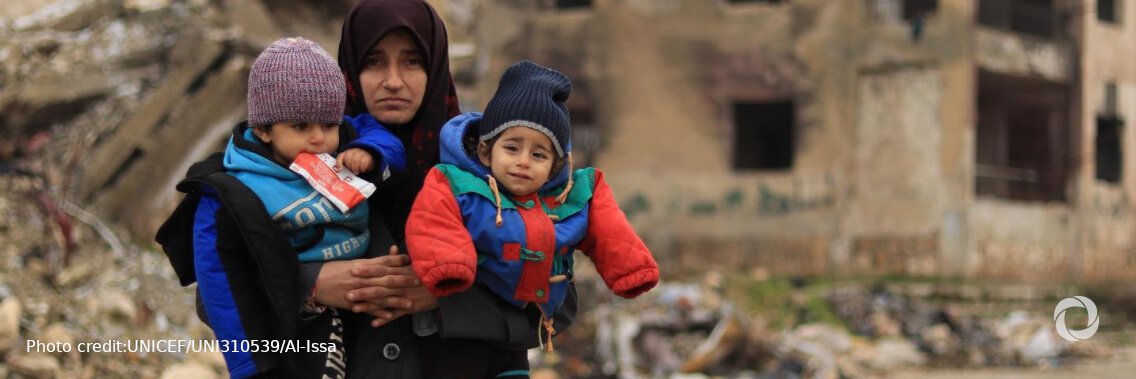
As Syria marks its tenth year of conflict, 13.4 million people – 75% of the country’s population – are in need of urgent humanitarian assistance, a 20% increase from 2020. The cost of the basic food basket has increased by 250% in the last year and is beyond the reach of many families.
Action Against Hunger, one of the few international organizations that has been able to work inside Syria since the beginning of the conflict, calls for action to break the vicious cycle of mass hunger caused by continued violence. While emergency assistance is still desperately needed, it is not sufficient to meet the recovery needs of the population.
After 10 years of conflict and hunger, here are the key facts:
- 13.4 million people are in need of humanitarian aid. That’s twice as many as in 2011.
- 9.3 million people are food insecure, meaning there is no available food or no sustained access to healthy food. 2.2 million more people are at imminent risk of becoming food insecure.
- The cost of a basic food basket, which includes commodities such as rice, bread, wheat, lentils, sugar, and vegetable oil, has increased by 250%.
- 6.1 million people are internally displaced and five million refugees have fled the country. More than 90% of refugees are in the neighboring countries of Turkey, Lebanon, Jordan, and Iraq.
“Many people have reduced the number of meals they eat to two a day, buy food on credit, or have sold their livestock and belongings to raise money to feed themselves. It’s a massive phenomenon in the country, especially in Idlib and Aleppo in the northwest, which shows the close links between war and hunger,” explains Nasr Muflahi, Country Director of Action Against Hunger in Syria.
With the country’s currency, the Syrian pound, plummeting in value and inflation soaring, the population – exhausted after a decade of conflict – is developing extreme coping mechanisms.
“We are seeing many children dropping out of school to work and a dangerous increase in child marriage,” Muflahi adds.
Access to food is cited by the population as the number one need at the moment, closely followed by employment, livelihoods, and shelter. The fuel shortage crisis further exacerbates the humanitarian crisis: “the running costs of agricultural machinery are becoming unaffordable for many farmers and laborers are having to reduce working hours to line up for hours at gas stations.”
Syrian women will be decisive in the country’s future
“An end to the Syria crisis will only be possible with the full and active inclusion and participation of millions of the country’s women,” says Eiman Zarrug, a member of our team in Syria. “They have suffered through conflict and hunger, but remain resilient and determined, despite enduring ten years of war and countless risks to their safety.”
“Syria’s women have lost loved ones and livelihoods, time and time again, yet do not give up,” continues Zarrug. “They become the breadwinners, find ways to work, earn an income, and ensure they take care of their families at the same time. An end to this crisis is only possible if women are at the heart of peace processes.”
Syrian women are also more likely to suffer from hunger and malnutrition than their male counterparts. Anemia among women and malnutrition among pregnant women are among the issues of greatest concern to Action Against Hunger.
“More than half a million pregnant women do not have access to adequate health services, and anemia that results from lack of micronutrients will have a major impact on their babies’ health at birth. Many of these consequences will be irreversible, limiting their children’s ability to learn and grow,” explains Chiara Saccardi, Head of Action Against Hunger for the Middle East Region.
The needs in the country today are radically different from those of a decade ago. Action Against Hunger is deploying and funding recovery programs to restore water networks, schools, and hospitals and to focus on solutions to improve food production.