
Add us as your preferred source on Google to see more of our content in Search.
 Add to Preferred Sources
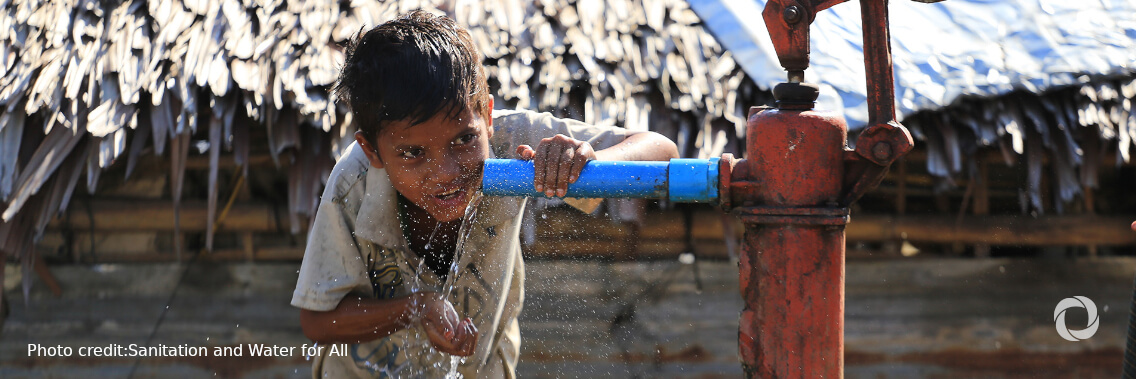
Across Africa, refugees, especially women face a similar problem. The lack of reliable water supplies threatens children’s health particularly and costs women essential time they could be using to earn money, leading to increased levels of poverty.
According to standards set by UNHCR, the UN Refugee Agency, each refugee should have access to at least 20 litres of water per day. UNHCR and its partners are striving to improve the situation for refugees such as Josephine.
In 2016, the agency worked with partners to introduce a piped water system to replace the hand pump, installing three taps in Josephine’s section of the Tongogara camp that opened for two hours each day. The new system helped improve the quality and quantity of the water, however, refugees found there was still a shortage.
Last year, a project funded by the African Development Bank (AfDB) led to the installation of new high-capacity boreholes and an expanded and better engineered piped water system, known as a water reticulation system, that runs on solar power and can deliver piped water to all 10 sections in the camp. The water project has also benefitted the residents of the surrounding host communities in Chipinge district, where the camp is located.
The AfDB-funded initiative – Innovative Solutions to Support Livelihoods of Vulnerable Communities – which includes the water reticulation systems, is part of a broader strategy to enhance the economic and technical capacity of refugees and their host communities.
The project has made available public lighting, potable water, and a vibrant irrigation scheme, among other innovations. Refugees are now working in newly allocated plots to produce food for their families.
“We are continually improving our search for groundwater by drilling more high-yielding boreholes and powering them with solar energy,” said Nosakhare Boadi, UNHCR’s Water and Sanitation officer based in Harare.
Groundwater is more sustainable and less vulnerable to pollution than surface water sources and solar power is more eco-friendly as well as cost-effective.
“Eventually, water supply will be more reliable as pumping will no longer be dependent on the national grid or diesel generators,” he added.