

Add us as your preferred source on Google to see more of our content in Search.
 Add to Preferred Sources
Almost half of Australia’s AU$4 billion budget for development aid focused on three Sustainable Development Goals (SDG) in 2019-2020: health, education, and poverty, according to a report recently released by the country’s Department of Foreign Affairs and Trade.
Health and wellbeing, the third of the 17 SDGs received the most aid, almost AU$700 million. This was followed by AU$615 million for SDG 4 – quality education, and AU$547 for SDG 1 – poverty. Next in line came SDG 16 – peace, justice, and strong institutions receiving over AU$460 million followed by SDG 13 which had an allocation of AU$305 million.
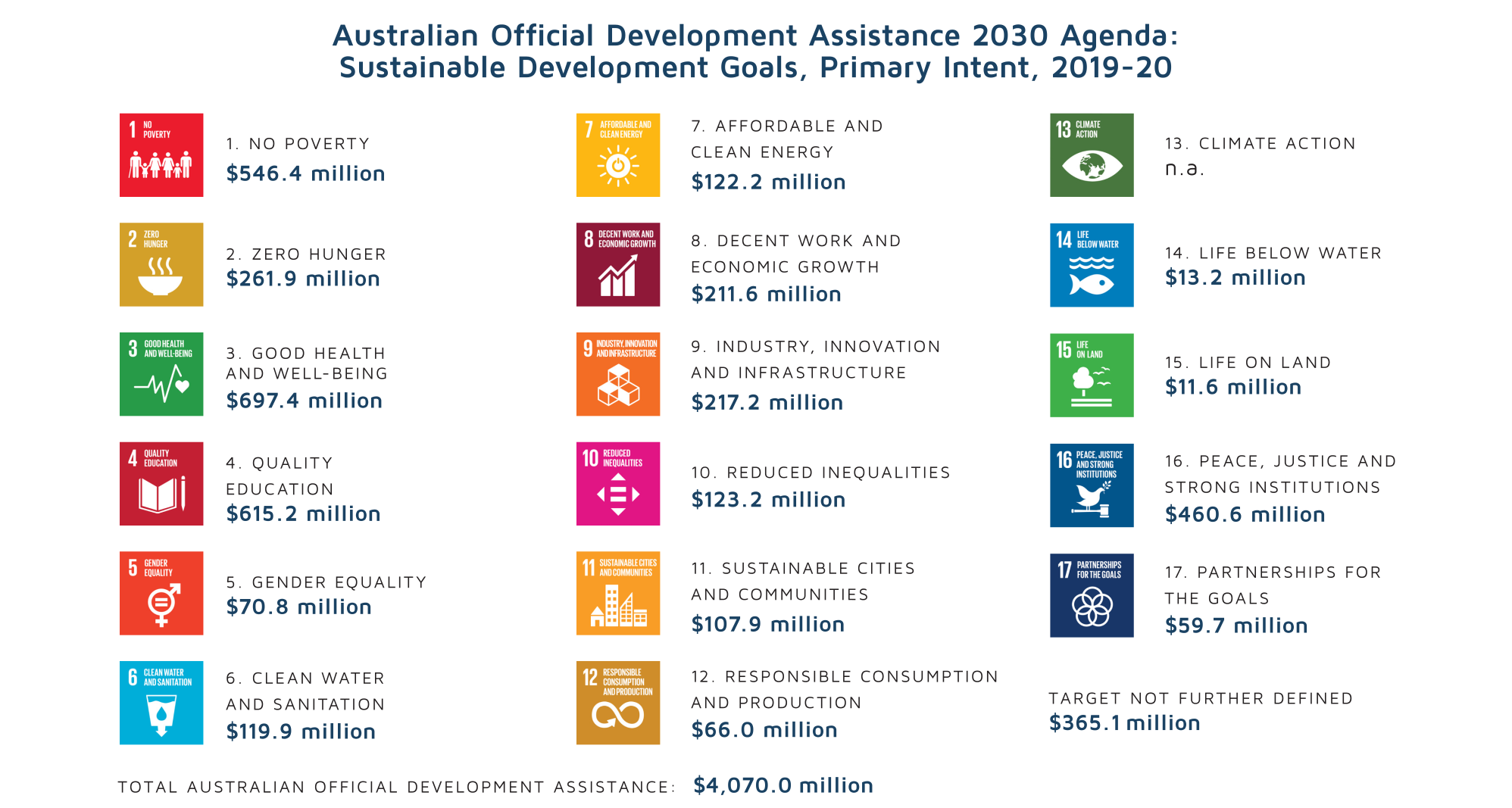
This move has been seen as something of a U-turn in Australia’s aid priorities as in 2019 the country announced that it would cut aid for health in order to increase funds for infrastructure projects in the Pacific. Obviously, the shift in focus to spending on health issues mostly stems from the increased needs generated by the COVID-19 pandemic.
??’s international development program has been transformed to stand with our neighbours in the wake of #COVID19. Through our #PartnershipsForRecovery strategy, we are helping to strengthen health security, support stability and stimulate economic recovery in our region ⬇️ https://t.co/3OTpD5qtYd
— DFAT?? (@dfat) March 12, 2021
“Australia’s international development program has been transformed to stand with our neighbours in the wake of COVID-19. Through our Partnership for Recovery strategy, we are helping to strengthen health security, support stability, and stimulate economic recovery in our region,” the Department of Foreign Affairs and Trade wrote on its Twitter account.
In terms of the ways in which aid is channeled, Australia’s funds were allocated via multilateral organizations (40%), commercial suppliers (23%), non-governmental organizations (11%), Australian public sector organizations (7%), developing countries governments (6%), universities and academic institutions (6%) and other partners (6%).
In 2019-2020, Australia’s development aid fell to its lowest, decreasing from AU$5.5 million in 2013-2014 to AU$4 billion. Thus, the country has failed to meet the UN target for healthy countries of 70 cents of foreign aid for every $100 earned, with Australia achieving only some 21 cents.