
Add us as your preferred source on Google to see more of our content in Search.
 Add to Preferred Sources
The UK has cut humanitarian assistance for Rohingya refugees by over 40% with the development assistance announced by the UK Foreign, Commonwealth and Development Office (FCDO) falling from £47.5 million in 2020 to £27.6 million.
“Since 2017, the UK has contributed over £321 million to the Rohingya response and we remain a leading donor to the Rohingya crisis response in Bangladesh,” read an FCDO press release announcing the cut decision.
Muslim Rohingya have fled Myanmar, which is a predominantly Buddhist country, to escape a deadly crackdown by the army. Bangladesh is said to be sheltering about 885,000 Rohingya refugees in 34 overcrowded camps although some estimates put this figure closer to 1 million.
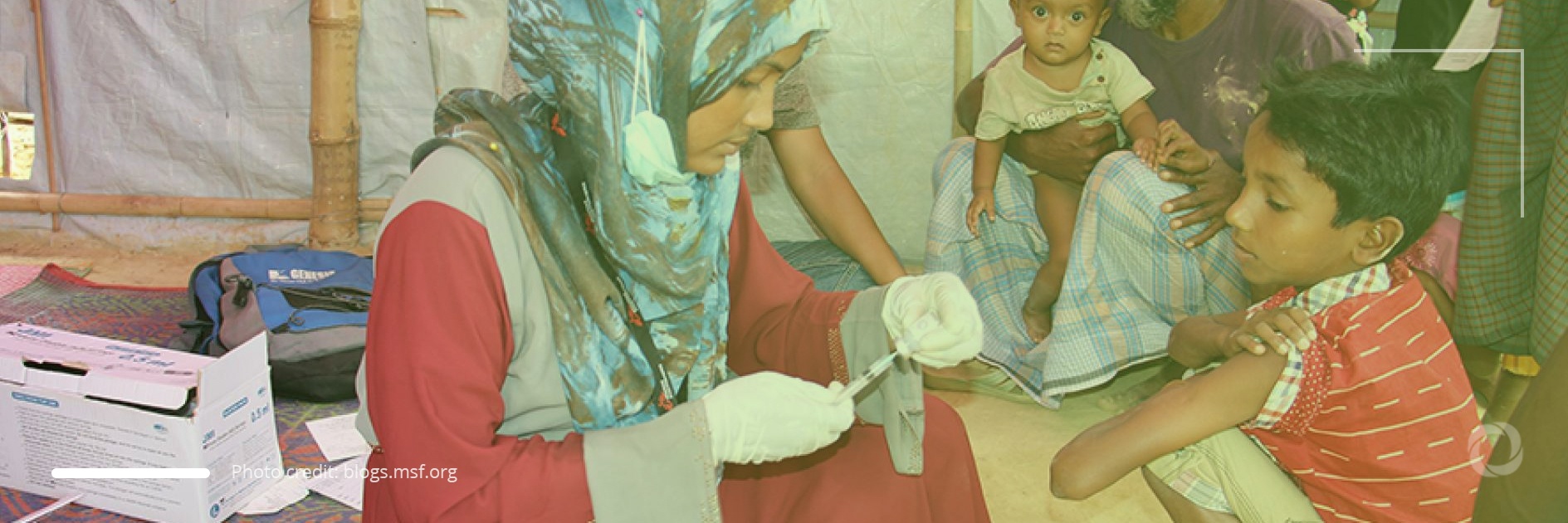
The decision to cut aid comes at a rather tense time for Rohingya refugees. On 20 May the Bangladeshi authorities imposed a full lockdown in five camps as the number of confirmed coronavirus cases among the refugees began to climb, reaching 992 as of 24 May.
“No one will be allowed to go out or enter these camps during the lockdown days. Only people providing emergency services which include food, medicine, nutrition, sanitation, and gas supply will be allowed to move in during this time,” said Abu Toha Bhuyan, health sector coordinator of the Refugee Relief and Repatriation Commission.
Against this background, humanitarian aid workers and practitioners have slated the UK‘s decision.
“This decision will have catastrophic consequences for some of the world’s most desperate and vulnerable people. The UK is stepping back when they need us to step up,” Kirsty McNeill, Save the Children’s Executive Director of Policy, Advocacy and Campaigns told The Guardian. “[They] now live in dangerous and cramped refugee camps struggling to contain COVID-19. There have been more than 80 fires so far this year in what is the world’s largest refugee settlement [around Cox’s Bazar], with a population density six times that of New York City,” she added.
Meanwhile, the UN has appealed for US$943 million to fund urgent assistance to cope with the Rohingya humanitarian crisis.
“Bangladesh finds itself in a region particularly affected by COVID-19 and therefore the needs are even more urgent than in the past,” said Filippo Grandi, the UN High Commissioner, at a virtual press conference.
The UK’s decision to cut development aid (ODA) aligns with the recent strategy of the British government under which the country has slashed ODA from 0.7% of its Gross Domestic Income to 0.5%. British officials explained the decision was due to the COVID-19 pandemic-driven crisis and they pledged to return to the previous level of funding when the situation improved. Prior to this, the British government also decided to cut assistance to Yemen and Syria where the lives of millions depend on foreign aid.