
Add us as your preferred source on Google to see more of our content in Search.
 Add to Preferred Sources
The European Bank for Reconstruction and Development will from the end of 2022 align all its activities with the goals of the Paris Agreement, aiming to accelerate decarbonization across its regions, supporting them to reach net-zero emissions by mid-century.
The decision was approved by the EBRD’s Board of Governors at the Bank’s Annual Meeting 2021. In 2020 the EBRD had already committed to raising the proportion of its green finance – investments that not only align with but actively promote the green transition – to more than 50 percent by 2025.
“Holding the increase in the global average temperature to well below 2°C is a global imperative to safeguard our planet and protect ourselves from climate-related risks. With commitment, the EBRD will be at the forefront among multilateral institutions to ensure that our work is directed to helping countries achieve net zero by the middle of the century. By way of its multilateral shareholding and private sector focus, the EBRD will help its countries of operations manage the political and economic challenges related to such an unprecedented transition. I truly welcome the push from all our shareholders to accelerate on this shared agenda,” said EBRD President Odile Renaud-Basso.
The changes will drive all future strategy, operations, and client engagement. Using a methodology developed jointly with the other multilateral development banks, projects will be screened to ensure that they are consistent with long-term progress towards low-carbon development and that physical climate risks are addressed. Policy support will develop green energy capacity-building, and encourage a just transition that supports those impacted by the transition away from fossil fuel dependency.
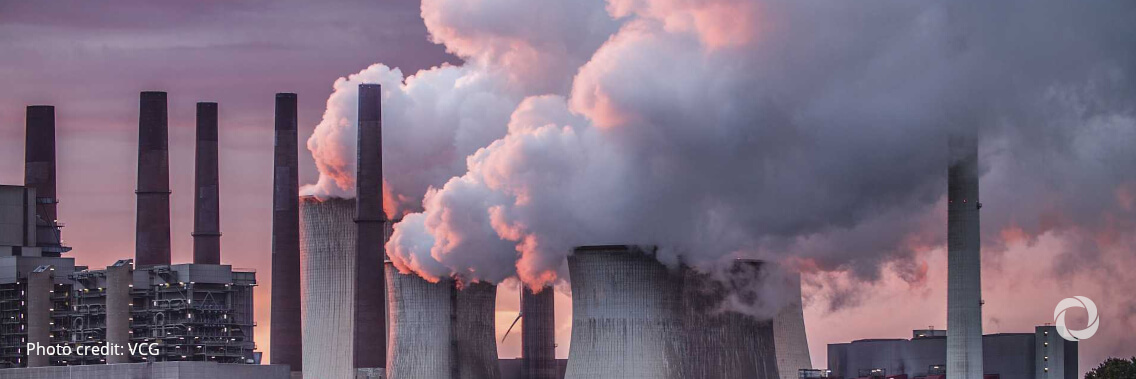
The EBRD, created 30 years ago to help formerly communist economies adapt to market conditions, works in many countries that face the toughest challenges in reducing carbon emissions, or are vulnerable to climate change. EBRD countries are 35 percent more carbon-intensive than the world average, and highly polluting coal accounts for more than 40 percent of the primary energy supply in seven EBRD countries.
Yet the EBRD regions are well-positioned to benefit from the fast-growing transition to renewables, thereby reducing their reliance on fossil fuels, with excellent resource and growing capacity in wind, solar, and hydropower. The Bank will therefore increase financing for renewable energy and associated energy systems.
Designing a way out of economies built around fossil fuels within three decades will require intensive planning, including securing the social conditions for a sustainable and just transition. The EBRD will also significantly scale up policy advice and institutional capacity building for low carbon and climate-resilient strategies, promoting and supporting ambitious action in, and with, its countries of operations.
The EBRD is committed to supporting economies to be digital, equal, and sustainable and will invest in each of these areas as it helps communities affected by the closure of coal mines and other carbon-intensive industries.
“The low carbon transition requires the world economy to move in less than 30 years from a more than 80 percent reliance on fossil fuels to a net-zero model. This is a challenge that is unprecedented in economic history. Similarly, the associated opportunity is enormous,” said the EBRD’s First Vice-President Jürgen Rigterink.
“A clear commitment to the goals of the Paris Agreement, whether by country or company, creates the enabling environment to unleash innovation and investment, creating high-quality jobs, opening new markets, diversifying economies, creating a cleaner, more liveable communities, and boosting sustainable growth. The goal of the EBRD is to support its countries of operation in creating that environment, and innovators and investors in realizing those goals,” Harry Boyd-Carpenter, the EBRD’s Managing Director, Green Economy and Climate Action, added.
The EBRD’s country expertise, private-sector focus, and mandate for economic transition give it a critical role to play in advising countries and clients on how to frame their individual climate ambitions through Nationally Determined Contributions (NDCs), Long-Term Strategies (LTSs), and sector-specific low carbon pathways.