

Supply of IT Equipment and Software - Armenia
Last update: 1 day ago
Supply of IT Equipment and Software - Armenia
Last update: Nov 2, 2026

Details

Application deadline:
Dec 2, 2026
Location:
Armenia
Armenia
Contract type:
Goods
Status:
Open
Sectors:
ICT & Telecommunications
Languages:
English
Contracting authority:
Contracting authority type:
Nonprofit institute / think tank
Eligibility:
Organisation
Budget:
N/A
Date posted:
Sep 25, 2026

Associated Awards

There are no awards associated with this tender.

Project cycle timeline

STAGES
EARLY INTELLIGENCE
PROCUREMENT
IMPLEMENTATION
Cancelled
Status
Programming
Formulation
Approval
Forecast
Open
Closed
Shortlisted
Awarded
Evaluation

Summary

AI generated
Supply and deliver IT equipment and software to three public-sector recipients in Armenia under the Eastern Partnership Regional Road Safety Observatory project. The contract supports improved road safety data collection, management and analysis capacit...
  • Eligible applicants: Only duly registered legal entities may apply. The organization must be authorized to supply IT equipment and software.
  • Geographic and legal eligibility: The tenderer must be registered in an eligible country under the EU's NDICI framework and comply with the applicable nationality rules under Regulation (EU) 2021/947 and the relevant Financial Regulation.
  • Sector activity: The organization must demonstrate activity and experience in the supply of IT equipment and software.<...

This summary is generated by AI and may contain errors. Please verify key details against the original description and attachments.

Full summary is available with certain plans.

Register and select a membership plan to access this feature.

Unlock full summary

Description

The Eastern Partnership Declaration on Road Safety[1], endorsed in April 2018 in Ljubljana, sets the target of reducing the number of fatal and serious road traffic injuries by 50% from 2020 to 2030. To reach these goals, the Eastern Partnership Transport Ministerial Meeting on 6 June 2019 in Luxemburg endorsed a joint declaration[2], announcing that the countries will work together towards the establishment of a Regional Eastern Partnership Road Safety Observatory (EaP RSO). The countries are also party to the UN Resolution on Improving Global Road Safety (UN RES/74/299) which encourages member states to leverage the opportunities of “regional road safety observatories, to harmonize and make road safety data available and comparable.”

The Eastern Partnership Road Safety Observatory (EaP RSO), is being supported by the European Union financed under the Neighborhood, Development and International Cooperation Instrument (NDICI-Global Europe): EU Grant Contract #NDICI-GEO-NEAR/2023 / 451-203 “Supporting the Eastern Partnership Regional Road Safety Observatory” (EaP RSO).   The EaP RSO is hosted by Georgia, as selected competitively among EaP bidder countries by the European Commission and confirmed to the Government of Georgia in May 2021. The Secretariat of the new EaP RSO is established in Tbilisi, Georgia in the ISET Policy Institute, and is being led the ISET Policy Institute and by EASST, the Eastern Alliance for Safe & Sustainable Transport.

EaP RSO is a joint initiative of the EU and of the countries in the Eastern European Neighborhood who are members of the Eastern Partnership Transport Panel, united with the common goal of advancing quickly and efficiently towards the reduction of road traffic fatal and non-fatal injuries. The Technical Secretariat of the EaP RSO has now been established in Georgia housed within ISET Policy Institute and working with EASST. The next steps are the development and implementation of a program of work with the member countries. EaP RSO Partner countries involved in the EaP RSO are Armenia, Azerbaijan, Georgia, Moldova, and Ukraine.

The EaP RSO will be instrumental in achieving this goal by fostering the sharing of good practices and interchanging data to help create a solid body of evidence-based practice. It will work to develop capacity in data collection, data reliability, and improvements in the analysis and practical application of data essential for road safety policy development. The Observatory will house some country-level data, but more importantly, it will act as a catalytic force to develop or strengthen national road safety data collection, management, and analysis, including data on key road risks not derived from road crashes (such as seat belt wearing rates or drink driving).

To date EaP partner countries have agreed: to work jointly under the framework of the EaP RSO; upon a governance structure that includes different levels of interaction between countries (political, technical, etc.) including working groups and National Data Coordinators (NDCs); to have a four-year time frame with data sharing; on joint interventions and capacity building activities; on EaP RSO outputs such as a website and regular reports; and to have annual data submission by member countries. Supported by the World Bank, work has been done to develop the branding and draft design for an EaP RSO website, assess the current state of road safety data in EaP member countries and opportunities for improvement, and identify civil society organisations (CSOs) working in the region with a direct interest in road safety.

Link to original source: https://eaprso.org/

Contact Details • 1

Name:
Officer

Market Intelligence

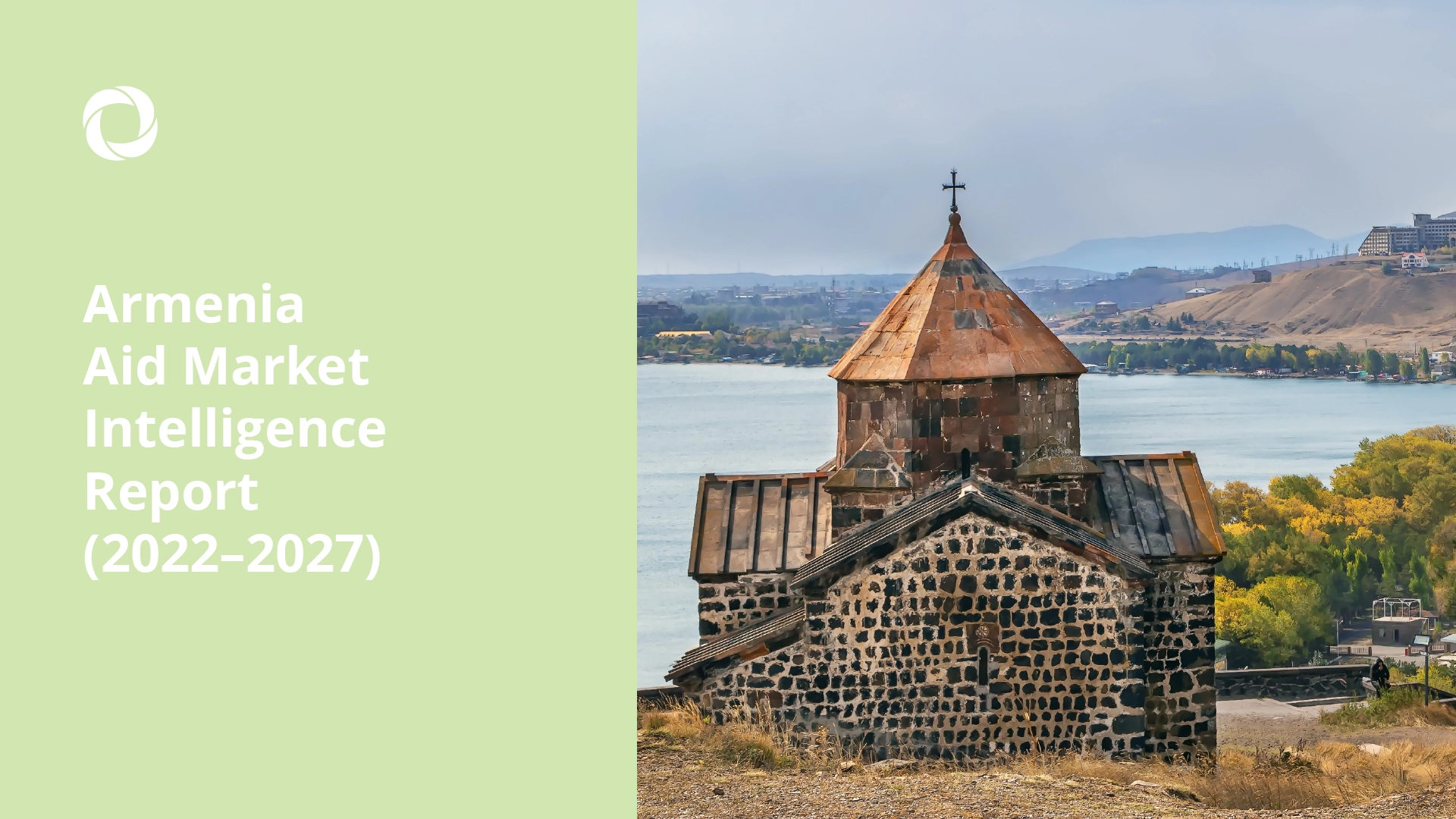
Discover the Armenia market report

Explore key market trends, active sectors, major donors, and business opportunities across the development landscape.

View report
tender Background

About the Funding Agency

EuropeAid is an agency responsible for designing European international cooperation and development policy and delivering aid worldwide. Its purpose is to aid in the reduction and eventual abolition of poverty in developing nations by fostering sustainable development, democracy, peace and security. With its partner nations, EuropeAid walks alongside them on their journey to sustainable development, continually adapting its help to their changing requirements. EuropeAid is also concerned with increasing the value and impact of aid money by ensuring that help is provided appropriately.


Under the donor EC - European Commission, DevelopmentAid covers the following entities:


Departments / Directorate Generals

  • AGRI - Agriculture & Rural Development
  • BUDG - Budget
  • CLIMA - Climate Action
  • COMM - Communication
  • CNECT – Communications Networks, Content & Technology (formerly Digital Agenda)
  • COMP - Competition
  • ECFIN - Economic & Financial Affairs
  • EAC - Education & Culture
  • EMPL - Employment, Social Affairs & Inclusion
  • ENER - Energy
  • ENV - Environment
  • ESTAT - Eurostat
  • FISMA – Financial Stability, Financial Services & Capital Markets Union
  • SANTE - Health & Food Safety
  • ECHO - Humanitarian Aid & Civil Protection
  • HR - Human Resources & Security
  • DIGIT - Informatics
  • GROW - Internal Market, Industry, Entrepreneurship & SMEs
  • DEVCO – International Cooperation & Development - EUROPEAID
  • SCIC - Interpretation
  • JRC - Joint Research Centre
  • JUST - Justice & Consumers
  • MARE - Maritime Affairs & Fisheries
  • HOME - Migration & Home Affairs
  • MOVE - Mobility & Transport
  • NEAR – Neighbourhood & Enlargement Negotiations
  • REGIO - Regional & Urban Policy
  • RTD - Research & Innovation
  • SG – Secretariat-General - no procurement opportunities available
  • FPI – Service for Foreign Policy Instruments
  • TAXUD - Taxation & Customs Union
  • TRADE - Trade
  • DGT - Translation


Agencies

  • European Centre for Disease Prevention and Control
  • Eurojust
  • European Food Safety Authority (EFSA)
  • European Chemicals Agency (ECHA)
  • European GNSS Agency (GSA)
  • European Union Agency for Network and Information Security
  • The European Joint Undertaking for ITER and the Development of Fusion Energy ("Fusion for Energy")
  • European Union Agency for Fundamental Rights
  • European Stability Mechanism (ESM)
  • Consumers, Health, Agriculture and Food Executive Agency (CHAFEA), Health and Food Safety Unit
  • European Maritime Safety Agency (EMSA)
  • European Fisheries Control Agency
  • Single Resolution Board
  • Office of the Body of European Regulators for Electronic Communications (BEREC Office)
  • The Executive Agency for Small and Medium-sized Enterprises (EASME)
  • European Asylum Support Office
  • European Union Intellectual Property Office
  • European Union Agency for Railways
  • European Environment Agency
  • European Agency for the operational management of large-scale IT systems in the area of freedom, security and justice (eu-LISA)
  • Education, Audiovisual and Culture Executive Agency (EACEA)
  • European Defence Agency
  • EU Grant Programmes


EU Bodies

  • European Parliament
  • Council of the European union
  • Court of Justice of the European Union
  • European Court of Auditors
  • European Economic and Social Committee
  • European Committee of the Regions
  • Publications office of the European Union
  • European Patent Office
  • European External Action Service
  • Agency for the Cooperation of Energy Regulators
  • Energy Community Secretariat

About the Sectors

ICT & Telecommunications

Features information and communication technologies, digital systems, and telecommunications infrastructure and services.



Key areas:
  • ICT systems, software, and digital solutions
  • Telecommunications networks and services
  • Digitalization, data, and communication tools

Locations

Armenia

Armenia has prioritised transport corridor upgrades, renewable energy expansion and digital infrastructure to enhance regional integration and competitiveness. Investments aim to strengthen Armenia’s role as a transit and services economy between Europe and Asia. The government has implemented regulatory reforms and sought foreign direct investment to modernise logistics and energy systems. Continued institutional strengthening and diversification beyond remittances and mining remain central to long-term resilience.

Nr. of tenders: 10747
Nr. of grants: 3043
Nr. of donors: 539
Nr. of jobs: 49
Frequently Asked Questions
Haven't found what you're looking for? Get in touch with us using our contact page.
Where can I find international tenders?
DevelopmentAid aggregates international tenders from major donors, development banks, UN agencies and governments in one searchable platform.
Who can apply for tenders listed on DevelopmentAid?
Tenders are typically open to consulting firms, NGOs, companies, and sometimes individual consultants, depending on the eligibility criteria set by the donor.
How do I apply for a tender?
DevelopmentAid does not submit tenders on your behalf. Each tender listing includes official documents and instructions explaining where and how to apply directly to the contracting authority.
What documents are usually required for a tender application?
Most tenders require a technical proposal, financial offer, company profile, references, and legal documents. Exact requirements are listed in each tender notice.