

Reconstruction Credit Institute /Kreditanstalt fur Wiederaufbau (HQ)

Fluthilfe und Prävention von Klimaschäden / Flood relief and prevention of climate damage

Last update: Sep 3, 2019 Last update: Sep 3, 2019

Details

Location:Peru
Peru
Category:Goods, Works, Consulting services, Non-consulting services
Status:Approval
Sectors:Education, Training & Capacity Building, Environment & Climate, Civil Engineering, Water, Sanitation & Hygiene, Vehicles, ICT & Telecommunications, Laboratory & Measurement, Disaster Reduction & Humanitarian Relief
Contracting authority:
Contracting authority type:Government / Public Sector
Eligibility:Unknown
Budget: EUR 10,000,000
Date posted: Aug 21, 2018

Attachments 2

Associated Awards

Project cycle timeline

STAGES
EARLY INTELLIGENCE
PROCUREMENT
IMPLEMENTATION
Cancelled
Status
Programming
Formulation
Approval
Forecast
Open
Closed
Shortlisted
Awarded
Evaluation

Description

Fluthilfe und Prävention von Klimaschäden / Flood relief and prevention of climate damage
Want to unlock full information?
Member-only information. Become a member to access this information. Procurement notices from over 850+ sources of tenders and grants published by donors, development banks, foundations, and international financial institutions (IFIs) are available here.
Similar tenders
tender Background

About the Funding Agency

Kreditanstalt fur Wiederaufbau (KfW) is a financial institution founded in 1948 in Frankfurt am Main, Germany. Since 1948, it has worked on behalf of the federal and state governments to improve economic, social and ecological living conditions worldwide. Over 6500 people work at KfW.

KfW is ranked as one of the leading global promotional banks and the third largest bank in Germany in terms of total assets. As a responsible bank, KfW supports people, countries and institutions that think ahead and thereby advance society. With this profile, KfW clearly differs from commercial banks. KfW’s duty is to execute public contracts, such as promoting medium-sized companies and start-ups and grant investment loans to small and medium-sized companies as well as financing infrastructure projects, housing construction, energy-saving technologies and municipal infrastructure. Further fields of activity include education loans and film financing and KfW supports environmental and climate protection projects across all fields of activity. KfW offers a wide range of construction, housing and energy conservation programs that are used to finance residential real estate investments. KfW supports municipalities, municipal companies and institutions in financing infrastructure activities such as building sports halls, rehabilitating sewers or developing local public transport. KfW also finances training and the further education of schoolchildren, students and specialists in this area and also offers student loans and grants for professional training.

KfW focus areas: Financing, Loans, Environment, Poverty Reduction, Socio-Economic Development, Education & Training, Energy, etc.

About the Sectors

Education, Training & Capacity Building

Covers formal and informal education, training, and capacity-building activities that develop knowledge, skills, and institutional capabilities across all age groups.


Key areas:
  • Education systems and learning programmes
  • Vocational training and skills development
  • Capacity building and professional development

Environment & Climate

Focuses on protecting natural ecosystems, promoting sustainable resource management, enhancing climate resilience, and mitigating the impacts of climate change through conservation, adaptation, and low-carbon initiatives.
Key areas:
  • Environmental protection and conservation
  • Natural resource and ecosystem management
  • Climate change and environmental resilience

Locations

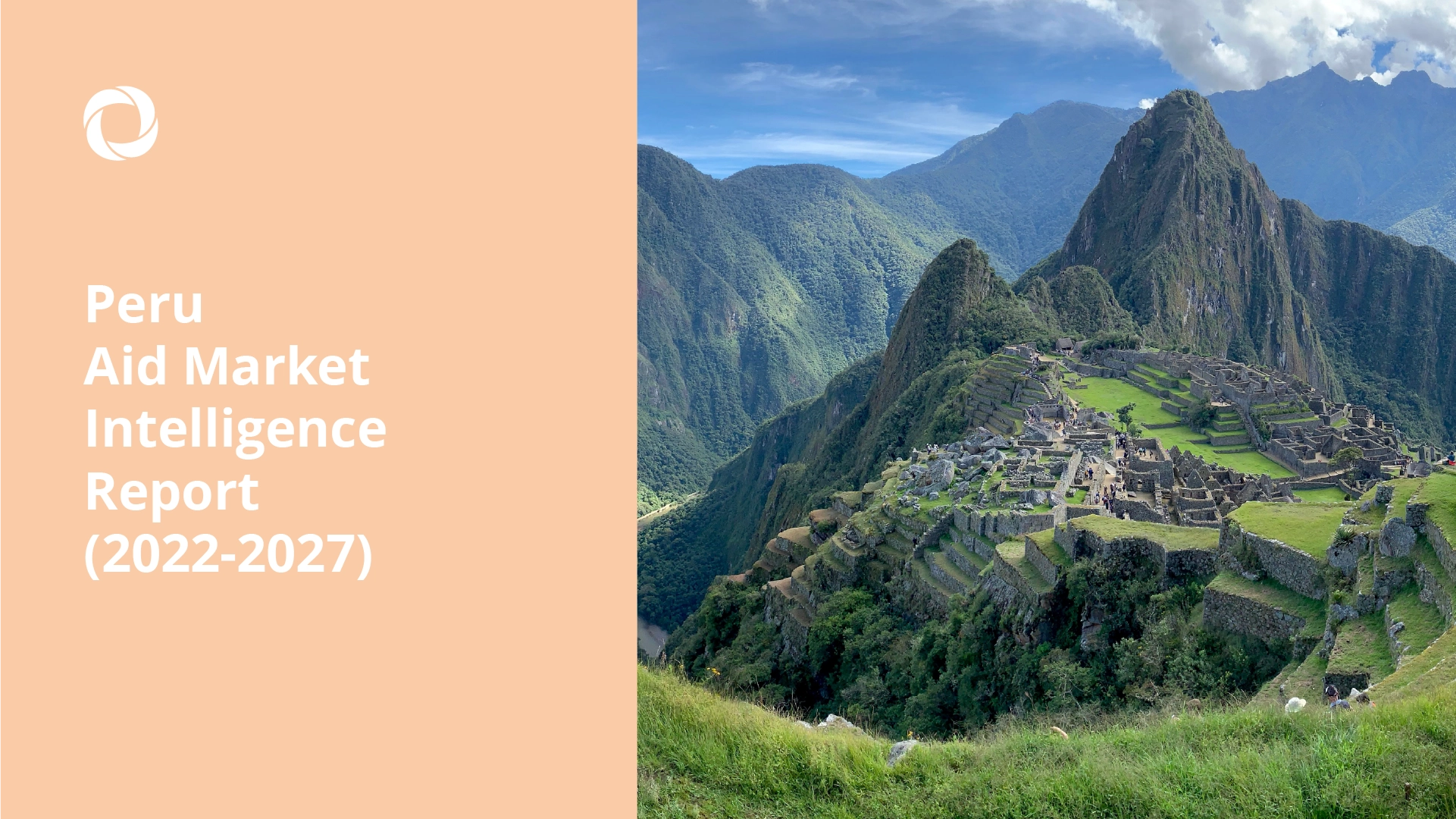
Peru

Peru prioritizes highway networks, mining-related infrastructure, port upgrades, metro systems, and renewable energy expansion. Public-private partnerships are widely used to deliver transport and logistics projects. Financing includes national budgets, pension-backed investment funds, multilateral institutions, and foreign capital. Political instability and regulatory processes can affect implementation timelines.

Nr. of tenders: 16610
Nr. of grants: 2330
Nr. of donors: 526
Nr. of jobs: 43
Frequently Asked Questions
Haven't found what you're looking for? Get in touch with us using our contact page.
Where can I find international tenders?
DevelopmentAid aggregates international tenders from major donors, development banks, UN agencies and governments in one searchable platform.
Who can apply for tenders listed on DevelopmentAid?
Tenders are typically open to consulting firms, NGOs, companies, and sometimes individual consultants, depending on the eligibility criteria set by the donor.
How do I apply for a tender?
DevelopmentAid does not submit tenders on your behalf. Each tender listing includes official documents and instructions explaining where and how to apply directly to the contracting authority.
What documents are usually required for a tender application?
Most tenders require a technical proposal, financial offer, company profile, references, and legal documents. Exact requirements are listed in each tender notice.