

Add us as your preferred source on Google to see more of our content in Search.
 Add to Preferred Sources
Technologic innovator and the CEO of SpaceX Starlink and Tesla, Elon Musk, has met with representatives of the Brazilian administration to offer support with the monitoring of the Amazon deforestation using his satellite facilities. He also discussed the possibility of bringing satellite internet to the Amazon rainforest and other remote places in Latin American countries.
Acharam que iríamos parar com o leilão do 5G? Não! Agora vamos buscar empresas de inovação para investirem no Brasil. Queremos que o país seja hub de inovação da América Latina com o 5G. Eu acredito no 🇧🇷! #LetsDoThis @elonmusk pic.twitter.com/s7G4spT94A
— Fábio Faria 🇧🇷🇧🇷🇧🇷 (@fabiofaria) November 16, 2021
During the meeting with the Brazilian Communications Minister, Fabio Faria, in Austin, Texas, Elon Musk said,
“We’re looking forward to providing connectivity to the least-served people of Brazil. With better connectivity, we can help ensure the preservation of the Amazon,”
For his part, Faria confirmed his government’s willingness to cooperate, noting:
“We’re working to seal this important partnership between the Brazilian government and SpaceX. Our objective is to bring Internet to rural areas and remote places, in addition to helping control fires and illegal deforestation in the Amazon rainforest.”
Technology
Musk’s SpaceX has at its disposal a fleet of 4,500 satellites which orbit at low altitude and are thus useful to monitor environmental crimes in the Amazon. Brazil also seeks connectivity in the rainforest to provide remote health centers with the internet as well as schools to enable remote learning to be offered. To make this possible, the internet provider needs to fulfill specific requirements, i.e., deliver 3.5GHz frequency and expand the fiber optic cable network. Starlink has 1,800 satellites in orbit that offer connectivity to 140,000 users around the world and it is planning further expansion.
Brazil’s needs
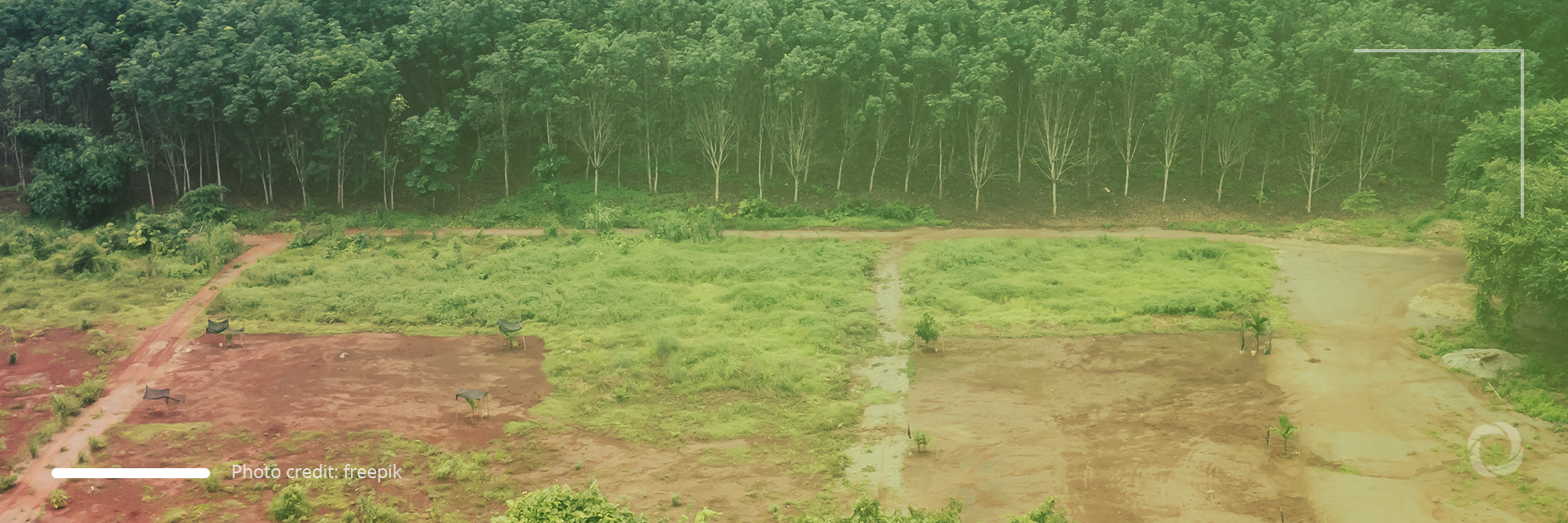
As deforestation of the Brazilian Amazon continues, this Latin American country needs to introduce measures to curb the activity and stop illegal logging by spotting areas where the rainforest is being cleared and subsequently punish the perpetrators.
In October 2021, deforestation reached a new record according to National Institute for Space Research (INPE) which announced that 877 square kilometers of rainforest had been cleared, the largest ever area for October since 2016 when INPE started to measure deforestation level and 5% more compared to the same period last year. Illegal logging aims to prepare land for mining and farming and has dramatically increased under current President, Jair Bolsonaro. During the latest COP26 climate summit he pledged to totally end deforestation by 2028. However, scientists and activists doubt if this promise will be fulfilled in view of Bolosonaro’s previous performance.
Internet connection in the remote areas of Brazil is no less important. According to government data from 2020, about 45.9 million people are still digitally excluded. One of the reasons for this is a lack of connectivity especially in the northern part of the country and thus also in the Amazon where 69.7% of the population have access to the internet, followed by 74% in the Northeast, 81.5% in the Midwest and 81.1% in the Southeast.