

Add us as your preferred source on Google to see more of our content in Search.
 Add to Preferred Sources
Large swaths of the Amazon rainforest are on fire again now that the dry season has started and illegal logging continues. In August, fires in the Brazilian Amazon reached a devastating scale, similar to that recorded in 2019 and 2020.
According to the Brazilian National Institute of Space Research, satellites registered 28,060 fires in the Brazilian Amazon in August 2021 which is 4% less compared to the same month in 2020. However, the Monitoring of the Andean Amazon Project (MAAP), a forest monitoring project affiliated with the non-profit Amazon Conservation Association, estimates that major fires in Brazilian Amazon almost doubled in the same period in comparison to August 2020.
“So far this year has way more major fires through the same period. This year could be worse than last year, which ironically was actually way worse than the infamous 2019 year,” said Matt Finer, a senior research specialist who leads the MAAP project.
The discrepancies between the two assessments stem from the fact that each organization uses different monitoring tools which is why the outcomes may differ, according to Mikaela Weisse, a forest monitoring expert from the US think-tank, World Resources Institute.
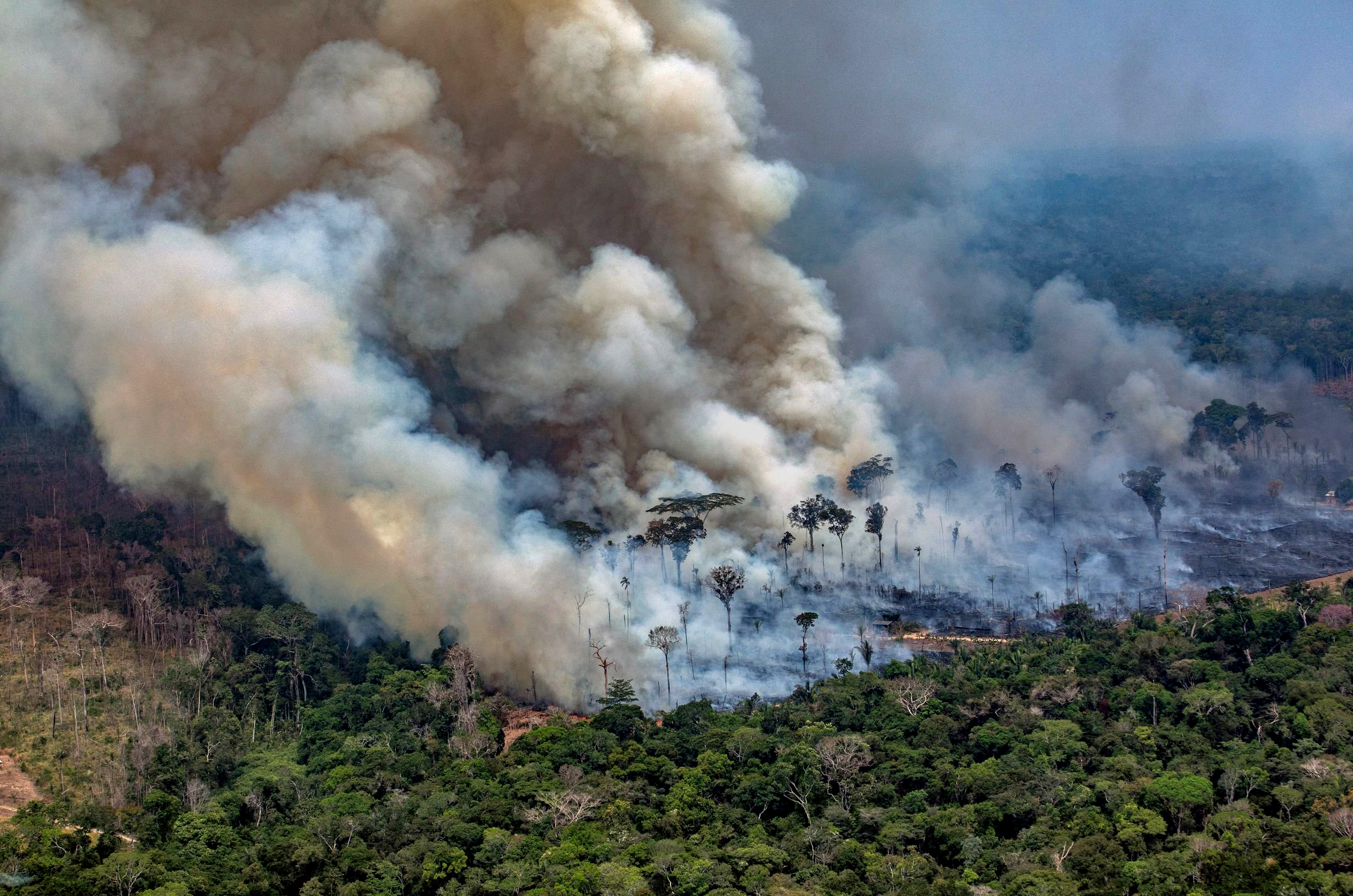
MAAP estimates that the Brazilian Amazon has experienced over 1,000 serious fires since January 2021. However, it is not only Brazil that is having problems with fires since this year they have also broken out in Bolivia and consumed thousands of acres there. INPE’s data indicates that by July fires had consumed about 2 million acres in the Brazilian part of the forest alone. Regardless of the differences between the data, there is no doubt that there is clear evidence that the highest ever number of recorded fires above the historic average has occurred for the third consecutive year.
On the one hand, President Jair Bolsonaro introduced certain measures to reduce the number of fires, including the deployment of troops, but these turned out to be ineffective. On the other hand, his policy aims to reduce the extent of protected land and make it available to farmers, loggers, and miners. Bolsonaro’s initiatives have recently been challenged by indigenous people who protested against such policy as it will also affect the land they live on.
Scientists stress that the fires are deliberately started by humans as, in general, the Amazon is a rather wet area. People typically burn trees after cutting them down or, less commonly, when they want to clear a swath of forest, said Ane Alencar, Science Director at the Amazon Environmental Research Institute in Brazil. However, the extent of the fires has been additionally affected by the worst droughts in the last 90 years which is why researchers fear that the current fires may further intensify and cause more damage. According to their assessments, further deforestation will irreversibly change the world’s largest world rainforest. Xiao Feng, a Professor from the Department of Geography of Oklahoma State University, warns that the Amazon could turn into savannah and “If this happens, it will be a tragedy”, adding that “Having effective forest policy will help delay, if not prevent, the coming of the tipping point.”
A recent study published in Nature indicates that the Amazon rainforest is now emitting more carbon dioxide than it is absorbing as a result of harmful human activity.
The Amazon rainforest covers an area of 6.7 million sq km which means it is vital for slowing down the pace of global warming. Brazil holds about 60% of the rainforest within its territory.