
Add us as your preferred source on Google to see more of our content in Search.
 Add to Preferred Sources
According to the Global Humanitarian Overview launched by the UN, 274 million people in 63 countries will need humanitarian assistance in 2022. The situation is particularly difficult from the perspective of food security. The number of undernourished people has risen to 811 million. The COVID-19 pandemic has further increased violence against women; over 70 per cent of women in humanitarian settings have experienced gender-based violence.
As global humanitarian funding is not sufficient to cover all needs, assistance must be targeted more and more carefully at the most disadvantaged people. In its humanitarian policy, Finland places special emphasis on the needs of women, girls, and persons with disabilities.
“For many consecutive years, the UN has announced that the number of people in need of emergency relief is higher than ever before. Unfortunately, this is true also this year. Finland will increase its humanitarian support to save lives and alleviate suffering in humanitarian crises. We will focus on addressing the needs of women and improving the difficult food security situation,” says Minister for Development Cooperation and Foreign Trade Ville Skinner.
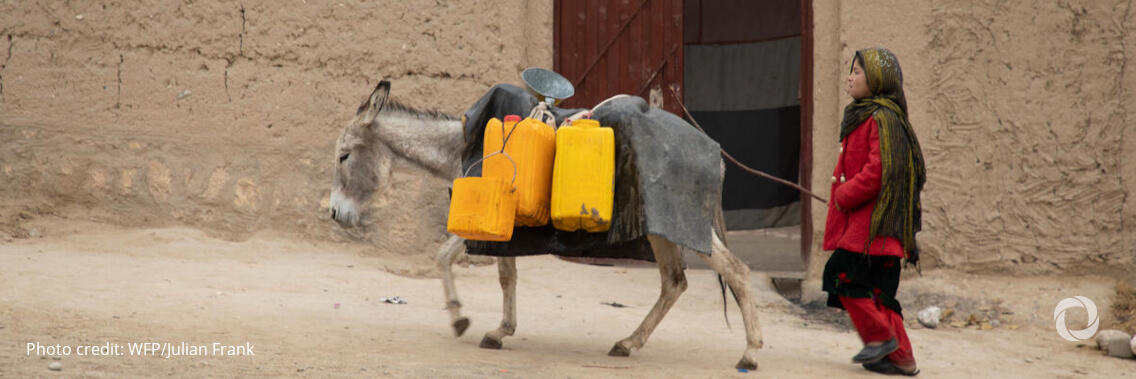
Finland strengthens food security in countries affected by the humanitarian crises by supporting the World Food Programme (WFP). The additional funding of EUR 14 million will be channeled to WFP’s work in Afghanistan and Ethiopia as well as to school feeding programs in, for example, Somalia, the Central African Republic, and Madagascar.
“School feeding improves children’s nutrition and encourages families to send also girls to school. It can therefore indirectly protect children from recruitment as child soldiers, forced marriage, and exploitation in conflict-affected countries,” says Minister Skinner, who serves as a global champion for school feeding for the WFP.
Finland addresses the needs of women in humanitarian crises through the United Nations Population Fund (UNFPA). Finland has granted EUR 4 million to provide opportunities for safe childbirth, to support the operation of mobile clinics, and to provide medical treatment and psychosocial support for survivors of gender-based violence.
Additional funding will also be granted to the United Nations Refugee Agency (UNHCR) for its COVID-19 response in the Horn of Africa (EUR 3 million); to the United Nations Relief and Works Agency for Palestine Refugees (UNRWA) (EUR 3 million); to the International Committee of the Red Cross (ICRC) in Syria (EUR 1.2 million); to the Finnish Red Cross for its field hospital in Haiti (EUR 1 million); and to the Finnish Red Cross for such emergency relief materials as tents and kitchens to Ethiopia (EUR 0.5 million). Plans have also been made on additional funding for the United Nation’s Central Emergency Response Fund (CERF), through which Finland will contribute in responding to sudden-onset disasters and protracted underfunded crises.
As a result of the funding decisions made towards the end of the year, Finland’s humanitarian assistance in 2021 will rise to EUR 113 million. In Afghanistan and Ethiopia, in particular, humanitarian needs have grown dramatically in tandem with the slowing or suspended implementation of development cooperation programs. Therefore, funding targeted at these countries has been redirected from long-term development cooperation to humanitarian assistance. This will increase the total amount of humanitarian assistance and, for its part, emphasize Afghanistan and Ethiopia in humanitarian funding for 2021.