

Add us as your preferred source on Google to see more of our content in Search.
 Add to Preferred Sources
The head of Amnesty International Ukraine resigned over a report criticizing the Kyiv authorities, unending crises driving millions to a breaking point in Afghanistan and WHO reported over 35,000 Monkeypox cases. Here is what you missed from last week’s headlines in the international development sector.
Head of Amnesty International Ukraine resigns over report critical of Kyiv authorities
The head of the Ukrainian office of the international human rights watchdog Amnesty International, Oksana Pokalchuk, has resigned after the organization published a report claiming that Ukrainian servicemen had “turned civilian objects into military targets” while repelling the invasion of Russian troops.
In her resignation statement, Pokalchuk described the report as “one-sided”. She blamed Amnesty International for ignoring the opinion of the Ukrainian team within the report and supporting “Russian propaganda”.
“If you don’t live in a country that has been invaded by invaders who are tearing it apart, you probably don’t understand what it means to condemn an army of defenders.”
Unending crises driving millions to breaking point in Afghanistan
The International Federation of Red Cross and Red Crescent Societies (IFRC) is renewing its call for increased global solidarity with the people of Afghanistan who continue to face immense humanitarian needs.
Simultaneous crises in the country have caused some of the worst sufferings in recent generations.
A cocktail of disasters and crises has battered the country for more than a year now, with new shocks worsening conditions that were already dire. In late June, an earthquake struck south-East Afghanistan killing more than 1,000 people and destroying or damaging homes of 60,000 households leaving them exposed to the elements. Starting July into August, off-season rains brought floods that washed away livelihoods and aggravated humanitarian needs across more than 20 provinces.
Monkeypox cases top 35,000: WHO
Monkeypox infections continue to rise globally, with more than 35,000 cases across 92 countries and territories, and 12 deaths, the head of the World Health Organization (WHO) reported.
WHO Director-General Tedros Adhanom Ghebreyesus, speaking during his regular press briefing from Geneva said:
“Almost 7,500 cases were reported last week, a 20 per cent increase over the previous week, which was also 20 per cent more than the week before,”
The majority of cases are being reported from Europe and the Americas, and mostly among men who have sex with men.
DevelopmentAid Editorials
The role of creative industries in developing countries | Experts’ Opinions
COVID-19 has affected all sectors of the world economy but the creative industry and cultural spheres were among the first to shut their doors because of the pandemic. The world has witnessed countries navigate and adjust to new ways of working and living in the post-pandemic environment and creative solutions have stepped into the spotlight. As a result, a new perspective of development has risen for poorer nations: how can creative industries boost the economies of developing countries?
Global income and gender inequality: facts and statistics
We live in a society where information is widely accessible yet we lack basic knowledge regarding inequality. Governments may report economic growth every year but it remains unclear how this growth is divided among a country’s population — who benefits and who loses as a result of economic policies.
Grain deal ‘victory for diplomacy,’ UN chief tells journalists in Ukraine
Positive momentum on the landmark Black Sea Grain Initiative to help vulnerable people access food reflects “a victory for diplomacy” for those caught in a cost-of-living crisis as well as for Ukraine’s hard-working farmers, UN Secretary-General António Guterres told reporters in Lviv, Ukraine.
Despite that the Black Sea Grain Initiative was signed a few weeks ago, the UN chief reiterated that “there is no solution to the global food crisis without ensuring full global access to Ukraine’s food products and Russian food and fertilizers”.
Here’s what else has happened
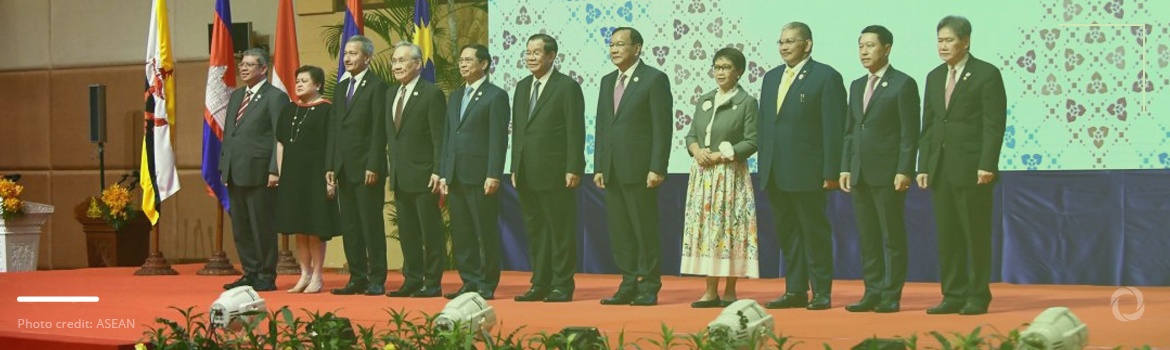
ASEAN: The 55th annual meeting of the Association of Southeast Asian Nations (ASEAN) Foreign Ministers was held in Phnom Penh, Cambodia, on August 3, 2022. The theme of this year’s summit was “ASEAN A.C.T – Addressing Challenges Together” and focused on sustaining the momentum of the ten ASEAN members’ community-building efforts.
South Sudan: It continues to be one of the deadliest places to be an aid worker, according to an analysis done by CARE International on data from the Humanitarian Outcomes Aid Worker Security Database.
United Kingdom: People whose lives have been upended by the Russian invasion of Ukraine, drought and food shortages in East Africa, and conflict in Syria will be among those to benefit from £36 million in UK humanitarian funding announced on United Nations’ World Humanitarian Day (Friday 19 August).
UNICEF: The ‘Spilno’ program, launched on 31 March 2022 together with the Ministry of Social Policy, was created to address the needs of families with children, who are among the most vulnerable groups in Ukraine. Since then, UNICEF has distributed US$125 million and reached 350,000 children, including 35,000 with disabilities, living in 120,000 households.
Reports
Depriving girls of secondary education translates to a loss of at least US$500 million for Afghan economy in last 12 months
Keeping girls out of secondary school costs Afghanistan 2.5 per cent of its annual Gross Domestic Product (GDP), according to a new analysis by UNICEF. If the current cohort of three million girls were able to complete their secondary education and participate in the job market, girls and women would contribute at least US$5.4 billion to Afghanistan’s economy.

WHO releases updated guidance on national strategic planning for tuberculosis
The World Health Organization (WHO) is releasing new guidance to support national strategic planning for tuberculosis (TB) response.

The Guidance for national strategic planning for tuberculosis was developed to better align with global commitments and the latest developments in TB and in public health and builds on lessons learned from using the 2015 toolkit. This document will be complemented by the Guidance for conducting reviews of TB programs, which will be published by the end of this year.
The ‘safe third country’ concept: a tool for fair migration or an excuse for rejection?
The safe third country concept is applied in the context of international protection of refugees and asylum-seekers. It refers to any country that provides protection to those seeking safety in accordance with the Geneva Convention.
The United Nations High Commissioner for Refugees (UNHCR) recommends that all countries currently applying or intending to apply the safe third country concept should develop implementation strategies for migration management that are based on reliable, objective, and up-to-date information from a range of sources.
Events
Doing Business with AIIB: Procurement Framework and Best Practices
📅 1 September 2022
Webinar
DevelopmentAid, in collaboration with the AIIB, invites suppliers, contractors, and consultants interested in discovering business collaboration opportunities with the Bank to join the webinar on “Doing Business with the AIIB: Procurement Framework and Best Practices”.
Singapore Convention Week 2022
📅 29 August – 2 September 2022
Singapore
The theme of this year’s UNCITRAL Academy Conference is “Embracing Global Change, Navigating New Possibilities”.
Leading experts from the legal, business, and government sectors around the world will come together to explore new opportunities amid current challenges and discuss creative ideas and innovative solutions. They will share their views on issues including investor-state dispute settlement, dispute resolution in relation to the digital economy, various specialized fields, and climate change amongst others.
AGRF 2022 Summit | Grow, Nourish, Reward
📅 5-9 September 2022 🕑 12:00 AM
Kigali, Rwanda
The Africa Green Revolution Forum (AGRF), Africa’s premier forum for driving the food and agriculture agenda in the continent, will host its 12th annual summit under the theme “Grow, Nourish, Reward — Bold Actions for Resilient Food Systems”.
The summit will convene leaders to journey along as they define game-changing solutions towards a food-secure Africa and food systems that deliver for people, planet, and prosperity.