

Add us as your preferred source on Google to see more of our content in Search.
 Add to Preferred Sources
Global progress in reducing extreme poverty grinds to a halt, Russian invasion of Ukraine impedes post-pandemic economic recovery, and WTO anticipates sharp slowdown in world trade growth in 2023. Here is what you missed from last week’s headlines in the international development sector.
Global progress in reducing extreme poverty grinds to a halt
The world is unlikely to meet the goal of ending extreme poverty by 2030 absent history-defying rates of economic growth over the remainder of this decade, according to a new World Bank study. The study finds that COVID-19 dealt the biggest setback to global poverty-reduction efforts since 1990 and the war in Ukraine threatens to make matters worse.
The Bank’s latest Poverty and Shared Prosperity Report provides the first comprehensive look at the global landscape of poverty in the aftermath of the extraordinary series of shocks to the global economy over the past few years. It estimates that the pandemic pushed about 70 million people into extreme poverty in 2020, the largest one-year increase since global poverty monitoring began in 1990. As a result, an estimated 719 million people subsisted on less than $2.15 a day by the end of 2020.
Russian invasion of Ukraine impedes post-pandemic economic recovery
The ongoing war in Ukraine has dimmed prospects of a post-pandemic economic recovery for emerging and developing economies in the Europe and Central Asia region, says the World Bank’s Economic Update for the region, released. Economic activity will remain deeply depressed through next year, with minimal growth of 0.3% expected in 2023, as energy price shocks continue to impact the region.
So far, however, the region has weathered the storm of Russia’s invasion of Ukraine better than previously forecast. Regional output is now expected to contract by 0.2% this year, reflecting above expectation growth in some of the region’s largest economies and the prudent extension of pandemic-era stimulus programs by some governments.
WTO anticipates sharp slowdown in world trade growth in 2023
Trade growth is expected to lose momentum in the second half of this year and remain subdued in 2023, as the global economy sustains multiple shocks, such as ripple effects from the war in Ukraine, the latest forecast from the World Trade Organization (WTO) has revealed.
The UN partner agency has cautioned against imposing trade restrictions which would ultimately result in slower growth and lower living standards. Global merchandise trade volume is estimated to grow 3.5 per cent in 2022, or slightly better than the 3.0 per cent anticipated in April.
However, the volume will slow to 1 per cent next year, a sharp decline from the 3.4 per cent previously estimated.
DevelopmentAid Editorials
Humanitarian assistance needs are on the rise.
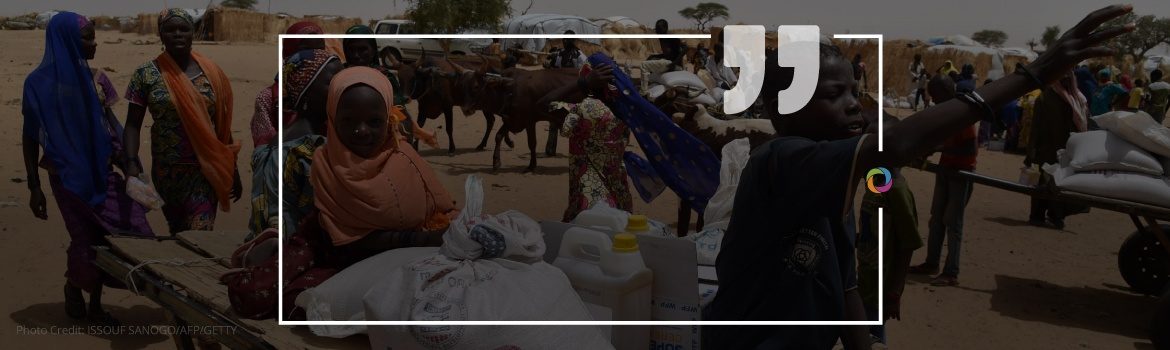
Years of wars, natural disasters, political turmoil, poverty and the COVID pandemic have left millions in need of humanitarian assistance. Some experts believe that the growing number of those in need is a sign that the international community has failed to address the root causes of humanitarian issues.
Emergency aid needs are set to rise by 17%. In most crises, women and girls suffer the most as gender inequalities and protection risks are heightened.
According to experts, these numbers reveal that the gap between the rich and the poor has increased.
Increased demands will force international donors to make hard choices and cut programs in some areas.
Preserving Amazon rainforest turns into thriving business in Brazil
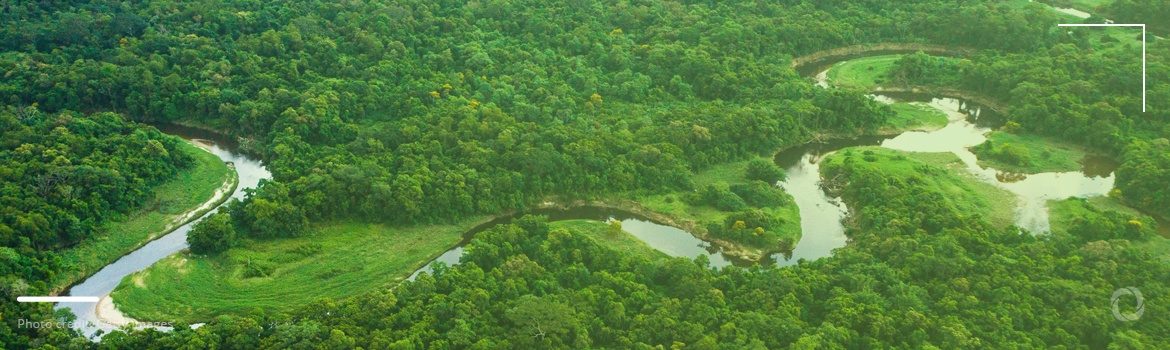
Ricardo Stoppe conserves half a million hectares of forest and earns US$12 million a year. Selling carbon is more profitable than raising cattle.
It is in the south of the state of Amazonas, the cradle of the Amazon Rainforest, that one of the largest single sellers of carbon credits in the world lives. Ricardo Stoppe is an example of how it is possible to make money by keeping the forest standing and how the preservation of natural resources can be a stimulant for Brazil’s economy.
Having graduated in medicine, Ricardo’s dream was to be a farmer. In the late 1990s, he bought some land in the state of Mato Grosso but the lack of adequate roads to transport cattle thwarted his plans.
Sometime later, he found a good opportunity in the Ituxi region in Amazonas State and invested US$60,000 to buy 150,000 hectares of land – part of which had already been deforested.
Here’s what else has happened
FAO: The gauge for world food commodity prices declined for the sixth month in a row in September, with sharp drops in the quotations for vegetable oils more than offsetting higher cereal prices, according to a new report released by the Food and Agriculture Organization of the United Nations (FAO).
ADB: The Asian Development Bank (ADB) has approved a $300 million loan to improve the quality of public health services in the Guangxi Zhuang Autonomous Region, Guizhou Province, and Shaanxi Province, in the People’s Republic of China (PRC).
UNDP: A year after the Taliban takeover of Afghanistan, the country faces “cascading crises” and a crippled economy that humanitarian aid alone cannot address, according to a new report by the United Nations Development Programme (UNDP).
Pakistan: Flood-torn Pakistan faces a monumental hunger crisis and a stark winter with crops destroyed and millions of people still destitute after flooding left much of the country under water, Concern Worldwide has warned.
Reports
Reduced opportunities will force 110 million girls into child marriage between now and 2035
Ahead of International Day of the Girl, a report released by the international aid agency, World Vision, calls for urgent action for the sake of the 110 million girls who will be forced into child marriage by 2035. The report, ‘Fighting for a Future’, tracks girls’ opportunities in 40 low- and middle-income countries, including the 20 with the highest rates of child marriage. It predicts that 52% of girls in countries with the lowest opportunity levels will be forced into child marriage.
Dana Buzducea, World Vision’s Partnership Leader for Advocacy and External Engagement said: “Every year, approximately 12 million girls are married before they reach the age of 18, and placed at high risk of sexual abuse, domestic violence, depression, and arrested education. This study compares 40 countries and shows the strong correlation between the opportunities (economic, educational, political) and the agency a girl has in her community and society and her risk of becoming a child-bride.”
“World Vision believes the world has both the knowledge and the resources to break this vicious circle, ensuring that every girl, no matter where she is born is protected from the violence that is child marriage, is able to make choices, build the life she wants, and achieve her full potential. What we need is the political will to use them.”
New report outlines priorities for global climate observations
High-priority actions to gather essential information on the climate system and improve monitoring and understanding of how it is changing are outlined in a new report by the Global Climate Observing System (GCOS). Climate observations are vital: they have unequivocally shown that human-induced climate change is occurring, and they have informed the projections needed to successfully adapt to climate change and reduce greenhouse gas emissions.
“All successful actions to adapt to or mitigate climate change must be based on sound accurate information that can only be provided by a global climate observing system. Planning for and mitigating the impacts of climate change, predicting and understanding future risks, and protecting vulnerable populations and infrastructures all require global information on the changing climate,” said WMO Secretary-General Prof. Petteri Taalas.
“Global climate monitoring needs to cover the entire Earth system from the atmosphere to the oceans, from the cryosphere to the biosphere, and encompassing the water cycle and energy and greenhouse gas budgets,” he said. WMO is one of the co-sponsors of GCOS.
The world must halt deforestation and use forests sustainably, FAO Director-General says
The world must halt deforestation, plant trees to make the planet greener and restore productive capacities, and use forests and trees sustainably, QU Dongyu, the Director-General of the Food and Agriculture Organization of the United Nations (FAO), told the opening of the 26th Session of the Committee on Forestry (COFO).
COFO26 is being held in hybrid format from 3 to 7 October at FAO’s Rome headquarters and will provide a platform for exchange and dialogue among participants and provide suggestions for FAO’s work in forestry.
Princess Basma Bint Ali of Jordan, FAO’s Goodwill Ambassador for Near East and North Africa, Cécile Ndjebet, Founder of the African Women’s Network for Community Management of Forests and the winner of the Wangari Maathai Forest Champions Award 2022, and Analí Bustos, World Forestry Congress Youth Forest Change-makers winner also spoke at the opening.
Events
The list of major upcoming events in the development sector in October 2022

Keep up-to-date on key events about emerging funding strategies, environmental policies, climate change, technological development, labor standards, and energy issues in the development sector via our compiled list.
Track events hosted by reputable international organisations, donors, NGO’s and IFIs that bring together the biggest change-makers and stakeholders in international development cooperation.
Save the date to register and attend the upcoming events in October 2022.
Download the comprehensive schedule of major online events.
GMCC Bitesize Session – Aid Funded Business Opportunities | Virtual

📅 26 October 2022
As part of the commitment to support businesses in Greater Manchester to navigate their international trade journey, the Greater Manchester Chamber of Commerce (GMCC) is pleased to launch a free series of Bitesize Sessions. The purpose of these sessions is to provide support and advice to businesses trading internationally during this time of change.
These sessions will provide an overview of a different topic each time including general export and import processes, border controls, and export documentation, etc.
World Health Summit 2022

📅 16-18 October 2022
Berlin, Germany
The World Health Summit and WHO jointly invite to the world’s leading global health conference. This year’s Summit will take place from 16-18 October 2022 in Berlin, Germany, and will bring together the most prominent names in global health from all sectors in all regions of the world: heads of state and government ministers, scientists, and representatives from the private sector as well as civil society.
Patrons are German Federal Chancellor Olaf Scholz, French President Emmanuel Macron, and WHO Director-General Tedros Adhanom Ghebreyesus. WHS 2022 aims to set the course for a healthier, more equitable future. Central topics include climate change and health, pandemic preparedness, digital transformation, and sustainable health systems.
Development2030 | Beyond Aid

📅 16-17 November 2022
Brussels Expo
With ever-increasing pressure to ensure the global public and governments worldwide continue to support overseas development assistance, it is imperative for the international community to adapt to the changing landscape if we are to achieve the Sustainable Development Goals.
The Development2030 event will consider how best we can do this, by identifying the key existing and emerging players and analysing their role in creating long-term impact for low- and middle-income countries. It is THE place for the overseas development community to build meaningful relationships, get inspired and meet like-minded individuals committed to achieving the 2030 goals.