Agriculture plays a pivotal role in the economies of Latin American countries. Nations such as Brazil, Argentina, and Mexico rely heavily on agricultural production as a key driver of their economic growth. Brazil is a major player in global agricultural markets, ranking among the world’s top exporters of soybeans, coffee, and beef, while in Argentina, agriculture is not only a growing sector but a vital component of the national economy, contributing nearly 16% to the country’s US$631 billion Gross Domestic Product (GDP).
However, despite the sector’s economic significance and nearly 92 million or 14% of the region’s population being employed in the sector, Latin America’s agricultural industry has faced various challenges in recent years, particularly in the areas of modernization and efficiency.
This raises a critical question: what role can digitalization play to improve the productivity and sustainability of Latin American agriculture? This article explores the potential of technological advances to transform the region’s agricultural sector.
Technology as a new driver on agriculture
Digital technology has become a fundamental component of modern agricultural practices, addressing numerous challenges faced by farmers in today’s environment.
In Latin America, the application of technology has the potential to be particularly transformative, offering opportunities for substantial increases in agricultural productivity.
The adoption of smart agriculture practices, which include advanced digitalization such as precision farming, data analytics, and automation, can lead to remarkable improvements in efficiency.
See also: What is Climate-smart agriculture and how can it help developing countries cope with climate change?
However, to fully capitalize on these benefits, it is essential to firstly establish a clear understanding of the concept of smart agriculture.
Smart agriculture: how can Latin America benefit from this?
Smart agriculture, also known as precision farming, is described by some sector specialists as a new revolution in the agriculture sector. This progressive technique utilizes sophisticated technologies and methods to improve various aspects of agricultural production.
In precision farming, the application of technologies – the Internet of Things (IoT) and big data analytics – is inevitable in bringing about this transformation.
The key aspects of smart agriculture are:
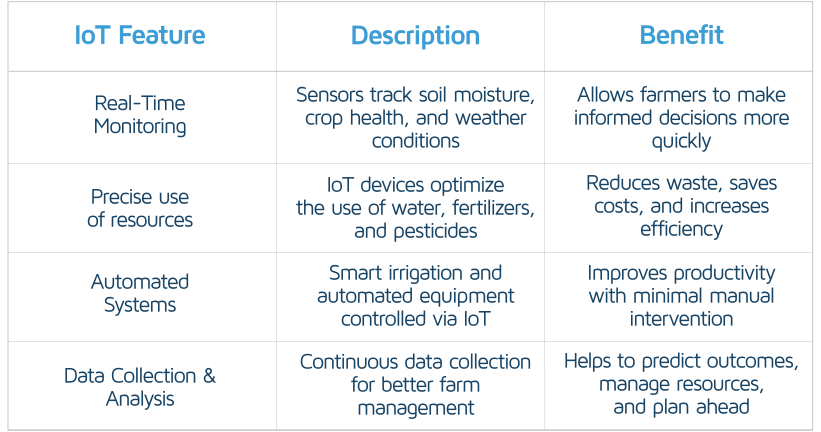
- Internet of Things: IoT transforms agricultural practices by using various sensors and devices to continually check the environment, the moisture content of soil, and the health of crops. Such real-time collections of data enable farmers to make good decisions about the efficient use of resources and ways to increase yields.
- Precision farming: Applying GPS features and data to determine the ideal time and location for planting, watering, and harvesting crops.
- Climate monitoring: Equipment used for weather monitoring so that farmers can plan and prepare for any changes in climate.
- Smart irrigation systems: Advanced watering systems that use data collected in real-time to help crops to get the amount of water they need.
How can Latin America cash in on smart agriculture?
According to the Food and Agriculture Organization (FAO), Latin America is home to 28% of the world’s arable land and benefits from varied climates that are ideal for a wide range of crops.
FAO notes that the use of innovative tools and solutions such as IoT, big data, and the optimization of the crop area, among others can contribute to the best utilization of resources as well as increasing crop yield and sustainability.
Adopting these improvements could lead Latin American agriculture to increased productivity and sustainability, resulting in food security and economic advances.
Incorporating IoT into agriculture
Incorporating IoT into farm and field management processes allows farmers to assess and monitor almost every activity, such as plant monitoring, gauging the moisture of soil, and assessing crop conditions, digitally.
It provides farmers with the tools needed to make the right choices regarding the use of farmland and the allocation of resources with minimal costs.
By using IoT, farmers increase their sustainability and also improve operational efficiency by using real-time data and analysis.
For example, some sources state that using IoT for agriculture can reduce water consumption in smart farms by up to 30%.
Case Study: IoT-driven irrigation systems in the Biobío region of Chile
In Chile’s Biobío region, IoT-driven irrigation systems have made a real difference to the agricultural sector. With the help of soil moisture sensors, these systems determine the quantity of water crops need at a given time in the irrigation process. Thus, water is used appropriately, increasing yields and encouraging sustainable agriculture.
- Water savings: According to a study by the Chilean Ministry of Agriculture, IoT irrigation systems have achieved up to a 30% reduction in water consumption by farms. Given the scarcity of water, this may be considered as a weighty argument for the adoption of IoT-driven irrigation systems.
- Increased yields: The Inter-American Development Bank reports that farmers in the Biobío Region have seen crop yields increase by as much as 20% due to the more efficient use of water.
- Cost savings: Operating costs are reduced. The World Resources Institute notes that optimized water use has reduced the costs associated with water and energy, resulting in economic benefits for farmers.
Scaling-up challenges vs potential benefits
What are the challenges of scaling-up the digitalization of agriculture?
- Higher initial costs: Advanced agricultural technology is relatively expensive and unaffordable for most farmers compared to traditional agricultural methods.
- Low level of technical knowledge and skills: Farmers have to learn how to apply new technologies which is often costly and time-consuming.
- Lack of infrastructure: Two important factors for the proper functioning of the IoT devices are a consistent internet connection and power supply. These inputs are often needed in fields far from cities which makes it difficult for farmers to use IoT.
Benefits of agriculture digitalization
- Widespread adoption: With proper backing, smart agriculture could spread rapidly across Latin America.
- Sustainable practices: Digitalization brings sustainability closer to farms, as farmers can make smart decisions and use critical resources in a wiser way, thus reducing the pressure on the environment.
- Economic growth: Increased productivity can translate to higher economic output in countries located in the region.
Final thoughts
Smart agriculture represents a transformative opportunity for Latin America, with the potential to significantly improve agricultural productivity, drive economic growth, and contribute to more sustainable farming.
As Latin America stands on the brink of this technological evolution, it must carefully evaluate and strategically implement smart agriculture solutions to maximize their benefits and ensure a resilient and prosperous agricultural sector.
See also: Artificial intelligence is revolutionizing agricultural sector in sub-Saharan Africa