
The international development sector in review: 2025 insights and the path ahead | Experts’ Opinions

Add us as your preferred source on Google to see more of our content in Search.
 Add to Preferred Sources
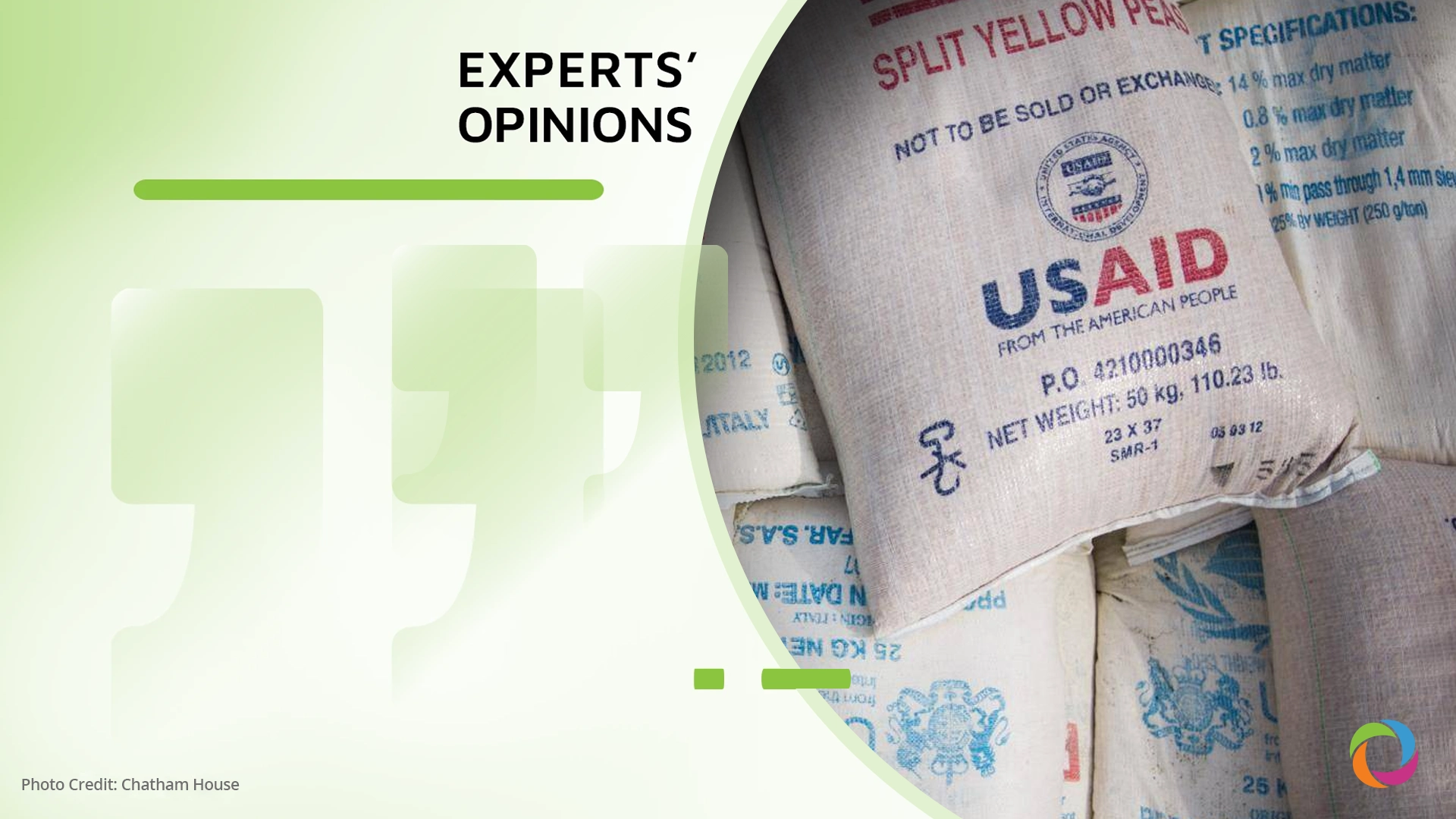
As 2025 comes to an end, now is a good time to reflect upon the state of things in the aid community. During the last 12 months, the international development sector has been disrupted by a series of major events – from the closure of one of the largest international development organisations, the United States Agency for International Development (USAID), to dramatic and significant funding cuts, political transitions and ongoing active military conflicts in Ukraine and the Middle East. The sector has been experienced a great deal of pressure but, with only four more years left to achieve the Sustainable Development Goals by 2030, the situation is now even more uncertain than ever, with a growing gap between needs and the available resources. The main questions continue to revolve around sustainability, efficiency, and the future of global solidarity. Based on the lessons learned, we asked international experts to share their conclusions about 2025 and new objectives and resolutions for 2026.
Key Takeaways:
- Among the most significant global events or crises in 2025, experts define global major cuts in the international development sector, ongoing conflicts and wars, and the intensification of climate events.
- The political transitions of 2025 led to a shift in donor priorities towards migration management and stabilizatio,n as well as geopolitical influence.
- According to experts, development sector business models are overly dependent on traditional aid funding and are proving to be critically fragile, requiring urgent diversification toward private sector impact investment and social enterprise.
- To advance localization in 2026, agencies must move beyond rhetoric by transferring leadership, budgets, and decision-making power to community structures and national NGOs to ensure sustainability even as global resources contract.
DevelopmentAid: Which were the most significant global events or crises in 2025 that had a direct impact on development aid strategies and priorities?

“In 2025, development aid strategies have been shaped by a tough combination of conflict, climate pressure, and shifts in political funding. Firstly, major conflicts have continued to dominate budgets and attention. Large-scale emergencies and reconstruction needs — particularly in places like Ukraine, Sudan, and Gaza — have forced donors to prioritize life-saving assistance, service continuity (water, power, health), and rapid recovery measures that can be delivered in insecure environments. Secondly, the political environment around aid has become more volatile. In particular, the Trump administration’s approach to cutting or freezing parts of US foreign assistance has had a knock-on effect across the humanitarian system with implementing partners facing uncertainty, programs being scaled back or re-phased, and other donors having to reconsider what they could realistically cover. This has increased the pressure to focus on fewer priorities, stronger value-for-money, and clearer delivery plans. Thirdly, climate extremes have reinforced adaptation as a core development objective. Flooding, heat, and drought risks are now driving more funding toward resilient infrastructure and nature-based solutions, with stricter requirements for climate diagnostics, safeguards, and implementable designs.”

“In 2025, funding from major donors has diminished, and this has forced the UN and other agencies to focus only on the most urgent, life-saving activities. Conflicts have made this even harder. Sudan has become the world’s largest displacement crisis, and famine conditions emerged in North Darfur. Humanitarian access remained extremely limited. In Gaza, efforts to deliver aid through military-led channels did not work and raised serious concerns about safety, neutrality, and the long-term impact on humanitarian principles. Ukraine also faced unstable funding. U.S. support stopped and restarted several times, while the EU and NATO tried to fill the gap. This made it difficult for aid agencies to plan long-term programs or monitor activities properly. Climate disasters added even more pressure. Major events, such as Pakistan’s heavy floods, pushed organizations to invest more in early warning, disaster-risk reduction, and support for farmers. Large financing gaps plagued the whole of 2025, showing the need to link humanitarian, climate, and development funding more closely. Official development assistance also declined sharply, with least developed countries and health programs suffering the most, and many agencies having to cut back and focus on immediate needs.”

“The year 2025 profoundly reshaped priorities in the energy, water, and environment sectors. The intensification of climate events — floods, droughts, heatwaves, and water stress — revealed the structural vulnerability of water and energy infrastructure. These shocks underscore the urgent need to adopt more resilient, decentralized, and cost-effective solutions, particularly in rural areas and fragile contexts. At the same time, protracted conflicts in Sudan, Gaza, Ukraine, and several Sahel countries have led to the destruction of water, sanitation, and energy networks. This damage necessitates immediate rehabilitation while disrupting technical planning and long-term investments. In these unstable environments, ensuring the continuity of essential services becomes a major challenge. Finally, the contraction or reorientation of international funding has forced many energy-water-climate programs to be suspended, reduced, or refocused on strictly vital interventions. The most affected projects concern access to drinking water in isolated areas, WASH activities, non-emergency renewable electrification, and integrated water resource management or climate adaptation initiatives.”

“January 25, 2025 became a disastrous day when the Trump administration issued a stop-work order for its ongoing development projects across the world. As a result, 92% of overseas projects, with an estimated value of about US$54 billion, were terminated. This decision created a large and devastating impact on crisis-affected people. It caused major reductions in life-saving and essential services, protection and resettlement support, and affected millions of people. Many communities became increasingly desperate. Women and children faced higher risks of gender-based violence, child labor, and early marriage. Trust between communities and authorities declined, and insecurity and access challenges increased. Almost all sectors were affected, including agrifood systems, infrastructure, health, education, governance and humanitarian assistance. Other donors also significantly reduced their global funding. This situation has exposed a harsh truth – international development assistance had become a lifeline for key sectors in developing economies. When this overseas assistance was withdrawn, many nations became vulnerable in multiple areas. Millions of people lost their jobs, and small and medium-sized organizations that supported the development sector are now struggling and may soon collapse. This crisis has reminded us that development cannot be sustainable without real efforts being made toward decolonization and localization. The main drivers of this event were the growing pressure of domestic expenses and the decline of international trade in donor countries. These factors pushed governments to reduce overseas development assistance. It is also recognized that development projects help to promote international trade by reducing non-tariff barriers. If donor countries believe they can recover their losses and achieve development goals without supporting international development and trade, they are mistaken. Tariff measures alone cannot solve the challenges of development economics.”

“In 2025, as a result of the convergence of high intensity conflicts – Sudan, Gaza, Ukraine, and also the Sahel – and severe climate disruptions in East Africa and the MENA region, I observed how inflation, shrinking donor budgets and supply chain volatility have compelled agencies to rethink their strategies towards vital life-saving services, better localization and leaner, evidence-based programming. The overriding consequence continues to be a widening mismatch between the available resources and needs.”

“The shutdown of USAID by the new U.S. Administration and the major aid cuts announced stand as 2025’s most consequential events. These abrupt closures triggered widespread program terminations, severely constraining the capacity of NGOs to save lives and support vulnerable populations globally.”
DevelopmentAid: What are the lessons learnt and the key recommendations to be considered to improve the effectiveness of development aid in 2026?
“Lessons:
- Funding instability demands flexible planning. When donors reduced or paused funding, rigid multi-year programs failed, while lighter, modular designs that can scale up or down proved more effective.
- Dependence on volatile external funding undermines service continuity, and community partnerships are vital when resources shrink.
Recommendations:
- Diversify financing with predictable multi-year commitments.
Integrate climate resilience and conflict sensitivity into all programs. - Strengthen local systems through capacity support and flexible funding for communities.”
“The year 2025 highlighted three major lessons for the water, energy, and environment sectors. The first lesson concerns the heavy reliance on a limited number of donors, which weakens technical projects when funding fluctuates. The suspensions and reallocations of funds has demonstrated how much the viability of infrastructure depends on a diversified financial architecture. The second lesson relates to the increasing absorption of development budgets by humanitarian emergencies. In fragile contexts, environmental, energy, and resilience investments are often relegated to the back burner, reducing the capacity of local systems to plan beyond the immediate response. Finally, siloed sectoral approaches have limited the overall impact of interventions and climate is no longer an isolated issue but a cross-cutting constraint that requires integrated planning. For 2026, three priorities have emerged. The first approach involves promoting low-cost, high-resilience solutions, such as solar pumping, modular mini-infrastructures, and nature-based solutions. The second relies on water-energy-climate nexus approaches that are capable of generating multiple benefits within a constrained budget. The third involves accelerating technical localization and community governance by strengthening local capacities, maintenance models, and direct access to funding for national organizations.”
“In 2025, three things became very clear to me from the perspective of an international civil engineer working on “bankable” infrastructure concepts. Firstly, funding is no longer just background noise — it is a delivery risk. When donor priorities shift or budgets are frozen, projects that are not structured in phases can stall completely. Secondly, a good technical design is not enough. Many projects fail not because the hydraulics are wrong, but because it is unclear who operates and maintains the system, who pays for routine cleaning, who owns procurement decisions, and who is accountable when performance drops. Thirdly, in dense cities the real damage often comes from small bottlenecks whereby clogged secondary and tertiary drains can cancel out major investments in trunk channels. So for 2026, my recommendations are (1) design and procure in phases — create modular packages that can move forward even if funding arrives in waves; (2) treat O&M and behaviour change as core components, with measurable indicators and clearly assigned institutional responsibility; and (3) set a minimum “readiness bar” before financing, including climate diagnostics, ESIA/ESMP, and a costed maintenance plan, so the time from approval to implementation is shorter and the results actually last.”
“Two critical lessons have emerged. Firstly, development sector business models that are overly dependent on traditional aid funding have proven to be critically fragile, requiring urgent diversification toward private sector impact investment and social enterprise. Secondly, local NGOs – with lower operational costs, deeper contextual understanding, and community proximity – present significant comparative advantages in this constrained environment. However, realizing this potential requires deliberate investment in their organizational capacity and donor-readiness.”
“Three strategic lessons are abundantly clear. (1) prolonged crises call for predictable, multi-year funding instead of small financing cycles; (2) solid interventions are not viable anymore; and (3) local actors continue to be the foundation of good delivery. The sector should focus on risk-informed multi-year funding for 2026, put into action integrated humanitarian development peace methods, and establish community-led analysis and accountability. Reforms such as these aren’t optional; they are crucial for relevance in a time of limited funding.”
DevelopmentAid: In 2025, several countries experienced political transitions and elections. How did these shifts influence development cooperation, and what geopolitical alignments might shape aid in 2026?
“In key African and Asian states, political transitions and leadership changes in 2025 shifted development cooperation. In some countries, political realignments set off aid reviews or reductions by traditional donors while accelerating engagement with new partners (China). Geopolitically, major power competition and multipolar positioning are shaping the aid flows and strategic partnerships going into 2026, with implications for conditionality and trade links.”
“The political transitions observed in 2025 in the United States, Europe, and Canada have profoundly influenced the direction of international cooperation. In several donor countries, governance changes have led to a refocusing of external aid on geopolitical, security, and migration priorities, creating increased uncertainty surrounding funding for the energy and climate sectors. This trend is reflected in a concentration of budgets on a limited number of areas that are considered to be strategic, often at the expense of structural interventions in countries with low political visibility. At the same time, the space left by the withdrawal or reduction of some Western donors is fostering the rise of new actors, particularly the Gulf States, China, and India, whose investments in water, energy, and infrastructure are becoming crucial. This redistribution of influence suggests a more fragmented aid landscape in 2026, characterized by the coexistence of sometimes competing intervention strategies. In this context, competition between political agendas could slow down the long-term investments needed for universal access to drinking water, the deployment of clean energy, and the implementation of ambitious climate adaptation solutions.”
“Political transitions and elections in 2025 did not change why development cooperation exists as much as they changed how it is delivered – which channels are used, how quickly funds are approved, and what conditions come with these. The biggest influence came from shifts in major donor countries. When a new administration or parliament revisits priorities, funding is often paused, reprogrammed, or redirected toward areas that are easier to justify politically. In practice, this usually means a stronger focus on measurable results, tighter oversight of partners, more emphasis on value-for-money, and a preference for programs that can demonstrate impact quickly and reduce political risk. Looking into 2026, I expect more geopolitical “alignment” in aid. We may see more bloc-style financing packages (e.g., EU and partners pooling instruments), more competition between different financing models (Western donors vs China and Gulf financiers), and a stronger tilt toward resilience and stability objectives. That tends to favor climate adaptation, the protection of critical services (water, energy, health), urban governance, and projects that are genuinely implementation-ready.
“The rise of governments pursuing nationalist agendas reflects deliberate political choices that prioritize domestic concerns over international solidarity. While some reductions respond to legitimate public finance pressures, others signal ideological repositioning on global development cooperation. These policy shifts, particularly when narratives about the effectiveness of foreign development aid remain contested, risk normalizing aid withdrawal across donor countries, fundamentally reshaping traditional development partnerships.”
“The political transitions of 2025 have led to a shift in donor priorities towards migration management, and stabilization as well as geopolitical influence. In the meantime, crisis-affected nations have widened their ties with regional blocs, China, and the Gulf states, resulting in a more multipolar aid landscape. In order to attain effective development cooperation in 2026, it is going to be necessary to navigate political complexity while preserving principled, community-centered programming and remaining neutral in the face of competing global interests.”
DevelopmentAid: How can international development organizations better integrate localization commitments in 2026 to strengthen community ownership, especially amid declining international funding?
“To reinforce community ownership in the midst of declining international funds, development actors should (1) Increase multi-year, unearmarked funding directly to local organizations. (2) Work with communities to design early action plans using local indicators, and support them with flexible small grants, cash, seeds, and flood protection to ensure local ownership. (3) Invest in long-term institutional capacities, including systems for financial management, risk mitigation, and advocacy. These measures can help to shift power, reduce dependency on external actors, and better align aid with local priorities.”
“The contraction of international funding and the increasing complexity of fragile contexts have made localization a strategic priority for 2026. Beyond political commitments, it is becoming an essential condition for ensuring the continuity, effectiveness, and sustainability of interventions in the water, energy, and environment sectors. Success will depend on strengthening community-based management models to enable users and local structures to assume a central role in the operation and maintenance of infrastructure. It will also require the establishment of stronger local accountability mechanisms to guarantee transparent governance and greater ownership of projects by the populations concerned. Finally, national actors must be more involved in the formulation, implementation, and monitoring of programs in order to anchor solutions in local capacities and reduce dependence on international mechanisms. In a context of limited resources, this approach constitutes one of the most effective levers for maintaining the impact of interventions and strengthening the resilience of communities.”
“In 2026, localization will only work if communities have not just a “voice” but real responsibility, resources, and a plan.
- Establish a small but predictable budget locally (city teams/market committees/community groups) for routine cleaning and minor repairs.
- Involve local actors in decisions from day one: what to fix first, who maintains it, and how performance is checked.
- Pay for ongoing maintenance, not just campaigns. Contracting local teams/SMEs to keep drains functioning with simple spot checks is often more effective than one-off clean-up events.
- Reduce paperwork for local partners, while supporting them with practical help (procurement, finance, safeguards).
And one key point – aid is not really aid if there is no sustainability and maintenance strategy. If ownership, budgets, responsibilities, and maintenance routines are not agreed upfront, results will fade quickly and the investment is essentially wasted.”

“Localization is now a key component for effective development aid with sustained impact amid declining international aid funding for the following main reasons:
- With declining international funding levels, local initiatives based on local resources that are allocated both for human resources and materials or inputs are more cost-effective and hence target more beneficiaries.
- Local ownership of community initiatives enhances long-term sustainability. Based on my professional experience with development actors, in particular INGOs, the UN, and other multilateral agencies in South and Southeast Asia, the focus must be on supporting the conceptualization, designing, and planning stage at the community level to develop local initiatives that meet local needs and ensure full local ownership. It should include a resource mobilization strategy that the community or small medium businesses can contribute to in terms of materials and costs – a co-investment model – with a top-up by an international agency if needed. This contrasts with the current sub-contracting model where local partners implement donor-driven programs by international agencies. Technical assistance programs by international agencies funded by external donors can support localization initiatives through capacity building and training and monitoring with the local partner being fully responsible for its successful implementation.”
“To advance localization in 2026, agencies must move beyond rhetoric by transferring leadership, budgets, and decision-making power to community structures and national NGOs to ensure sustainability even as global resources contract.”
“The sustainable path forward lies in genuine localization – not merely channeling reduced funds locally, but transformative investing in “donor-ready” national organizations. This requires strengthening local civil society’s financial management, results-based management, compliance frameworks, and impact demonstration capabilities – enabling them to lead responses effectively while leveraging INGO technical expertise through strategic partnerships.”
Due to major global funding cuts, the year 2025 has been marked by several significant layoffs in the international development sector. Experts predict that the job market of 2026 will be even more competitive, and new technical and soft skills will be required for those seeking to climb the career ladder. On the DevelopmentAid job board, professionals can choose from a variety of more than 53 sectors featuring a total of over 5,000 openings in the international development sector. Jobs can also be filtered by location, duration, work experience, salary, etc. Only Individual Professional Members can access all these openings quickly and gain access to tenders and grants for individuals, organizations, donors, etc. Moreover, they can also check market salary trends, read the latest news and editorials, or watch webinars to improve their skills. In conclusion, for those looking for new opportunities in terms of jobs, opting for an Individual Professional Membership should be high on the to-do list.