

Add us as your preferred source on Google to see more of our content in Search.
 Add to Preferred Sources
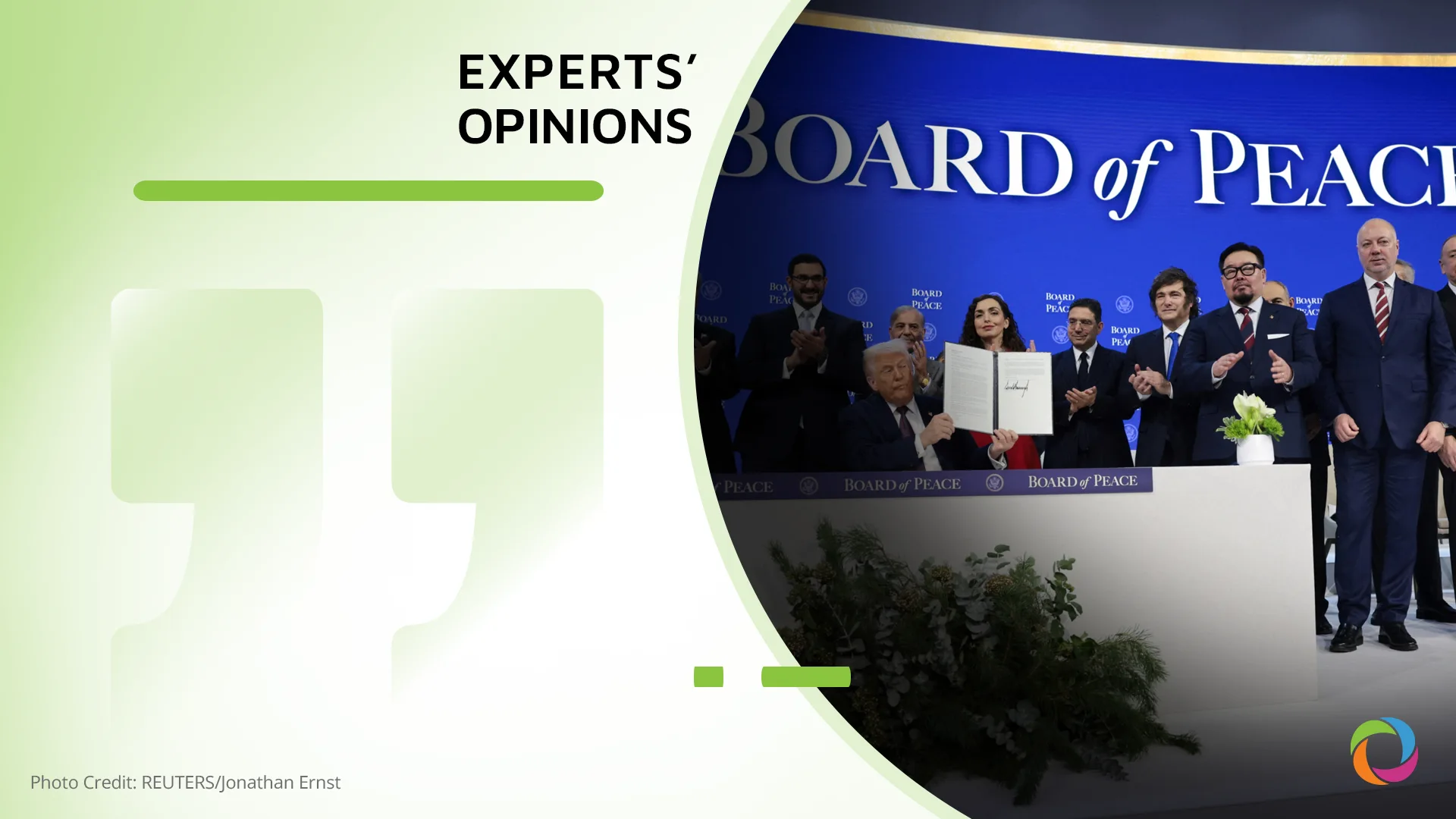
After facing significant funding cuts and massive criticism over its role in handling global conflicts and maintaining peace, the United Nations now has to face rivalry. In January 2026, U.S. Donald Trump launched the concept of the ‘Peace Council’, presented as a new international organization to manage global conflicts. Although initially approved in November 2025 by the UN as part of Trump’s 20-point peace plan for Gaza, the Council’s new charter appears to reflect the White House leader’s ambitions to create an organization that will rival the UN, and would work “in conjunction with the UN”. This is why a legitimate question arises: Will the Peace Council strengthen multilateral conflict resolution, or will it slowly take the place and role of the UN? We asked some DevelopmentAid Experts to share their opinions. Check these out below.
Key Takeaways:
- The Peace Council offers permanent seats to states that contribute US$1 billion and was originally designed for the reconstruction of the Gaza Strip that had destroyed by Israel. Hungary and Bulgaria are the only EU states to have expressed willingness to join the Council so far.
- According to experts, the new structure may help to fill operational gaps, particularly in fast-moving crises where the UN’s consensus-driven processes can be slow.
- Experts believe that new initiatives such as the U.S.-led Peace Council may influence how cooperation is organized, but they cannot replace the UN’s foundational role.
- From the opportunity perspective, the Peace Council could provide a more agile mechanism for crisis response, enabling rapid coordination among key actors.
- However, if perceived as a unilateral or U.S.-centric alternative to the UN, it could deepen geopolitical fragmentation and weaken the legitimacy of collective decision making.
DevelopmentAid: Does the creation of a U.S.-led Peace Council represent an effort to strengthen multilateral conflict resolution or is it intended to replace the United Nations?
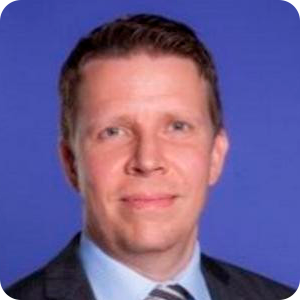
“The creation of the U.S.-led Peace Council can be interpreted as an attempt to reinforce, rather than replace, multilateral conflict resolution mechanisms. Although it originates from a U.S. initiative, its stated intention to work “in conjunction with the United Nations” suggests complementarity rather than competition. In practice, the UN remains the only universally legitimate forum where states can collectively address threats to peace and security. The Peace Council could therefore serve as a flexible, issue-specific platform capable of mobilizing rapid diplomatic engagement, while still anchoring its legitimacy in the UN framework. If structured transparently and aligned with international law, it may help to fill operational gaps, particularly in fast-moving crises where the UN’s consensus-driven processes can be slow. Ultimately, its value will depend on whether it reinforces collective action or becomes a unilateral tool. Under an inclusive approach, it has the potential to strengthen – not undermine –multilateral conflict resolution.”
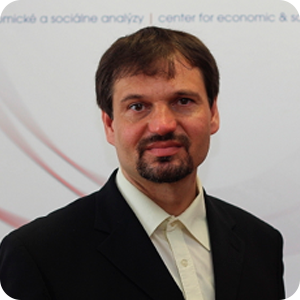
“The roots of the current conflicts can be found in growing distrust, which has already reached such concerning levels that even traditional allies cannot trust each other any longer. Threats and brute force are becoming more and more preferred over the values of respecting international law and order. Military superpowers and their citizens do not realise how dangerous engaging in a conflict can be even for them, and how large conflicts such as the war in Ukraine diminish their own military advantages, quickly making expensive army equipment and skills obsolete and vulnerable. It is therefore crucial to rebuild trust among nations in the first place to achieve effective conflict resolution – trust that one state will not attack another, or at least that such an attack can only worsen the attacker’s own national security in the long run. The United Nations exists to promote such trust due to its broad and open membership, transparency and the categoric prohibition of the use of force in international relations. The U.S.-led Peace Council is based on a different mechanism and circumstances. It can cooperate with the UN, but it cannot replace it.”
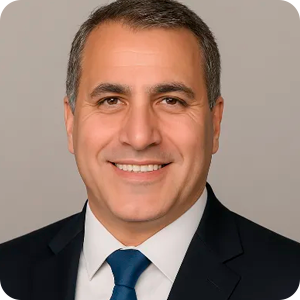
“I think that today the world is increasingly looking for an effective and influential alternative to the United Nations, and it is no secret that there is a growing perception that the UN has struggled to address many global issues, most notably security and peace. Significant shifts have taken place in the global map of economic, political, and security influence, yet the UN appears to have failed to keep pace with these transformations. Over time, it has, in my view, become an administratively bloated structure facing serious organizational, administrative, and financial challenges. The proposed Peace Council, supported by the largest global power – the United States – appears to represent an attempt to redraw the global balance of power and influence. Undoubtedly, there are serious dangers associated with moving away from international law shaped by the United Nations, toward rules that may instead be written by today’s dominant military and economic powers. However, the process seems to have already begun, and the international community must prepare for what lies ahead. In this context, it can be argued that France and the United Kingdom may gradually lose their traditional influence, while Middle Eastern countries increasingly compete to fill this evolving geopolitical space.”
“The crisis of the UN system has been widely debated, reforms have been urged, various directions have been discussed, all with little to no concrete outcome. Very few expected that a ‘solution’ would come with the proposal to establish the Peace Council presented by U.S. President Donald Trump. The impression is that most of the world seems to be rather unenthusiastic about joining the initiative. This lack of broad acceptance can partly be attributed to the stated ‘entrance fee’ but more probably to the new power dynamics, the restructuring of geopolitical alignments and last but not the least, the deep crisis in the sphere of diplomacy, especially between the superpowers. The initiative of one superpower (the U.S.) that aims to align the entire world, including Russia and Chin,a with whom it is in sanction/tariff/trade confrontations, does not look very promising. The unipolar world has gone because it could not resist the fast-changing economic and political dynamics. The Peace Council resembles “first aid”, a nicely “rapped and ribboned solution” (peace) that would reverse this process. The world is dangerously out of balance, and it is difficult to see how the new structure could remedy this. Could it be that we lost ground when we left the international law-based order for a rather arbitrary rules-based order that enabled the big ones to take from the buffet table what they liked? In that context, the UN and its Charter look as relevant as ever. The world has changed since 1945, but the basic preconditions for its survival are largely the same.”
“The Gaza Peace Council, led by the U.S,. represents a diplomatic initiative to solve the conflicts in the region. However, it is important to note that this Peace Council cannot replace the UN Security Council which is an international institution recognized by all countries in the world today. The UN Security Council has a mandate, and it is a legitimate organization. Its resolutions are binding for the parties of conflicts. All decisions taken by the UN Security Council are based on international consensus and in line with human rights. Despite the fact that the newly created Gaza Peace Council can play the role of mediation between conflicting parties, this could never replace the UN. The United Nations will continue to be the main actor and preserver of security and peacebuilding in the world.”
DevelopmentAid: In the coming years, how do you see the future of the UN? Will it remain the central platform for global peace and security, or will international cooperation shift toward power-led structures?
“In the coming years, the United Nations is likely to remain the central platform for global peace and security, even as new diplomatic formats emerge. Its universal membership, legal authority, and institutional experience give it a legitimacy no alternative structure can replicate. While geopolitical tensions may challenge its effectiveness, these pressures also highlight why the UN remains indispensable: it is the only forum where all states, large and small, can engage on an equal footing. New initiatives – such as the U.S.-led Peace Council – may influence how cooperation is organized, but they cannot replace the UN’s foundational role in setting norms, authorizing peace operations, and coordinating humanitarian responses. Instead, the future may involve a more networked multilateralism, where flexible coalitions support, rather than supplant, the UN system. If member states invest in reform and political will, the UN can continue to serve as the backbone of international peace and collective security.”
“The UN cannot function as a central platform for global peace and security if its decisions can be vetoed by those known as not respecting its fundamental values. Nor can any alternative organization function effectively for that purpose if it is led by such powers. The authority of a global leader must originate from trust to prevent further tensions and conflicts. This is not the current reality, as there is no major power that has not acted as an aggressor. For such a platform to work, fundamental values and rules known to bring peace and stability must take the highest priority. Any use of military force to achieve foreign policy goals – other than stopping ongoing attacks – must be considered nothing less than murder and unacceptable under any circumstances. Any state engaging in such actions, whether a superpower or not, must be regarded as an enemy of peace, with no right to protection. I strongly believe that any peace-promoting organisation, if based on these principles, can gradually gain the necessary power to enforce peace and stability. This is because people in every country want to live in peace.”
DevelopmentAid: What does the Peace Council mean for the world and what are the risks and opportunities?
“The Peace Council represents both an opportunity and a risk for global diplomacy. On the opportunity side, it could provide a more agile mechanism for crisis response, enabling rapid coordination among key actors and reinforcing ceasefire efforts such as those in Gaza. If aligned with the UN Charter and embedded within broader multilateral frameworks, it may help to mobilize political momentum in situations where traditional institutions face gridlock. However, the initiative also carries potential dangers. If perceived as a unilateral or U.S.-centric alternative to the UN, it could deepen geopolitical fragmentation and weaken the legitimacy of collective decision-making. The key determinant will be how transparently it operates and how closely it cooperates with the UN. Managed responsibly, the Peace Council could become a complementary tool that strengthens global conflict resolution efforts. Mismanaged, it risks creating parallel structures that dilute international unity.”
“Any effort that demonstrates a willingness to live in peace should be regarded as positive. Any platform where peace-promoting solutions are openly discussed should also be welcomed. In fact, it is not important how many such organizations are established or who leads them. What matters most is what they actually do. In this regard, they can either promote peaceful cooperation or achieve the exact opposite. It is always better to extend trust to every initiative and put aside assumptions about the intentions of others. We cannot see into them, and they may change. Peace cannot happen without trust and forgiveness, after all. However, vigilance and constructive, helpful criticism must also be maintained, applied with all necessary strictness. Forcing an attacked country to surrender existing frontiers to the attacker “for the sake of peace” is, for example, not a good idea. Such actions can support the aggressor and encourage further violence. It would be comparable to unlocking the door for a thief, since such borders or front lines are most likely heavily fortified.”
See also: U.S. ambitions in Greenland: A pivot away from multilateral cooperation? | Experts’ Opinions
Major shifts in global power structures don’t just reshape cooperation; they also impact careers, funding, and influence development. By becoming an Individual Professional Member on the DevelopmentAid platform, professionals can gain access to jobs, tenders, grants for individuals, and the contact details of the most important actors in international development. To better inform their opinions, they can also research news, editorials, podcasts, reports, webinars, events and much more in order to be able to make the best decision for their professional career.