
Assessing the impact of the 2026 Iran war on the economies and cooperation in the Gulf region | Experts’ Opinions

Add us as your preferred source on Google to see more of our content in Search.
 Add to Preferred Sources
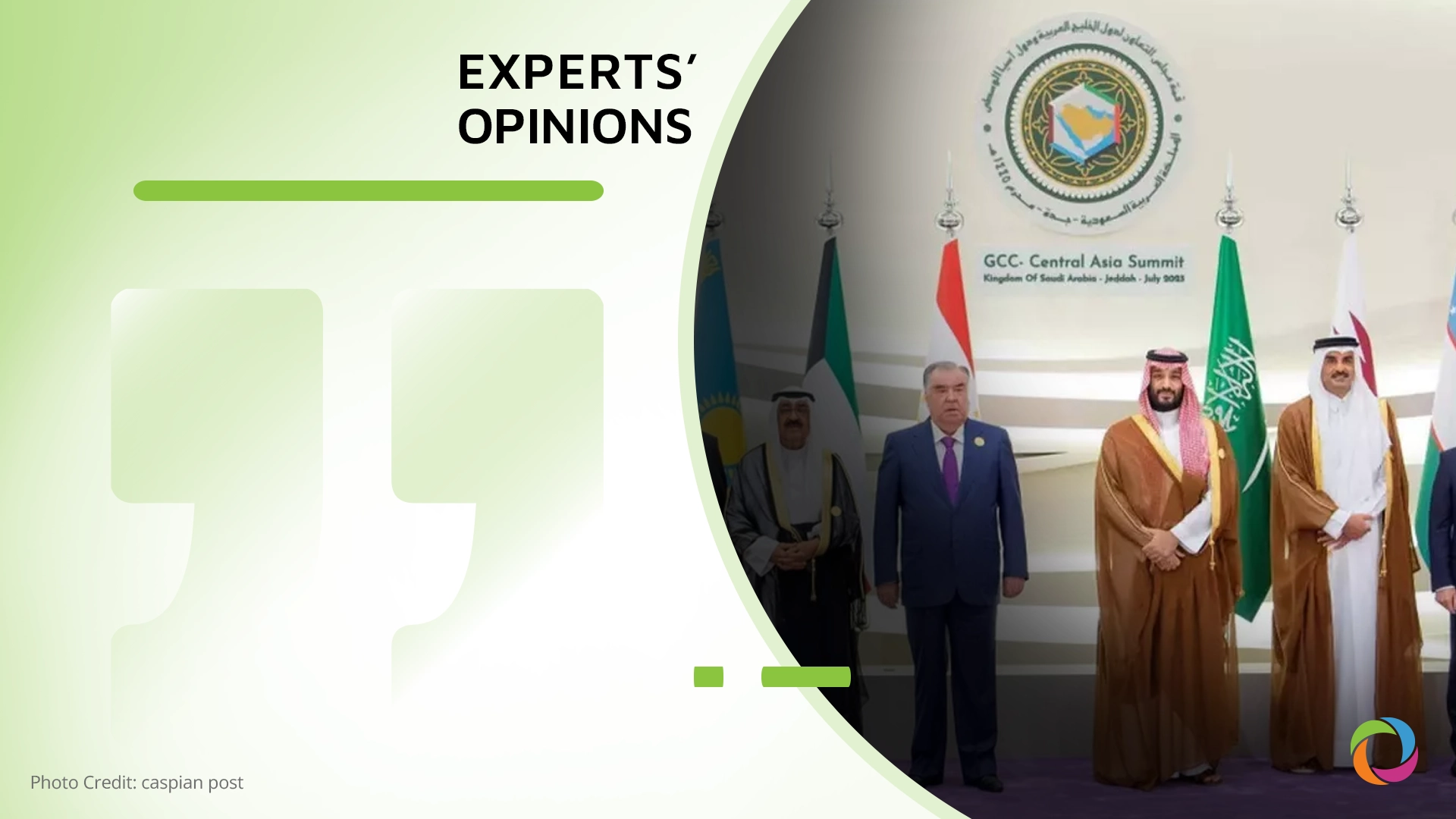
Established in 1981 by six Arab nations bordering the Persian Gulf—Bahrain, Kuwait, Oman, Qatar, Saudi Arabia, and the United Arab Emirates—the Gulf Cooperation Council (GCC) originally focused on regional defense and security. Today, economic cooperation has emerged as a central pillar of the GCC, with member states gaining influence as regional development actors with expanding aid budgets. However, the military conflict involving the U.S., Israel, and Iran, which unfolded on February 28, 2026, poses a direct threat to the security, economy, and future of regional integration. The impact of Iran’s retaliatory strikes within the Gulf extends far beyond immediate infrastructure damage. These hostilities not only disrupt oil flows but also erode the reputation of stability that the Gulf states have cultivated to expand trade, promote tourism, and reduce their reliance on fossil fuel exports. Will this conflict fundamentally alter the long-term vision of Gulf societies, and how will it reshape future partnerships? We asked several experts to share their opinions on this issue and share their responses.
Key Takeaways:
- Following the U.S. and Israeli attack on Iran, Iranian missiles and drones targeted not only military facilities in GCC states hosting U.S. forces, but also civilian sites and key infrastructure, including hotels, energy facilities, and airports in Abu Dhabi, Bahrain, Dubai, and Kuwait.
- Experts believe that the Iranian crisis in early 2026 has fundamentally challenged the global perception of Gulf stability, yet it serves as a catalyst for the GCC to transition from a security-dependent region to a proactive hub for global cooperation.
- GCC countries could consider, in this context, moving forward with cross-border logistics corridors, shared storage capacity, and harmonized standards for critical infrastructure resilience.
- With growing financial capacity and experience in building resilient ports, airports, and energy systems, Gulf states can increasingly export this expertise to partners in Africa, the Middle East, and South Asia.
DevelopmentAid: How is the war in Iran reshaping the collective security and economic outlook of Gulf Cooperation Council countries?
“The 2026 Iran war has forced the Gulf Cooperation Council (GCC) to rethink both security and economic strategy, while strengthening monitoring, evaluation, and learning (MEL) systems to support real-time decision-making, adaptive management, and accountability. The GCC is moving away from reliance on the United States toward strategic autonomy and deeper military integration, including a joint missile defense system, shared intelligence, and expanded local defense production, underpinned by real-time data systems, feedback loops, and performance monitoring. It is also diversifying security partnerships with actors such as the EU, Turkey, Pakistan, and India. Economically, the disruption of the Strait of Hormuz and major losses in aviation and tourism have pushed GCC states to shift from large-scale prestige projects to “war-proof” investments. These include AI and data infrastructure, critical minerals, and localized manufacturing, alongside broader trade links and stricter fiscal discipline, guided by impact measurement, performance indicators, and evidence-based decision-making. At the same time, the GCC is positioning itself as a development and humanitarian leader, partnering with NGOs and advancing health diplomacy initiatives to support regional stability and de-escalation, reinforced by accountability frameworks, results reporting, and continuous learning systems.”
“The conflict is creating a shared understanding that economic stability depends on protecting the physical systems that sustain it. It is forcing GCC states to rethink security through the lens of infrastructure protection. Attacks on airports, ports, and energy facilities have shown how exposed the region’s economic backbone is. Beyond defence, this could accelerate plans to harden energy corridors and alternative export routes, such as pipelines bypassing the Strait of Hormuz. Economically, the disruption of shipping lanes and aviation routes has highlighted the fragility of sectors central to diversification, such as tourism, logistics, and global trade. As a result, GCC countries will be prioritizing resilient infrastructure, redundancy in transport networks, and risk-adjusted planning.”
“Escalating tensions involving Iran are prompting Gulf Cooperation Council countries to reassess both their security frameworks and economic resilience strategies. For Gulf economies—highly integrated into global energy markets and maritime trade routes—regional instability directly threatens supply chains, investor confidence, and tourism-driven diversification agendas such as Saudi Vision 2030.”

“The Iranian crisis in early 2026 has fundamentally challenged the global perception of Gulf stability, yet it serves as a catalyst for the GCC to transition from a security-dependent region to a proactive hub for global cooperation. By rebranding as a “beyond-2030” think-tank and strategic intermediary, the GCC may find an opportunity to mitigate investment risks through a collective political will focused on economic diversification. Central to this shift is the transformation of tourism (note the GCC’s existing “Green Initiatives”) into a sustainable, research-driven sector that leverages the region’s advanced infrastructure and high-caliber human capital, considering the accumulated local and expat talent. This instability is likely to accelerate intra-GCC integration in sophisticated fields such as AI-computing, digital connectivity, state-of-the-art air transport, and joint R&D initiatives. Consequently, the evolving landscape positions Gulf nations as more versatile and strategically engaged donors in international development, possibly fostering technical partnerships. Ultimately, the success of this mid-term future depends on a unified regional agenda that aligns interstate agreements with a sustainable, knowledge-based economic model, ensuring the GCC’s resilience in an increasingly complex global order.”
DevelopmentAid: Could rising regional instability accelerate deeper cooperation among GCC countries in areas such as economic diversification, humanitarian assistance, and development partnerships?
“The 2026 Iran conflict is pushing the GCC toward deeper regional coordination, shifting from risk-avoidance to proactive collective strategies across security, economic diversification, and humanitarian action, supported by strengthened monitoring, evaluation, and learning (MEL) systems for real-time decision-making. Shared threats have reinforced the link between national stability and regional cooperation, with growing reliance on data systems, feedback loops, and performance monitoring. Economically, major disruptions, especially the Strait of Hormuz closure and $40 billion in aviation and tourism losses, have exposed vulnerabilities. GCC states are pivoting to “war-proof” investments, with Saudi Arabia scaling back megaprojects in favor of AI, logistics, and localized manufacturing, guided by impact measurement and evidence-based decision-making. The bloc is also expanding trade ties with ASEAN (Association of Southeast Asian Nations is an intergovernmental forum of all 11 states in Southeast Asia – editor’s note) and advancing the IMEC corridor (India-Middle East-Europe Economic Corridor – editor’s note) to secure supply chains. The GCC is emerging as a major humanitarian actor, partnering with NGOs and CSOs for crisis response and recovery, reinforced by accountability frameworks and results reporting. Initiatives like joint GCC-Iran health diplomacy aim to rebuild infrastructure and ease tensions. At the same time, Gulf-led development models are evolving toward South-South cooperation, blending Islamic philanthropy with modern financing tools to support a more resilient regional order.”
“Instability is pushing GCC states toward more integrated infrastructure strategies. Shared vulnerabilities, especially in energy grids, ports, and airspace, could encourage joint arrangements and coordinated crisis response mechanisms. GCC countries could consider, in this context, moving forward with cross-border logistics corridors, shared storage capacity, and harmonized standards for critical infrastructure resilience. The need for economic diversification, given the current instability, would also encourage co-investment in renewable energy corridors and digital infrastructure that spreads risk across borders.”
“In response, GCC states are increasingly recognizing the value of deeper regional coordination. Beyond traditional defense cooperation, this may accelerate collaboration in economic diversification, infrastructure connectivity, humanitarian response, and climate resilience. Joint investment platforms and coordinated development initiatives could become more prominent tools to mitigate shared risks while sustaining long-term growth strategies.”
DevelopmentAid: How might the evolving geopolitical landscape influence the role of Gulf countries as emerging donors and partners in international development?
“The 2026 geopolitical crisis and declining Western aid are accelerating the GCC’s rise as a major development actor in the Global South, supported by strengthened monitoring, evaluation, and learning (MEL) systems for evidence-based planning and adaptive decision-making. As traditional donors like the U.S., UK, and Germany reduce funding, Gulf states are filling the gap, contributing nearly US$14 billion in humanitarian aid (2020–2025) and achieving higher aid-to-GNI ratios than Western counterparts, with increased use of data systems and performance tracking. The GCC is advancing a model of “philanthro-diplomacy,” combining Islamic social finance principles with evidence-based development, impact measurement, and accountability frameworks. This approach favors flexible, bilateral partnerships and promotes more equitable South-South cooperation. At the same time, Gulf states are strengthening collaboration with NGOs and civil society, recognizing their role in crisis response and stabilization, supported by results reporting, feedback loops, and continuous learning systems. Institutions like the King Salman Humanitarian Aid and Relief Centre and Qatar Fund for Development are central to this shift. The GCC is also using humanitarian initiatives as diplomatic tools, including “Track II” health cooperation with Iran, while expanding blended finance and impact investing to sustain results and strengthen resilience.”
“The conflict can accelerate the GCC’s emergence as an infrastructure-focused development actor. With growing financial capacity and experience in building resilient ports, airports, and energy systems, Gulf states can increasingly export this expertise to partners in Africa, the Middle East, and South Asia. Reconstruction needs in the region and globally can entice Saudi Arabia, the UAE, and Qatar to use infrastructure financing as a tool of influence, shaping trade corridors and political alignments. At the same time, the desire to secure alternative supply chains is driving investment in overland transport routes, digital connectivity, and renewable energy grids beyond the Gulf. This positions GCC countries as donors whose development strategies are anchored in building physical systems that enhance regional stability.”
“At the same time, the evolving geopolitical environment is likely to strengthen the Gulf’s role as an influential actor in international development. Countries such as Saudi Arabia, the United Arab Emirates, and Qatar are already expanding development financing, humanitarian aid, and strategic partnerships across Asia and Africa. Heightened regional uncertainty may further encourage Gulf states to invest in stability abroad—positioning them not only as energy powers but also as increasingly significant development partners.”
See also: The risks and opportunities of the India–EU Free Trade Agreement | Experts’ Opinions
For international development experts who want to explore the opportunities of working within GCC, the DevelopmentAid job board (with over 5,500 open positions) currently shows over 30 available positions in the area. Interested candidates can also check salary trends, type of contracts, and read more news to make informed decisions. Aside from that, they can also check tenders and grants for individuals, or even contact organisations directly. All these options are available with a single Individual Professional Membership, which allows professionals to explore a plethora of opportunities, saving both time and money.