

Add us as your preferred source on Google to see more of our content in Search.
 Add to Preferred Sources
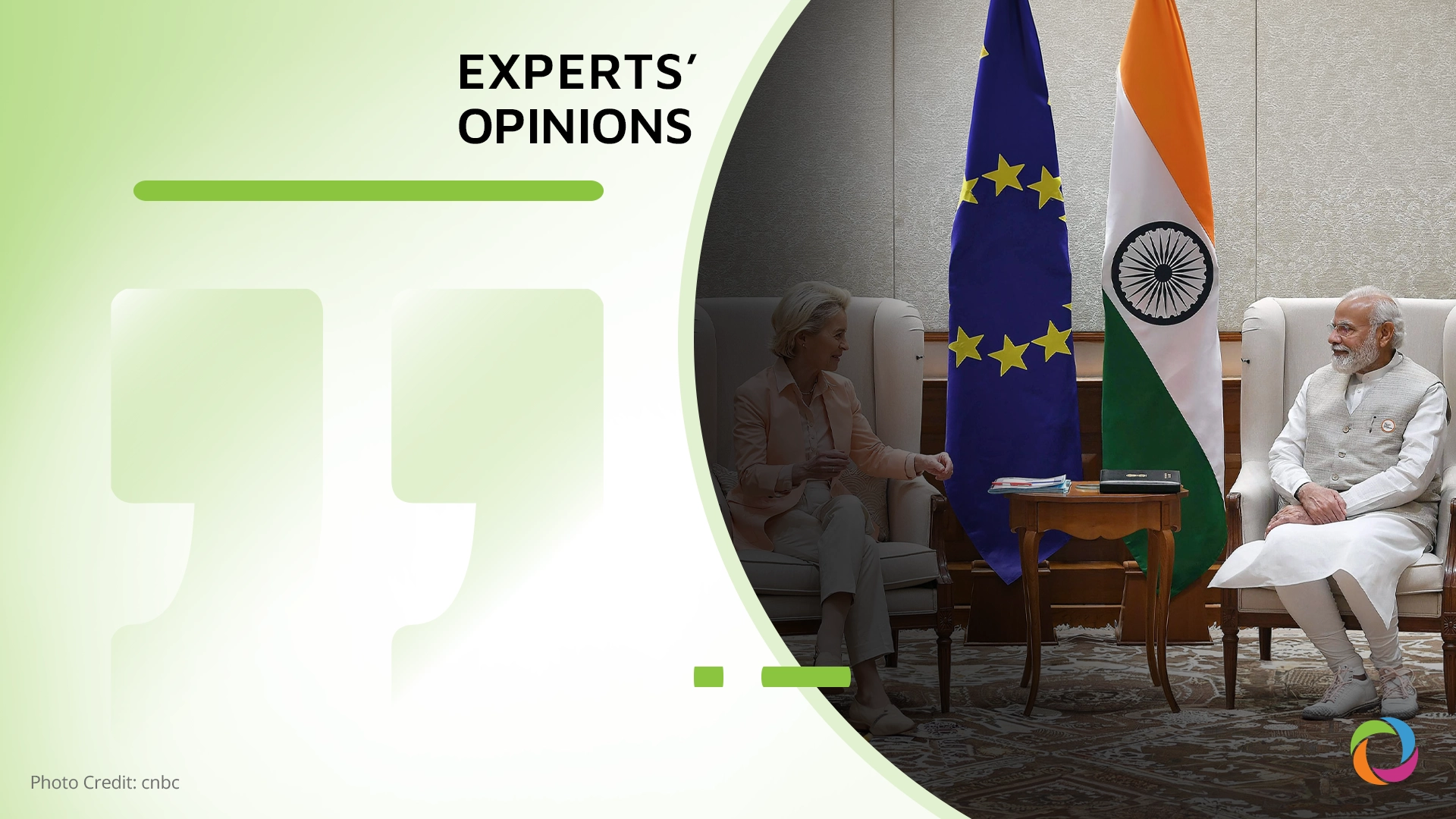
“When one door closes, another door opens” is probably one of the most often thought-of quotes in international trade. When the U.S. shut the door in the face of dozens of economies by raising tariffs, this triggered several game-changing agreements in international trade. One of these was the India-EU agreement. In January 2026, India and the European Union announced a deal that was labeled as the “mother of all deals” due to its size and potential global impact. The agreement aims to facilitate mutual trade between the bloc and the world’s most populous country, and is expected to double EU exports to India by 2032, after tariffs on 96.6% of goods traded by value have been eliminated. In turn, 90% of Indian exports to the EU will be subject to zero-duty. In the context of an increasingly fragmented global order, is this really a game-changing deal or does it carry hidden risks that policymakers should anticipate? Check out some opinions below.
Key Takeaways:
- With tariffs reduced, EU countries will be able to double their exports to India. At the same time, New Delhi will receive 500 million euros from the EU to reduce greenhouse gas emissions.
- The deal is widely framed as a hedge against U.S. economic coercion, advancing “strategic autonomy” for the EU and multi-alignment for India.
- This cooperation can strengthen strategic partnerships in areas such as technology, defense and climate change, fostering a more robust and resilient relationship.
- As the main risks, strict EU regulatory standards, climate measures such as the Carbon Border Adjustment Mechanism, and increased European imports could put pressure on Indian producers and domestic industries.
DevelopmentAid: What are some of the concrete economic and strategic gains from the India–EU Free Trade Agreement (FTA) and what risks should policymakers anticipate?

“The India-EU FTA, concluded in early 2026, includes substantial mutual concessions reflecting genuine commercial ambition. For instance, India will reduce tariffs on cars imported from the EU from 110% to as low as 10% (for 250,000 units only) while also eliminating or phasing out duties on EU industrial goods such as machinery, chemicals, and pharmaceuticals. In return, the EU will open its market to Indian textiles, leather, marine products, pharma, and services, eliminating tariffs on over 90% of lines covering ~99% of Indian export value, boosting sectors such as clothing and seafood. However, uncertainties remain, such as ratification by all 27 EU member states and India, plus legal revisions, potentially delaying full implementation until 2027 or later. Several analysts suggest geopolitical motivations, rather than purely economic ones, drove its rapid conclusion. The deal is widely framed as a hedge against U.S. economic coercion, advancing “strategic autonomy” for the EU and multi-alignment for India. It can be interpreted – at least in part – as a strategic reaction by both to aggressive U.S. tariff policies. In 2025, India faced steep U.S. penalties, including reciprocal tariffs escalating to 25% (up to 50% on certain goods), plus an additional 25% levy tied to continued purchases of discounted Russian oil. The EU also faced threats of punitive tariffs from Washington over various issues. The FTA could prove costly for China, as it accelerates the “China Plus One” diversification strategy, where companies and economies seek alternatives to heavy reliance on China for manufacturing and supply chains. The U.S. Supreme Court’s February 20, 2026, ruling striking out President Trump’s use of the International Emergency Economic Powers Act to impose sweeping tariffs created immediate ripple effects: lower effective tariffs and a ‘strategic pause’. Trump’s pivot to a temporary 10-15% global tariff under Section 122 of the Trade Act of 1974 (effective for up to 150 days) results in lower rates for India compared to the prior regime, dropping weighted averages significantly in some estimates. In addition, in early February 2026, the U.S. and India reached a breakthrough interim trade deal, slashing U.S. tariffs on Indian goods to 18%, removing Russian oil-linked penalties, and mutually opening markets, easing the 2025 tensions despite later U.S. tariff adjustments and delays yet we still do not fully know the repercussions of this US-India February deal for the FTA.”

“The 2026 India–EU FTA, while grandiosely termed the ‘Mother of All Deals’, functions more as a high-stakes geopolitical insurance policy than an immediate panacea for economic prosperity. By connecting two billion people and a quarter of global GDP, the pact ostensibly creates a necessary bulwark against rising protectionism, yet the underlying mechanics reveal a complex, potentially lopsided exchange. Strategically, the agreement formalizes a “de-risking” mandate, aiming to decouple supply chains from volatile dependencies in favor of rules-based partners. Economically, however, the benefits are asymmetric. India secures vital zero-duty access for textiles and a massive expansion in service subsectors, which serves its export-led growth strategy. Yet, this is heavily offset by the EU’s Carbon Border Adjustment Mechanism. Even with the US$590 million mitigation fund (the 500 million euros for adjusting carbon emissions provided by Brussels to New Delhi as part of the agreement, editor’s note), the regulatory burden of ESG compliance for Indian MSMEs is immense, threatening to stifle the very exporters the deal aims to empower. Conversely, the EU leverages this pact to maintain industrial hegemony, securing substantial tariff cuts for its machinery and automotive sectors. The ultimate test lies in the transition from ‘access on paper’ to ‘transformation in practice’. Without aggressive domestic industrial modernization to match European standards, the agreement risks becoming a hollow framework. Furthermore, the decision to defer sensitive agricultural negotiations ensures that this deal is not a finalized solution but a fragile starting point that is highly susceptible to future protectionist pushback and political stalling.”

“The India–EU FTA, finalized in January 2026 after nearly two decades of negotiations, promises significant economic and strategic gains. Economically, the FTA aims to reduce tariffs, which will boost trade volumes between India and the EU. This increased trade could lead to lower prices for consumers, greater market access for businesses and expanded opportunities for investment. The agreement also seeks to improve market access by streamlining regulations and standards, reducing red tape and strengthening supply chains. As the saying goes, ‘a rising tide lifts all boats’, and this FTA could indeed elevate the economies of both India and the EU. Strategically, the FTA deepens cooperation between India and the EU, which is particularly significant given the current global geopolitical landscape. This cooperation can strengthen strategic partnerships in areas such as technology, defense and climate change, fostering a more robust and resilient relationship. However, policymakers should also anticipate several risks. One key concern is ensuring that the benefits of the FTA are equitably distributed. Another risk is the potential for increased competition, which could put pressure on certain sectors and industries. Additionally, there are questions about the enforcement of sustainability standards and whether the agreement adequately addresses environmental and social concerns. As the adage goes, ‘look before you leap’, policymakers must carefully consider these potential pitfalls to ensure the FTA’s long-term success.”

“For the tech and venture capital ecosystems, the India-EU FTA is a massive catalyst for global innovation. The most concrete strategic gain is the frictionless corridor it creates for cross-border scaling. EU deep-tech and climate-tech start-ups will gain unprecedented access to India’s massive digital infrastructure and consumer base, while Indian SaaS and AI founders can tap into the EU’s lucrative enterprise market. We also anticipate a surge in VC cross-pollination, driving joint investments in resilient semiconductor supply chains and green technologies. However, policymakers must anticipate the risks around regulatory friction. The challenge lies in bridging the EU’s stringent frameworks, such as the AI Act and GDPR, with India’s evolving digital data protection laws. If new sustainability and data standards are rigidly enforced without transitional support, they risk unintentionally gatekeeping early-stage start-ups, ultimately only benefiting the legacy tech giants who can afford the heavy compliance overheads. To ensure this deal remains an engine for innovation, policymakers must prioritize harmonized digital sandboxes so the next generation of founders isn’t stifled by red tape.”

“What economic and strategic gains could the India–EU FTA generate? At its core, the deal promises expanded market access, with tariffs potentially eliminated on over 90% of goods traded. Indian labor-intensive sectors, such as textiles, leather, gems and jewelry, pharmaceuticals, marine products, and IT services, could gain a stronger foothold in European markets. Reduced tariffs and streamlined customs procedures may attract higher-quality European investment, strengthen supply chains, and accelerate technology transfer, particularly in renewable energy and digital innovation. For the EU, the FTA offers trade diversification, deeper access to India’s expanding middle class, and enhanced cooperation on sustainable production standards and climate governance. What risks and tensions must be managed? Regulatory alignment with strict EU standards could prove costly for Indian producers. Climate measures such as the EU’s Carbon Border Adjustment Mechanism may offset tariff gains for carbon-intensive exports. Increased European imports could pressure domestic industries, even as sensitive sectors remain protected. Ultimately, success will depend on balancing liberalization with phased transitions, social safeguards, and institutional support to ensure inclusive and sustainable outcomes.”

“From a strategic communications perspective, the India–EU FTA positions the European Union and India as long-term economic and geopolitical partners in a shifting global order. Economically, the deal promises expanded market access, lower tariffs for key sectors such as pharmaceuticals, automotive, and digital services, and greater supply chain integration. Politically, it reinforces the reform agenda of Narendra Modi and supports the EU’s Indo-Pacific strategy under Ursula von der Leyen. Strategically, the agreement decreases dependency on China and improves resilience against global disruptions. However, risks remain. Uneven benefits may fuel a domestic backlash, especially among small producers. Weak enforcement of sustainability and labor standards could undermine credibility. Moreover, over-framing the deal as a matter of geopolitical alignment may provoke regional tensions. Policymakers must therefore balance economic ambition with social inclusion, transparency, and credible regulatory oversight.”
Did you know that trade is an important and strategic sector in international development, often labelled as a key driver of economic growth, job creation and poverty reduction? For individual consultants and experts with backgrounds ranging from the private sector to business development who are looking for jobs in this field, there are currently over 130 openings on the DevelopmentAid job board. Because time is the most valuable asset to “trade” in exchange for a job, DevelopmentAid’s Individual Professional Membership allows candidates to find every available position in a single place and then open and filter these according to specific criteria. As well as this, they can access open tenders and grants for individuals or even contact organisations directly. To stay ahead of the competition, experts can check salary trends, listen to podcasts, access exclusive reports, news, and editorials, and stay up to date with the latest events in the sector.
Be quick, secure your Professional Plus Membership for 2026 today while DevelopmentAid is offering a 19% discount for a limited-time platform anniversary offer.