

Add us as your preferred source on Google to see more of our content in Search.
 Add to Preferred Sources
As even established democracies are increasingly experimenting with authoritarian tactics nowadays, ordinary people – particularly those from marginalized groups – endure the consequences and suffering. When it is becoming ever more insecure to gather and express opinions freely and safely, events like the Ottawa Civic Space Summit become vital platforms to resist this and reclaim civic space.
In reaction to the growing worldwide attacks on people’s basic rights – the freedom of association, of assembly, and of expression – civil society leaders, civic space activists, donors, and the media, supported by the private sector, gathered for a three-day event in Canada in late April 2026.
There were many topics to discuss, countless of thoughts to share, and numerous expectations to meet.
As a media partner at the event, DevelopmentAid provided news of civil society organizations and media outlets working on the frontline of defending civic rights. Now we share our perspective about this inaugural global summit.
“My expectations from this summit were high. As funding priorities shift from humanitarian and development needs to military and defensive spending, promoting diversity and civic resistance seems not mainstream but a marginalized sector. It becomes critical to keep this topic visible,” commented Kate Neliuba, Head of INGOs and Foundations Unit at DevelopmentAid.
She added that from the inaugural session of the event, she felt “enthusiastic” about discovering a gathering that sought to discuss and find practical solutions to the problems encountered by civil society organizations, human rights activists, and journalists in their everyday work.
The three days of the summit were divided into three thematic sections: Defend, Reclaim, and Reimagine the civic space.
Day 1. Defend
Day 1 was about understanding the importance of defending democracy and hearing inspiring stories of strong and brave organizations such as the Afghanistan Human Rights and Democracy Organization.
Later in the day, participants learned about the legal strategies and devices used by lawyers to counter attacks on human rights defenders in the most dangerous regions, such as Haiti or certain countries in the Americas.
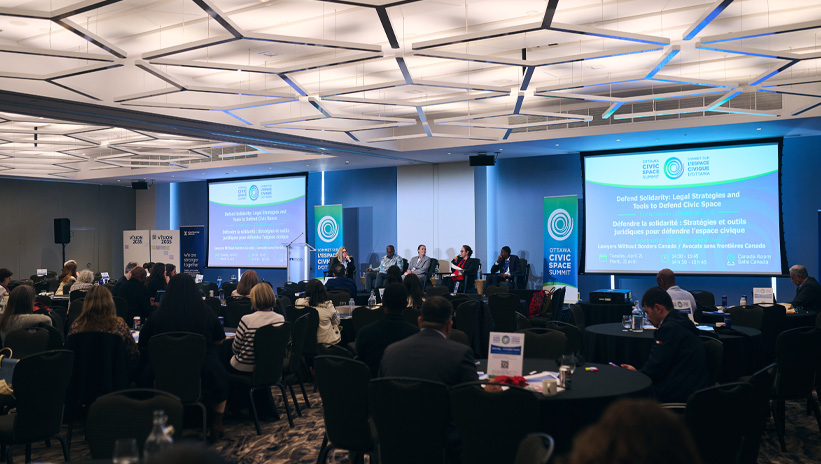
What stood out to Kate during day one was the panel entitled “Defend Democracy’s Frontlines: Understanding Drivers of Civic Space,” and the organizations that participated, which included the National Democratic Institute, Access Now, the Innovation Foundation for Democracy, the European Endowment for Democracy, Civicus, and Partners Global.
“This panel brought together leaders from civil society and democratic thought who analyzed the drivers behind the repression of the civic space witnessed around the globe. Thus, instruments and tools that ought to work for the good of the people are used against them –political power, technology, economic interests, and security narratives,” revealed Kate.
Day 2. Reclaim
The second day of the summit was about reclaiming public space – the freedom of expression, gender justice, and human rights.
“On the second day of the summit, what I found very important was the Sima Samar Award that embodied moral courage, resilience, and solidarity in the face of repression. I think the launch of this award was much-needed – it responds to a global moment in which civic space, democratic institutions, and fundamental freedoms are under sustained pressure. The award will elevate stories of courage and principled leadership that inspire others to act,” explained Kate.
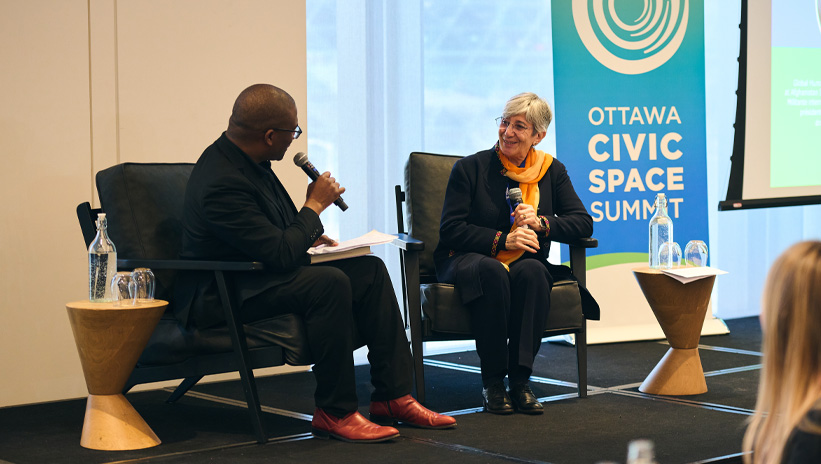
Another powerful moment of the second day was a short inspirational speech by the women-led nonprofit Organization for European Expertise and Communications (OEEK), with whom DevelopmentAid had conducted an interview earlier in April.
OEEK revealed the story of Belarusian youth who are living under long-standing repression, yet have a modern, democratic mindset. How do they withstand the constant pressure and what future opportunities are there?
A key finding shared by OEEK was that informal groups and grassroots initiatives are often the most active in a repressed civic space but, paradoxically, the least supported. Donors and institutions should find ways to reach them directly, even if they are not formally registered.
Hero Stories | Belarusian youth insist on their civic space despite repression: an interview with OEEK ahead of the Ottawa Civic Space Summit
In a protected civic space, freedom of expression thrives. Journalists and the media are the driving force of the freedom of expression as they serve the interests of people, asking the authorities uncomfortable and direct questions.
Lotfullah Najafizada, an Afghan journalist and founder of Amu TV, a Washington-based international news outlet reaching audiences inside and outside Afghanistan, shared his thoughts on reclaiming the public square during a panel session on Day 2 of the summit, and also during a DevelopmentAid Dialogues podcast episode.
“The public square, where the public should have its say, is eroding,” Najafizada said, citing Democracy Without Borders’ count of 91 or 92 autocracies versus 85 or 87 democracies – a division that is hitting discourse the hardest.
He added that the summit came at a critical moment and that he was excited to speak about the topic.

Day 3. Reimagine
The participants had many expectations from the third and final day of the summit. Earlier, both OEEK and Najafizada had expressed high hopes regarding planning and support, as well as an expectation for next year’s event to measure the progress achieved during 2026 and hopefully find a less repressive civic space.
The day began with a performance by the Eagle River Singers, a traditional drum group composed of Algonquin singers from the Algonquin Anishnabeg communities of Kitigan Zibi and Barrie Lake. This moment of mindfulness and celebration of diversity helped participants to start the day in a good way.
What followed was a fireside conversation with the Honourable Anita Anand, Canada’s Minister of Foreign Affairs. Entitled “From principle to practice: Canada’s role in defending civic space”, this session explored why civic space matters and Canada’s role and mission in defending and advancing it globally.
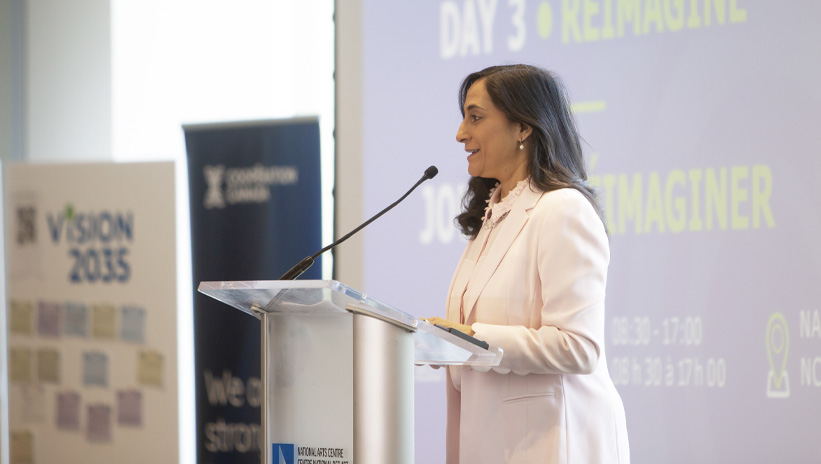
In her opening notes, Anita Anand thanked the Ottawa Civic Space Summit participants for their work.
“(…) it is here that I want to thank you for your work. It’s not just existing multilateral organizations such as the UN or NATO, for example, but it is in addition the work that we do everyday (…) in rooms like this, to ensure that those values that we hold dearly: human rights, international law, respect for gender equality and environmental sustainability, the fight against transnational repression and upholding the freedom of the press. These are fundamental values for us, as a Government, for our foreign policy, and I know for the work that many of you do everyday.”
After a sincere and inspiring discussion with Canada’s Foreign Minister, a session on reimagining the civic space in the following years unfolded. Entitled “Reimagine 2035: Building A Vision for Open Civic Space”, the plenary launched Vision 2035, a global participatory initiative to develop a shared roadmap to protect and expand civic space over the next decade.
This session brought together foundation and civil society leaders, CEOs, development professionals, and progressive minds in the civic space arena. Their dynamic dialogue explored the challenges, tensions, and opportunities shaping the future of civic space. The session helped to frame the priorities that will guide global consultation and collaboration following the summit.
“My key takeaways from this summit were from two perspectives: emotional and practical. On the emotional side, I saw people who really care about civic space. People who proved to me that it is darkest before dawn and that by resisting the challenges, we can reignite hope. The practical perspective is that DevelopmentAid is doing the right work providing organizations in the sector with data that can help to achieve impact and accelerate development,” explained Kate Neliuba.
The organizers of the summit – Cooperation Canada and Resilient Societies – proudly reported that over 350 participants gathered for 30+ sessions, to listen and interact with more than 90 speakers during the summit.
Their hope is that the next edition of the Ottawa Civic Space Summit will hear many more success stories and attract many more actors choosing to provide funding and assistance to organizations working to improve and empower civil societies across the world.
DevelopmentAid is looking forward to the next Ottawa Civic Space Summit.