
Add us as your preferred source on Google to see more of our content in Search.
 Add to Preferred Sources
Species extinction rates accelerating, Sahel Crisis reaches unprecedented levels and out-of-pocket expenses hamper access to HIV services. Here is what you missed from last week’s headlines in the international development sector:
Species extinction rates ‘accelerating’
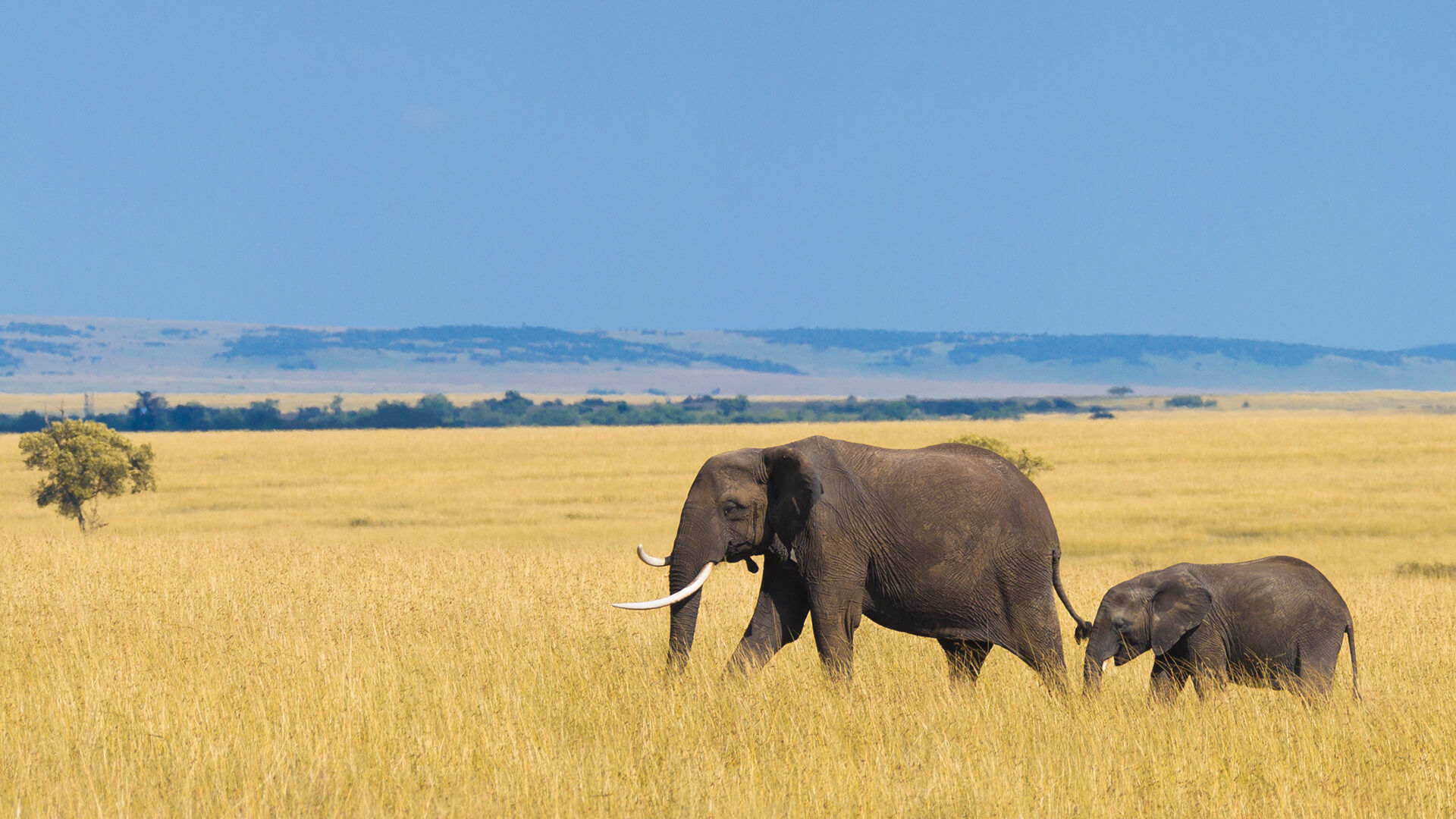
Nature is declining globally at rates unprecedented in human history — and the rate of species extinction is accelerating, with grave impacts on people around the world now likely, warns a landmark new report from the Intergovernmental Science-Policy Platform on Biodiversity and Ecosystem Services (IPBES).
“The overwhelming evidence of the IPBES Global Assessment, from a wide range of different fields of knowledge, presents an ominous picture,” said IPBES Chair, Sir Robert Watson. “The health of ecosystems on which we and all other species depend is deteriorating more rapidly than ever. We are eroding the very foundations of our economies, livelihoods, food security, health and quality of life worldwide.”
The Report also tells us that it is not too late to make a difference, but only if we start now at every level from local to global.
Sahel crisis reaching unprecedented levels
Repeated and increasingly sophisticated armed attacks in the Sahel and food shortages linked to last year’s severe drought have reached unprecedented levels, putting the future of a “whole generation” at stake, three top UN humanitarian officials said.
In an appeal for increased funding to support millions of people affected by spreading violence in Mali, Niger and Burkina Faso, the UN Resident and Humanitarian Coordinators for the three countries warned that the instability risked spilling over into other West African countries.
According to the latest UN figures, some 5.1 million people need humanitarian assistance in Burkina Faso, Mali and Niger’s western Tahoua and Tillaberi regions. Aid organizations have appealed for $600 million to assist those most in need, but funding is at around 19 percent only, for all three countries.
Out-of-pocket expenses hamper access to HIV services
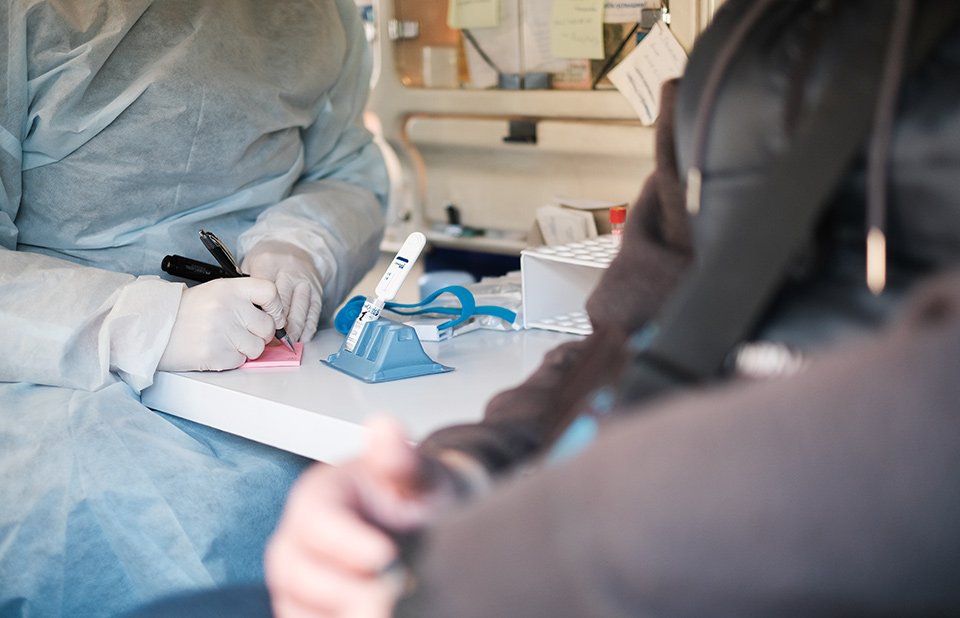
User fees and other out-of-pocket expenses―defined as direct payments made by people to health-care providers at the time of service use―are a major barrier to people getting tested for HIV, to people living with HIV being treated and to people living with HIV being retained in treatment and care, says UNAIDS.
Even if antiretroviral medicines are available free of charge, fees for diagnostic tests, consultations, and medicines for opportunistic infections have a huge impact on people living on a lower income.
Here’s what else happened
North Korea: A United Nations food security assessment in the Democratic People’s Republic of Korea has found that following the worst harvest in 10 years, due to dry spells, heat waves, and flooding, about 10.1 million people suffer from severe food shortages. The assessment concluded that the reduced harvest, coupled with increased post-harvest losses, has led to an uncovered food deficit meaning people won’t have enough food until the next harvest.
Blue economy: The Asian Development Bank launched a $5 billion Action Plan for Healthy Oceans and Sustainable Blue Economies. The financing is expected to support ocean health and marine economy projects from 2019 to 2024 in the Asia and Pacific region.
Women’s rights: UN Women announced a global intergenerational campaign to bring women’s rights and empowerment to the forefront. The Generation Equality campaign aims to bring attention to issues including equal pay, equal sharing of unpaid care and domestic work, and equal participation in economic and political life.
Reports
Job quality in 41 countries under the microscope
A joint ILO-Eurofound report covering about 1.2 billion of the world’s workers found stark differences in working hours, significant levels of intensive and emotionally demanding work and that the least-educated have worse overall working conditions and fewer opportunities to develop their skills.
”Working conditions in a global perspective” report stresses that job quality can be improved by reducing excessive demands on workers and limiting their exposure to risks.
52 million people undernourished in NENA region
The Regional Overview of Food Security and Nutrition in the Near East and North Africa, published by the Food and Agriculture Organization of the United Nations, indicates that 52 million people in the region are suffering from chronic undernourishment.
According to the report, conflict continues to be the main driver of hunger across the region. The report also shows that not only do conflicts undermine the region’s Zero Hunger efforts, but also the degree of rural transformation.
Events announced
Tenth Clean Energy Ministerial (CEM10/MI-4)
Vancouver, Canada
27-29 May 2019
CEM10/MI-4 will bring together international players comprised of a diverse, dynamic group of clean energy advocates and leaders to advance clean technology and innovation. The event provides, among others, a platform for high-level policy dialogue and sharing of best practices to help accelerate the transition to a low carbon future and public-private engagement to build cooperation among industry, government, and civil society to scale up clean energy around the globe.
Global Platform for Disaster Risk Reduction (GP2019)
Geneva, Switzerland
13-17 May 2019
The 6th session of the GP2019 is convened and organized by the UN Office for Disaster Risk Reduction (UNDRR) and hosted by the Government of Switzerland. The session will be co-chaired by Switzerland and UNDRR. It will represent the next important opportunity for the international community to boost the implementation of the Sendai Framework related goals of the 2030 Agenda, as well as commitments of the Paris Climate Agreement. It is also the last global gathering for all stakeholders before the deadline for achieving Target E of the Sendai Framework: to substantially increase the number of countries with national and local disaster risk reduction strategies by 2020.
Climate change and Green Growth Day: Moving from Emergency Relief to Building Resilience
Abidjan, Côte d’Ivoire
27-28 May 2019
The event will feature two panels and a Seminar on the achievements and challenges in addressing climate change through Bank activities across all sectors. The first panel will explore approaches, opportunities, and challenges in building resilience in Africa, while the second will discuss financing and business models for building climate-resilience in Africa.
Participants will be also invited to an exhibition highlighting the Bank’s work in Energy, Agriculture and Forestry, Water, Transport and Cities, Gender and Human Development, and Climate Information Services.
Innovate4Climate (I4C)
Marina Bay Sands Expo and Convention Centre, Singapore
4-7 June 2019
2019 will represent the 3rd Edition of I4C and will build on previous events which focused on unlocking the trillions in private sector investment needed to scale up national climate plans and to accelerate the global transition to a low-carbon, climate-resilient future and the development of innovative financing instruments and approaches to support low-carbon, climate-resilient development pathways.
The summit will focus on three areas where meaningful transformation is possible: the power of sustainable cooling, the promise of battery storage and the potential for climate-smart urban development.
Eighteenth World Meteorological Congress (Cg-18)
Geneva, Switzerland
3-14 June 2019
The first two days of the session will be dedicated to in-depth discussions on key Congress resolutions with significant implications for Members. Topics for discussions, which will be organized for each region in parallel, will include services such as the Global Multi-Hazard Alert System (GMAS), Multi-Hazard Early Warnings Systems (MHEWS), Hydrological Status and Outlook System (HydroSOS), as well as observations – the Global Basic Observing Network, World Water Data Initiative, and others.