
Add us as your preferred source on Google to see more of our content in Search.
 Add to Preferred Sources
Nearly eighty percent of Afghanistan’s past peace meetings since 2005 have left women completely out, a new joint report by Oxfam, Cordaid, and InclusivePeace. As intra-Afghan peace talks with the Taliban kick off in Doha this week, without the meaningful participation of women, any sustainable peace efforts are at risk of failure.
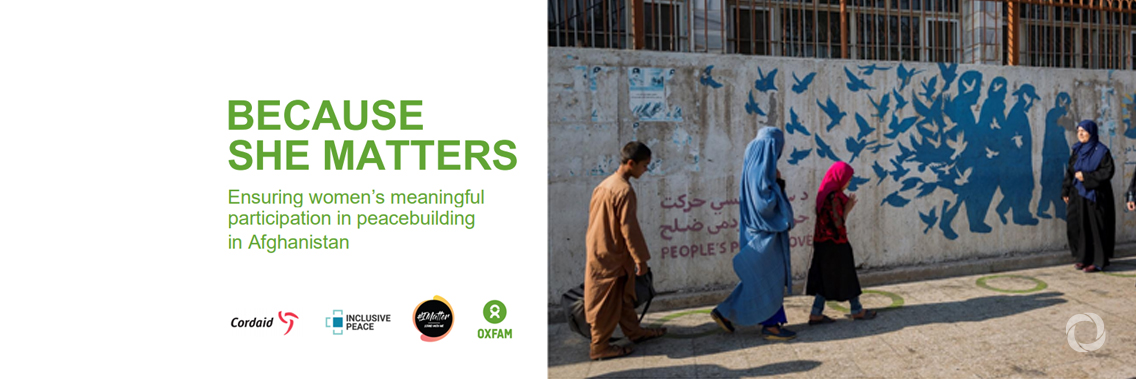
The joint report Because She Matters highlights tangible ways to ensure women’s propositions and concerns are reflected in the negotiation process. It also shows that peace is more attainable when women have a place at the table, as peace agreements are 35 percent more likely to last beyond fifteen years when women effectively engage in them.
“Continued exclusion of women from Afghanistan peace efforts and decision-making will not only jeopardize the realization of a true and sustainable peace, but blatantly disregard women’s rights to define their own future. We fear hard-won gains in women’s rights could be reversed”, said Ashish Damle, Oxfam’s Country Director in Afghanistan.
For 15 years, Afghan women took part only in 15 out of 67 (22 percent) exploratory meetings, formal and informal negotiations, and internationally backed consultations. Even when women were included, their numbers were often small and their influence was limited as they were excluded altogether from high-level meetings.
During the meetings between the US government and the Taliban in Doha in February that set the stage for the start of the intra-Afghan peace process last Saturday, not one woman was included in the conversation; and consequently, women’s rights were not mentioned in the resulting deal struck in February. Despite the deal, violence continues to rage with more than 500 civilians killed only in the first quarter of the year.
“Despite seeing a small number of Afghan women represented in peace processes, Afghan women’s voices are largely marginalized. The intra-Afghan peace process, at all stages and levels, needs to do much better,” added Damle.
Currently, many venues for women’s participation remain underutilized, including problem-solving workshops, and commissions, such as technical working groups and follow-up mechanisms.
Despite the political rhetoric and commitments on safeguarding women’s rights, the international community’s support for the inclusion of women in Afghanistan in peace processes remains shockingly low. There is also a fear that the negotiation delegations could compromise women’s rights in order to achieve a deal at the expense of truly sustainable peace. While the Afghan government has included five women in their 21-member negotiation team (24 percent), there are no women on the Taliban delegation.
Read the report: Because She Matters.
Original source: Oxfam