
Add us as your preferred source on Google to see more of our content in Search.
 Add to Preferred Sources
The best time to prevent the next pandemic is now, achieving gender equality in Asia and COVID-19 rapid tests for low- and middle-income countries. Here is what you missed from last week’s headlines in the international development sector:
The best time to prevent the next pandemic is now: countries join voices for better emergency preparedness
COVID-19 will not be the world’s last health emergency and there is an urgent need for sustainable health emergency preparedness to deal with the next one.
This was the strong sentiment shared by participants of the United Nations General Assembly side-event on ‘Sustainable preparedness for health security and resilience: Adopting a whole-of-society approach and breaking the “panic-then-forget” cycle’. The high-level virtual event was co-hosted by Finland, France, and Indonesia, along with the World Health Organization (WHO).
Past crises have shown that once an outbreak is under control, governments and donors tend to turn their attention to other pressing concerns. This cycle of “panic-then-forget” has prevented the development of effective health emergency preparedness across the globe. The world needs to break this cycle once and for all.
This week, the world crossed a grim milestone with over a million lives lost to the COVID-19 pandemic, and many more expected to have died from unprecedented disruptions to the health systems.
“Over the years we have had many reports, reviews and recommendations all saying the same thing: the world is not prepared for a pandemic. COVID-19 has laid bare the truth: when the time came, the world was still not ready,” said Dr. Tedros Adhanom Ghebreyesus, WHO Director-General, in his opening address. He called for investing in preparedness, with an all-of-government and all-of-society approach. “This will not be the last pandemic, nor the last global health emergency. But with the right political and financial investments now, we can advance health security, prevent and mitigate future pandemics, and protect our future and the future of generations to come,” he said.
Achieving gender equality key to restoring economic resilience in Asia
Business leaders and policymakers in Thailand said that top priority must be given to empowering women in the workplace if Asia and the Pacific is to recover from the economic damage of the coronavirus pandemic.
The CEOs of 110 companies in Thailand signed and announced new commitments to the Women’s Empowerment Principles (WEPs) during a ceremony to celebrate the 10th anniversary of the principles. They committed to broaden and strengthen gender-responsive business practices, including gender-equal corporate leadership, inclusive, safe workplaces, and equal pay for work of equal value. More than 3,600 companies worldwide have signed the WEPs, established by UN Women and United Nations Global Compact. Before today, only 11 companies in Thailand had signed on.
Narumon Pinyosinwat, Thailand’s Deputy Minister of Labour, said today’s event will help boost women’s labour force participation in Thailand. She said women now make up 45 percent of the country’s total workforce. But it is estimated that by 2040, up to 17 million jobs (44 percent of all jobs) in Thailand could be at risk of automation – and due to gender inequality, women are more likely to lose those jobs. That is why the Ministry of Labour has made women’s economic empowerment a top priority, Narumon said.
Global partnership to make available 120 million affordable, quality COVID-19 rapid tests for low- and middle-income countries
A set of agreements to make available, for low and middle-income countries, affordable, high-quality COVID-19 antigen rapid tests were announced by the Access to COVID-19 Tools (ACT) Accelerator.
Organizations involved in the milestone agreement include the Africa Centres for Disease Control and Prevention (Africa CDC), the Bill & Melinda Gates Foundation, the Clinton Health Access Initiative (CHAI), the Foundation for Innovative New Diagnostics (FIND), the Global Fund, Unitaid, and the World Health Organization (WHO).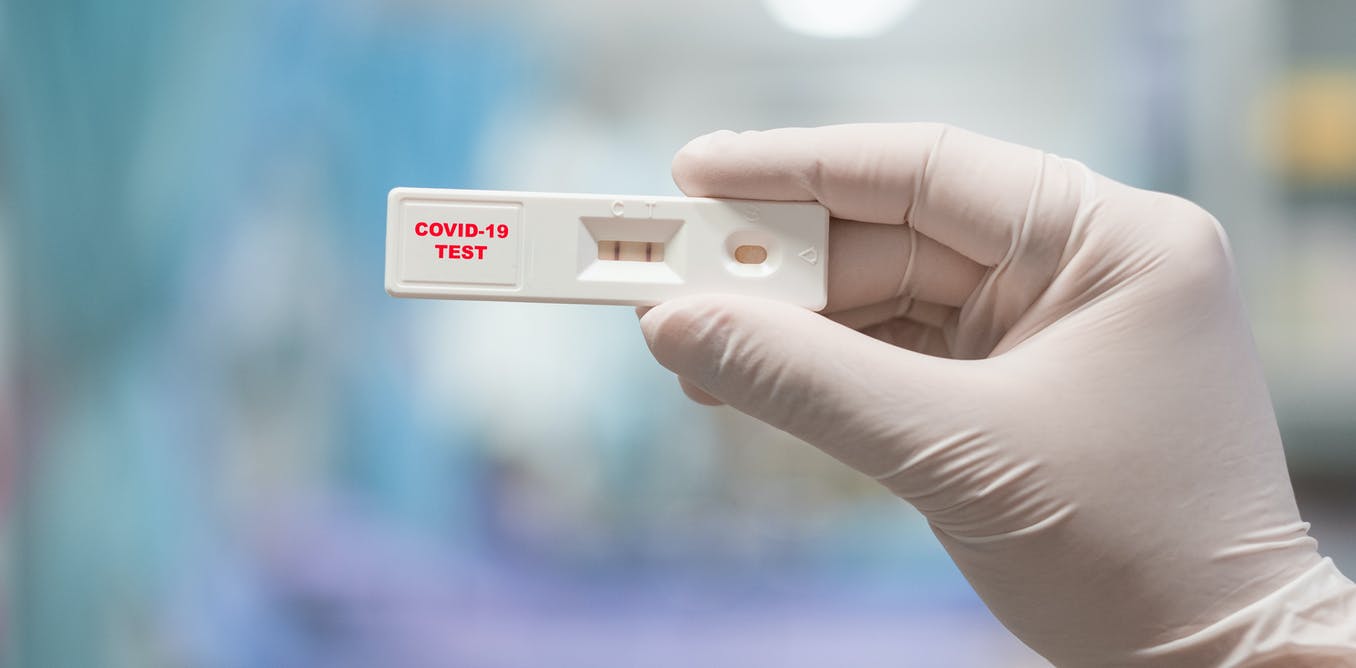
As part of this comprehensive, end-to-end effort, the Bill & Melinda Gates Foundation has executed separate volume guarantee agreements with rapid diagnostic test (RDT) producers Abbott and SD Biosensor. These two arrangements will make available to LMICs 120 million antigen rapid diagnostic tests (Ag RDTs) – priced at a maximum of US$5 per unit – over a period of six months. These tests provide results in 15–30 minutes, rather than hours or days, and will enable expansion of testing, particularly in countries that do not have extensive laboratory facilities or trained health workers to implement molecular (polymerase-chain reaction or PCR) tests.
To scale up the Ag RDTs, the Global Fund announced that it has made available an initial US$50 million from its COVID-19 Response Mechanism to enable countries to purchase at least 10 million of the new rapid tests for LMICs at the guaranteed price, with the first orders expected to be placed this week through the Global Fund’s pooled procurement mechanism.
FIND and WHO are working together to accelerate appropriate use by supporting implementation research that will optimize Ag RDT use in multiple LMICs, in line with WHO guidance. This includes the provision of catalytic volumes of tests to understand how Ag RDTs can best fit into health systems.
DevelopmentAid Editorials
The list of major upcoming events in development sector in October 2020
Keep up to the date key events about emerging funding strategies, environmental policies, climate change, technological development, labour standards and energy issues in the development sector via our compiled list.
Track events hosted by reputable international organisations, donors, NGO’s and IFIs that bring together the biggest change-makers and stakeholders in international development cooperation.
The World Bank approves US$150 million to support the post-COVID-19 economic recovery in Nepal
On 28th September, the World Bank approved the US$150 million ‘Nepal Urban Governance and Infrastructure Project’ to support post-COVID-19 economic recovery in Nepal. The project, which aligns with the National Urban Development Strategy (NUDS, 2017), will strengthen service delivery and the institutional capacities of municipalities in the strategic urban clusters of Provinces 1, 2, and 5 as well as the Gandaki Province.
The World Food Program: Climate change and COVID-19 have amplified food insecurity in Southern Africa
According to World Food Program officials, about 45 million people in Southern Africa are facing food insecurity and the worst affected country is Zimbabwe.
Here’s what else has happened
Gavi: Up to US$150 million in initial, catalytic support will be made available to 92 low- and middle-income economies eligible for participation in the Gavi COVID-19 Vaccines Advance Market Commitment (COVAX AMC), according to a decision taken at the Gavi Board meeting.
China: The United Nations World Food Programme (WFP) and the Government of China have signed agreements to provide food assistance to vulnerable people in Ethiopia and Guinea whose food security is being further undermined by the socio-economic effects of COVID-19.
Biodiversity: Biodiversity underpins most of the world’s economic activities, particularly in the agri-food sector, so the pace of its erosion must be contrasted with holistic, coherent, and collective efforts, FAO Director-General QU Dongyu said.
ADB: The Asian Development Bank (ADB) has approved a $40 million concessional loan and a $10 million project grant to help manage and mitigate flooding in Nepal’s Terai region.
Reports
Annual report: Pandemic recovery must be measured in ‘human rather than economic terms’
We must “commit” to building a more inclusive and sustainable world, the UN chief underscored in his annual report on the Work of the Organization. In the Introduction, Secretary-General António Guterres said the international community should reflect on “our shared progress as well as…our vision and values”.
He highlighted some of the Organization’s accomplishments, such as putting in place vital agreements that codify and protect human rights, setting ambitious goals for sustainable development, and charting a path towards a more balanced relationship with the natural world, among many others.
Read the Report of the Secretary-General on the Work of the Organization 2020.
Responding today for a better tomorrow
UN DESA entered 2020 with a concrete plan of action, placing it on firm footing to respond quickly to the needs of Member States when the COVID-19 pandemic abruptly upended our daily lives.
“In responding to this emergency, the Department immediately pivoted intellectual resources toward understanding and projecting the real and potential socioeconomic fallout of the pandemic and identifying policy recommendations and concrete actions for Member States to consider,” stated Under-Secretary-General Liu Zhenmin in the newly released UN DESA Highlights 2019-2020 report.
The report presents an overview of the support UN DESA has continued to provide to Member States to advance sustainable development, even amidst a global pandemic.
Read the report: UN DESA Highlights 2019-2020.
Events
Webinar | How to Get Shortlisted for a Project. CV Tailoring Tips
?8 October ? 4:00 PM CEST (Brussels time)
Webinar
Join DevelopmentAid for a free 1-hour webinar to learn what the features of a winning CV are and also how to tailor your CV so that it stands out from the competition and increases your chances of being selected for any donor-funded project.
Virtual | Financing Low-Income Countries Towards Realistic Aspirations and Concrete Actions in a Post-COVID World
? 5 – 8 October 2020 ? 8:30 AM (EDT)
Virtual conference
This online conference will bring together three key strands of the discussion around the financing needs of LICs for the SDGs – debt sustainability, domestic resource mobilization, and private capital flows. The lens through which each of these issues will be examined is one of a global economy that has suffered its largest shock since the Great Depression. By examining the key challenges and opportunities in each of these areas, the conference aims to set the stage for a discussion of how low-income countries might still be able to mobilize financing in sufficient volumes as well as on reasonable terms in the coming five years to remain on track towards achieving the SDGs.
Workshop | Integrated Marine Spatial Planning and Sustainable Blue Economy
? 19 – 23 April 2021
Workshop
Strategic Marine Spatial Planning and Sustainable Blue Economy Workshop in Brussels, Belgium is a unique program that has been specifically designed for those professionals who intend to employ MSP for marine conservation, support sustainable blue economy growth, and promote responsible and accountable maritime industry organizations. The program bridges the gap between marine science, management, and spatial planning, and therefore, equips its delegates with unmatched skills and knowledge to embark on new levels in their career.