
Add us as your preferred source on Google to see more of our content in Search.
 Add to Preferred Sources
2020 was a challenging year for the international development community. Aid workers, consultants, technical staff working in the field, as well as core-staff from the donor organizations, all worked hard despite the pandemic and the lockdowns, doing their best to facilitate development. Alongside those efforts, DevelopmentAid journalists were also watching and contributing, by writing about the progresses and challenges, to keep you up to date with the most important news and events in the development sector.
Today, we bring you TOP-15 of the most read editorials, published by DevelopmentAid in 2020. Their authors are development journalists from Nepal, Papua New Guinea, Poland, Moldova, and the US. Our editorial team wishes you a Happy New Year!
Experts’ Opinions| Being a Humanitarian Aid Worker: vocation, job, sacrifice and reward (PART I)
Being a Humanitarian Aid worker is not an easy job. It takes drive, courage, good communication skills and initiative. These workers believe they can make a significant impact through their career. Today, we mark World Humanitarian Day – a global celebration of people helping people. On this special day, we would like to inspire you by sharing the experiences of some Humanitarian Aid Workers.
Experts’ Opinions| Being a Humanitarian Aid Worker: vocation, job, sacrifice and reward (PART II)
Hard work, compassion, sleepless nights and a call for humanity – these are the key ingredients that make up a humanitarian aid worker. Today, we mark World Humanitarian Day – a global celebration of people helping people. On this special day, we would like to inspire you by sharing the experiences of some Humanitarian Aid Workers.
Unemployment rates will remain high
The unemployment rates triggered by the pandemic will be much higher than at the peak of the global financial crisis in 2008. The sharp contraction in economic activity suffered by many countries has led to a massive rise in global unemployment in the short term and a decrease in income opportunities in the long term. The recovery will take years despite the efforts of governments to develop adequate labor market policies concepts to mitigate the effects of the crisis.
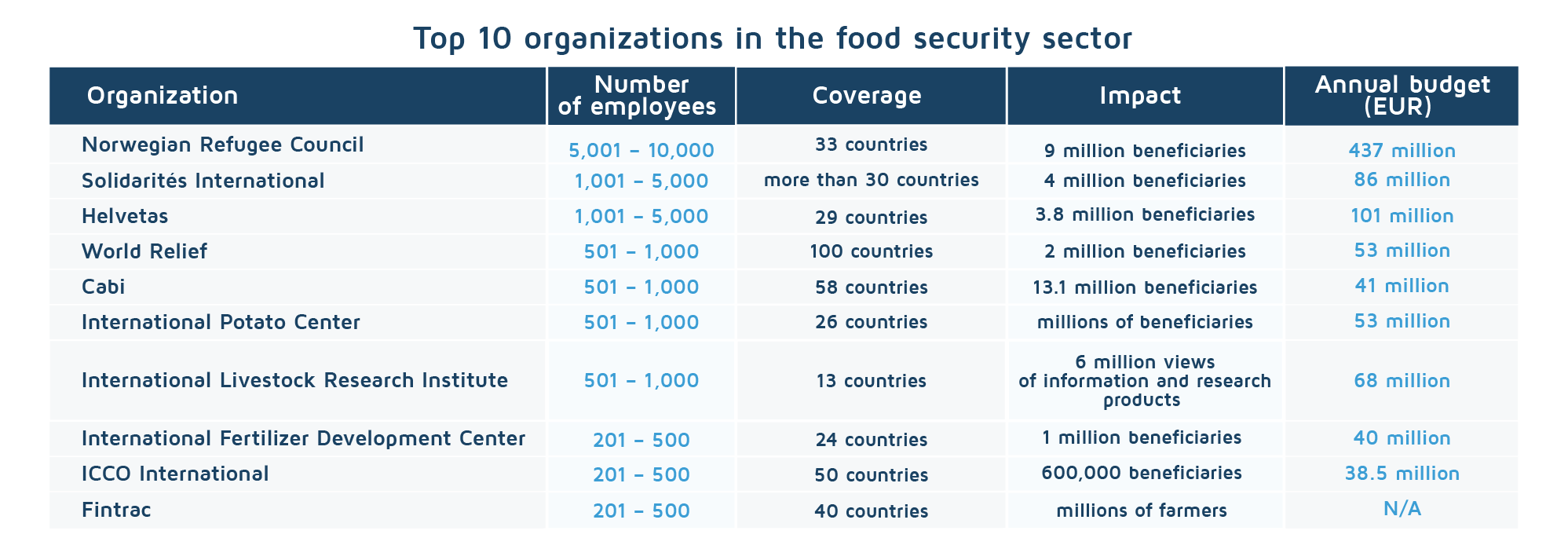
The Top 10 organizations in the food security sector
The gloomy perspective of the worsening food crises that have trapped people in poverty and hunger is putting pressure on governments and the international community. Even before the pandemic, food insecurity rates had raised concerns but the realities over the intervening period accelerated the impetus to adopt concerted channeled sustainable actions. More people could die from lack of food linked to COVID-19 rather than from the disease itself before the end of the year.
Data for good: connecting organizations with data experts to solve humanitarian issues
Data for good started out as a social movement several years ago when it sought to understand how data science could be used to address a range of humanitarian issues. Leading this movement was DataKind, a collaborative network of organizations. Basically, the idea of such custom projects is that they bring together high-impact organizations or initiatives and leading data scientists to work together in the service of certain humanitarian projects.
Germany looks to facilitate private sector investments in Africa
The German government’s policy, in terms of targeting its ODA spending, has followed the principle of diffusing aid globally on the basis of need, with little geographical bias. Its development finance institution – DEG – has reflected this policy, having a global geographical focus for its investments portfolio. However, with the recent ‘AfricaConnect’ €400 million initiative under DEG’s management, the German Development Ministry is looking to increase private sector investments and cooperation with the African continent.
Experts’ Opinions| Coronavirus Outbreak: Tracking its global impact
A few weeks ago, most people were living a normal life: waking up, going to work, going for a walk and spending time out and about with those close to them. Coronavirus has changed everything. At the beginning of March 2020, the World Health Organization labeled COVID-19 as a pandemic. The internet is full of different versions regarding the occurrence of the virus and its future. We asked the opinions of several global health experts to enable you to be informed by the most reliable sources.
Tailor a CV that stands out – advice from DevelopmentAid recruiters
Winning that sought-after contract can be challenging, especially when there are hundreds of rival applicants for the position. But with the right guidance, tailoring a CV into its finest shape will increase the chances of getting the contract aimed for. This article provides advice from the DevelopmentAid recruiters about how to best tailor a CV to apply for a project in the development sector and be the winning candidate.
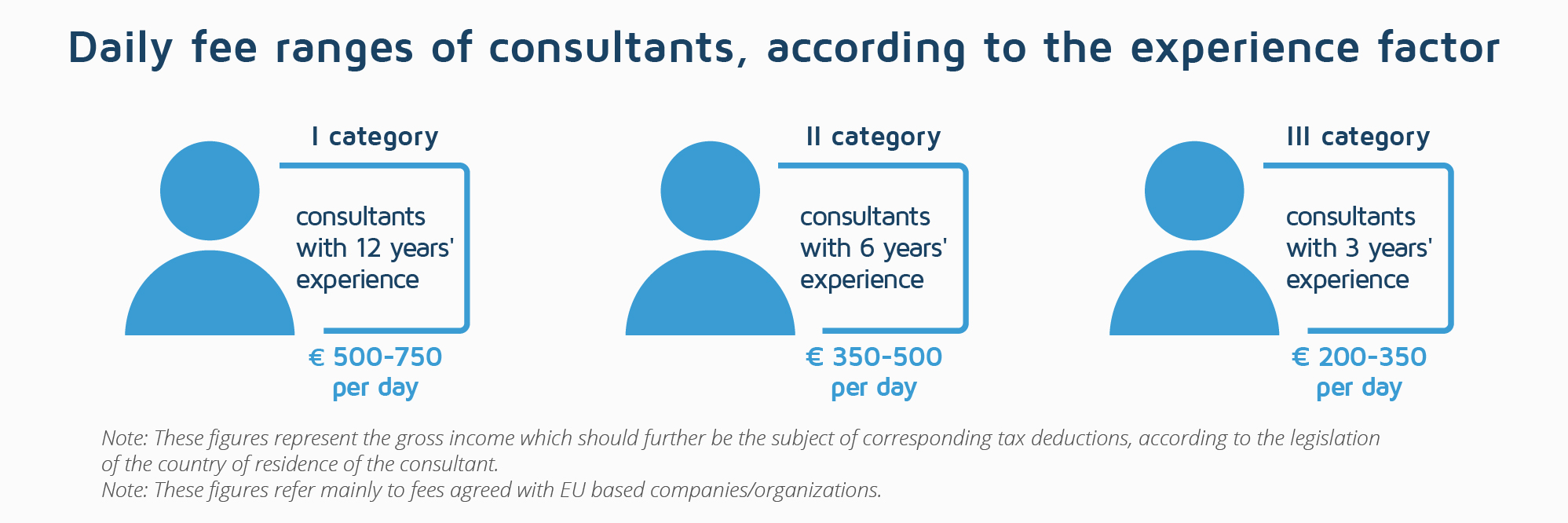
Consultancy fees and per diems: insights and tips from DevelopmentAid recruiters
A consultancy fee is the payment a development consultant receives for his work on a particular project, which can be supplemented with per diems to cover additional work-related costs. This article, from a DevelopmentAid specialist, aims to introduce some fee and per diem related insights and tips for practitioners working with EU based companies and organizations.
Experts’ Opinions | Child abuse on the rise. Reasons and solutions.
Organizations that operate in the field of child abuse prevention claim that this can happen in any family and no one is safe. According to certain studies, child abuse cuts across all boundaries of age, income, race, ethnic heritage and religious faith. However, statistics show that some groups are more vulnerable to this phenomenon such as families with a level of income below the poverty line, or families in which the parents are aged between 20 and 30 and those who have problems with alcohol, depression, domestic abuse, etc. There is no universal solution for child abuse. Nonetheless, some tips for preventing child abuse involve responsible behavior, patience and attention to detail by both parents.
DevelopmentAid professionals can now see who viewed their profiles
DevelopmentAid has launched a new feature for professionals. “Profile Analytics” will help you to understand who has looked at your profile during the last 90 days. The feature will provide additional trends and insights about the companies that viewed your profile and your CV.
Top 10 international organizations in education sector
The latest statistics point to a significant improvement in educational outcomes across developing regions. Enrollment in primary education in these countries has reached 91 percent. Despite the tremendous progress these countries have achieved, some 57 million primary-aged children remain out of school, more than half of them in sub-Saharan Africa.

Experts’ Opinions | Trump’s Immigration Ban. Who is the most affected?
At the end of April, the USA president, Donald Trump, signed an executive order suspending immigration into the US to protect American jobs and to prevent the spread of the “invisible enemy” of the coronavirus pandemic. This decision has created many worries among immigrants. Who is most affected by Trump’s US immigration ban and what will the long-term impact be? These are the questions we addressed to several migration experts.
Experts’ Opinions | The impact of Covid-19 on Education. Consequences and Solutions.
Education has been hit particularly hard by the COVID-19 pandemic with 1.53 billion learners out of school and school closure in 184 countries, impacting 87.6% of the world’s total enrolled learners. Drop-out rates across the globe are likely to rise as a result of this massive disruption to access to education. What are the biggest consequences and also what could be the solutions? Check out some insights from several international education experts.
Girls in Nepal face multiple obstacles to attend school
Although Nepal’s constitution guarantees equal rights to education, stating that every child has the right to education and no child should be subject to marriage, nevertheless girls face multiple obstacles to attend schools. As they reach higher grades, they are forced to drop out of school and subjected to marriage at an early age. This is mainly because the specific needs of girls are not considered within education systems and plans but also because parents are not alert to the need to educate their daughters while others cannot afford it. The Nepal Living Standards Survey (2011) revealed that Nepal has a literacy rate of 56.6% and there exists a vast difference between males and females with the male literacy rate standing at 71.6% while for females, it is 44.5%.