
Add us as your preferred source on Google to see more of our content in Search.
 Add to Preferred Sources
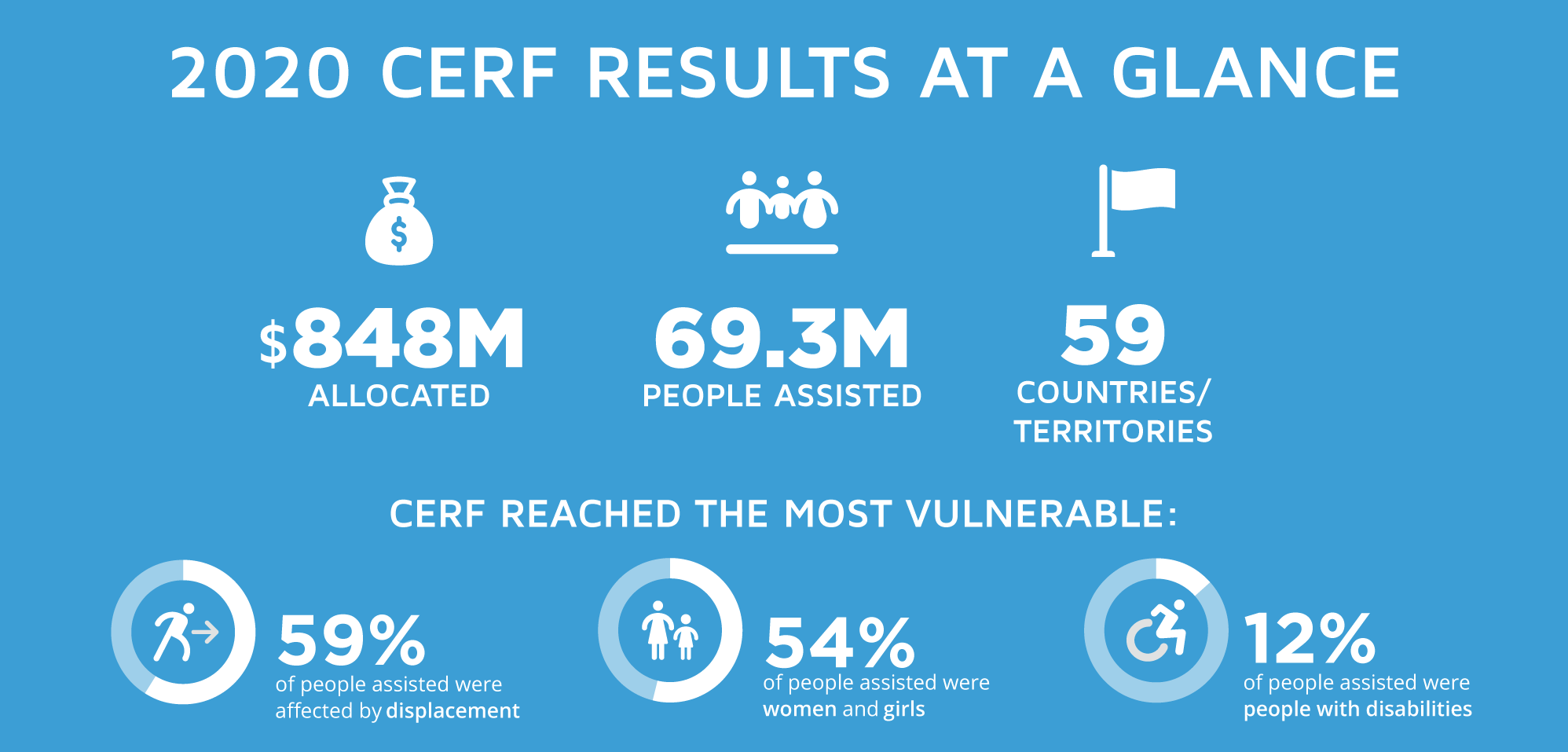
The UN’s Central Emergency Response Fund (CERF) channeled a record-high US$848 million to back humanitarian activities worldwide in 2020, up from US$539 million in 2019.
As 2020 saw practically double the number of global humanitarian challenges, the fund tackled humanitarian crises caused by conflicts and natural disasters and the global pandemic outbreak that pushed many into poverty. According to the CERF Annual Results Report 2020, the agency helped 69.3 million people in 59 countries of whom 59% were affected by displacement.
Gender equality and healthcare prioritized
As many as 54% of the recipients were women and girls whom CERF helped in an attempt to curb gender inequality and another 12% was accounted for by people with disabilities.
In view of the pandemic, CERF focused on critical healthcare issues, providing health aid to 41.7 million people.
“As people around the world continue to grapple with the COVID-19 pandemic, the UN’s Central Emergency Response Fund is an expression of solidarity. I have seen the power it has to save lives and prevent suffering. Donor support for CERF is an investment in progress and in hope,” said António Guterres, United Nations Secretary-General.
Thanks to CERF, sanitation facilities have been constructed in refugee camps in Jordan and proper medical and psychological support was provided to women giving birth, among others.
Conflicts and natural disasters
As many as 16.7 million people who were assisted by CERF funds were affected by conflicts and 12.2 million by natural disasters. CERF also supported 40.6 million refugees and members of the hosting communities. For instance, to curb a displacement crisis in Sudan, CERF allocated US$100 million, a historic amount.
Preventive assistance
CERF also focused some of its activities on the most neglected and underfunded humanitarian crises, providing a record-breaking US$225 million to 20 countries that failed to gain sufficient attention from international donors.
Thanks to the efforts of CERF it was possible to take preventive actions in the face of forthcoming crises to mitigate their extent and eventual damage such as the case of flooding in Bangladesh and the severe food insecurity caused by droughts in Somalia and Ethiopia.
“The CERF anticipatory action in Ethiopia presents a new strategy for the country facing recurrent drought episodes. By anticipating shocks and mitigating the effects before they can cause lasting damage to people’s lives and livelihoods, the multi-sector package of interventions provides an opportunity to anticipate and reduce needs, which will prove to be more effective and cost-efficient,” said Catherine Sozi, the UN resident coordinator and UN humanitarian coordinator in Ethiopia.
Since its establishment in 2005, CERF has supported hundreds of millions of people in over 100 countries and territories channeling over US$7 billion.