

Add us as your preferred source on Google to see more of our content in Search.
 Add to Preferred Sources
Mobile remittances to lead the digital revolution in African countries, Pakistan floods will devastate the economy and crisis fatigue not an option as global hunger crisis deepens. Here is what you missed from last week’s headlines in the international development sector.
Mobile remittances to lead digital revolution in marginal rural areas in five African countries
To harness the development benefits of using mobile channels to send and receive remittances, the UN’s International Fund for Agricultural Development (IFAD) announced its first grant to a digital payments company, MFS Africa, to promote the use of mobile remittances in marginal rural areas in five African countries: Ghana, Kenya, Senegal, The Gambia, and Uganda.
Mobile remittances – the money that migrant workers sent home through digital channels using mobile technology – can play a catalytic role linking individuals and businesses to the formal economy, while providing access to key financial products and services such as transactions, credit, insurance, payments or savings that can boost their own social and economic wellbeing.
This €1.2 million two-year grant is funded by the European Union through the IFAD-managed PRIME programme. This public-private partnership will help MFS Africa and its partners unleash new and untapped markets in marginalized rural communities where mobile remittances can provide significant social and economic benefits to some of the poorest people thanks to lower transaction costs coupled with safer and more easily accessible remittance services. MFS Africa and its partners are co-funding the grant with €0.64 million.
“MFS Africa is a great partner in our efforts to serve marginalized rural areas and leaving no one behind,” said Jyostna Puri, Associate Vice-President of the Strategy and Knowledge Department of IFAD. “What MFS Africa is doing is scalable. This grant is an investment to develop a model linking mobile remittances and financial inclusion that can be scaled up across Africa, and benefit not only remittance families but also their communities,” added Puri.
Pakistan floods will devastate the economy, likely leading to widespread hunger and violence against women, warns IRC
As heavy rains continue to be forecast in Pakistan, the International Rescue Committee (IRC) is warning against the resulting economic loss that will likely lead to food insecurity and an increase in violence against women. It is vital that the humanitarian response is fully funded to mitigate the severity of the consequences.
Pakistan is now predicted to experience an economic loss of $12.5 billion as a result of the destruction caused by flooding, with inflation projected to reach a record high of 30% by the end of this fiscal year.
Communities are set to lose everything to the worst flooding in decades: with over a third of Pakistan underwater in recent weeks, over 3.6 million acres of crops destroyed and over 750,000 livestock killed. Economists are predicting, however, that this is just the tip of the iceberg, and the full extent of the damage and loss suffered is likely to be much higher.
Crisis fatigue not an option as global hunger crisis deepens, the International Red Cross Red Crescent Movement warns
The warning lights are flashing on high: armed conflict, climate-related emergencies, economic hardship and political obstacles are leading to a growing wave of hunger in countries around the world. The misery for millions will deepen without immediate urgent action.
Systems-level improvements must be made to escape a cycle of recurrent crises, including investments in climate-smart food production in conflict-affected areas, and reliable mechanisms to support hard-to-reach communities hit by food shortages and skyrocketing prices, the International Federation of Red Cross and Red Crescent Societies (IFRC) and the International Committee of the Red Cross (ICRC) said ahead of the upcoming United Nations General Assembly.
The international armed conflict in Ukraine has greatly disrupted global food supply systems as well as future harvests in many countries due to the impact it’s having on the availability of fertilizer. The importance of more shipments by the Black Sea grain initiative reaching vulnerable populations in East Africa cannot be overstated. Too few grain shipments are getting to where they are needed.
DevelopmentAid Editorials
Hero Stories | Lesley Ann van Selm: Sustainable NGOs need to deal with the lack of democracy
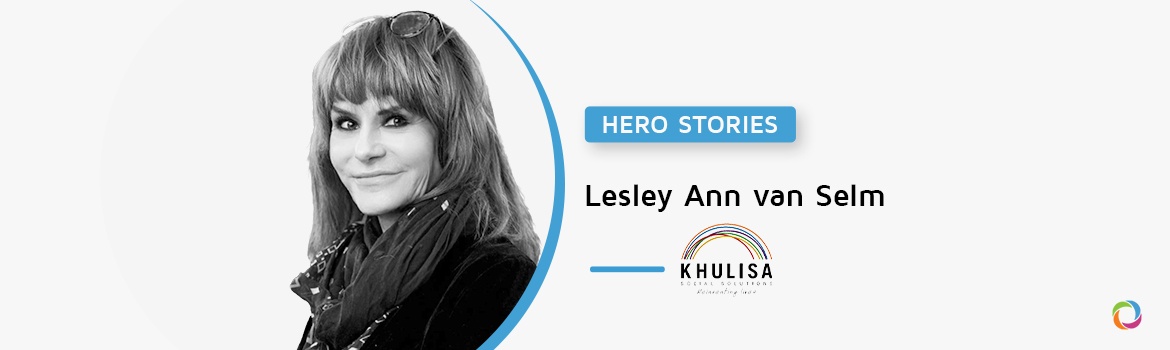
With decades of experience and a cabinet full of awards under her belt, Khulisa Social Solutions founder and managing director, Lesley Ann van Selm, still manages to retain her boundless energy and passion for solving community problems through dialogue. The view that people from outside a community know what’s best is something that van Selm rejects outright.
Is this then the key to Khulisa’s impressive track record of empowering vulnerable children, youth and the marginalized to unlock their full potential to develop resilient pathways and skills that has been leading to a sustainable future since 1997?
DevelopmentAid spoke with Lesley to find out more.
Doing business with the Asian Infrastructure Investment Bank: Procurement Framework and Best Practices | Post Webinar Release
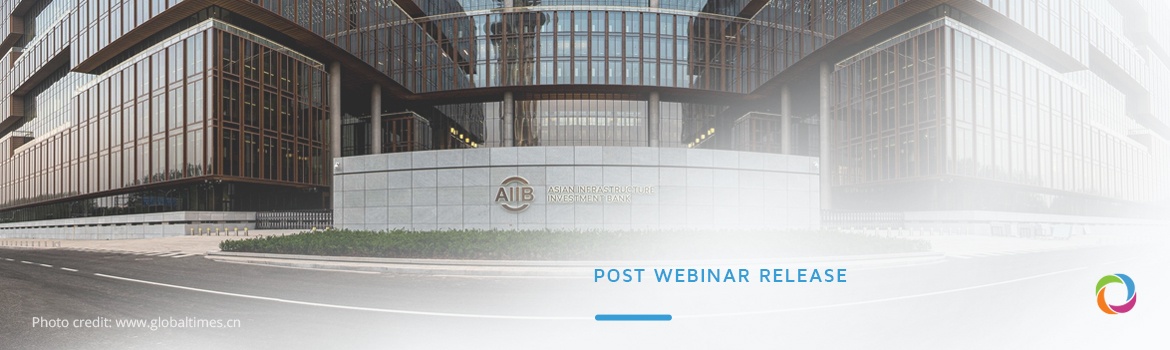
The Asian Infrastructure Investment Bank (AIIB) is one of the most recently established (2015) multilateral development banks that is on a mission to foster sustainable economic development, create wealth, and improve infrastructure connectivity in Asia. Over the last seven years, the AIIB has mobilized over US$35 billion to fund over 182 projects across eight major sectors. Green infrastructure, regional cooperation, and technology-enabled development are the key directions cemented in the Bank’s latest corporate strategy.
How to stand out from the competition with DevelopmentAid’s career leverage tools
Who doesn’t want to get more done in less time? This also applies when you’re looking for new assignments. Spending hours every day working on cover letters and resumes and applying to open positions that you think would be the perfect fit for you is not necessarily a bad approach but obviously, there are tools that can help job seekers to optimize their searches infinitely better to find that ideal opportunity. In this respect, the DevelopmentAid platform is an incredibly valuable asset to anyone searching for a job, and therefore becoming a Professional Plus member is crucial if you want to stand out from the competition. Read on to find out why.
Here’s what else has happened
EIB Group: The European Investment Bank (EIB), the EU bank, disbursed the first tranches of the €1.59 billion package of the Ukraine Solidarity Urgent Response, supported by an EU guarantee.
A tsunami of hunger: As risks of conflict-induced famine and widespread food insecurity continue to rise, the UN Emergency Relief Coordinator urged the Security Council to address the interlinked crises and work towards establishing lasting peace in affected regions.
Switzerland: Pakistan is experiencing one of the worst disasters in its history. Almost a third of the country has been left under water by a monsoon of unprecedented proportions. The Pakistani authorities have launched an appeal for international aid in light of the scale of the needs. Switzerland has responded with a CHF 3 million contribution in support of emergency relief measures. It has also deployed a Swiss Humanitarian Aid Unit team.
NextGenerationEU: The European Commission has issued €12 billion in a dual tranche transaction under its flagship NextGenerationEU programme. The deal was the 12th syndicated transaction under NextGenerationEU and the 7th in 2022. It consisted of a new 5-year bond of €7 billion due on 4 October 2027 and a new 30-year bond of €5 billion due on 4 October 2052.
Reports
Extreme hunger has more than doubled in 10 of the world’s worst climate hotspots over past six years
The brief – Hunger in a heating world- found that those 10 climate hotspots – Somalia, Haiti, Djibouti, Kenya, Niger, Afghanistan, Guatemala, Madagascar, Burkina Faso, and Zimbabwe – have repeatedly been battered by extreme weather over the last two decades. Today, 48 million people across those countries suffer acute hunger (up from 21 million in 2016), and 18 million people of them are on the brink of starvation.
- Somalia is facing its worst drought on record, and famine is expected to unfold in two of its districts: Baidoa and Burhakaba. One million people have been forced to flee their homes due to the drought. The country ranks 172nd out of 182 countries in terms of its readiness to cope with climate change.
- In Kenya, the current drought has killed nearly 2.5 million livestock and left 2.4 million people hungry, including hundreds of thousands of children severely malnourished.
- In Niger, 2.6 million people are facing acute hunger today (up 767 percent from 2016). Cereal production has crashed by nearly 40 percent, as frequent climatic shocks on top of ongoing conflict have made harvesting increasingly difficult. Production of staple foods such as millet and sorghum could plummet even further by 25 percent if global warming surpasses 2°C.
- Burkina Faso has seen a staggering 1350 percent rise in hunger since 2016, with more than 3.4 million people in extreme hunger as of June 2022 due to armed conflict and worsening desertification of crop and pastoral lands. Global warming above 2°C would likely decrease cereal yields like millet and sorghum by 15–25%.
- In Guatemala, a severe drought has contributed to the loss of close to 80 percent of the maize harvest and devastated coffee plantations.
UNDP launches ambitious plan to speed up progress on gender equality and women’s empowerment
The United Nations Development Programme (UNDP) has launched an ambitious new plan to help countries to accelerate progress over the next four years on gender equality and the global Sustainable Development Goals (SDGs). The Gender Equality Strategy 2022-2025 stands to unlock progress for millions of women and girls across the 170 countries and territories in which UNDP works.
Risk of global recession in 2023 rises amid simultaneous rate hikes
As central banks across the world simultaneously hike interest rates in response to inflation, the world may be edging toward a global recession in 2023 and a string of financial crises in emerging market and developing economies that would do them lasting harm, according to a comprehensive new study by the World Bank.
Events
Development2030 | Beyond Aid
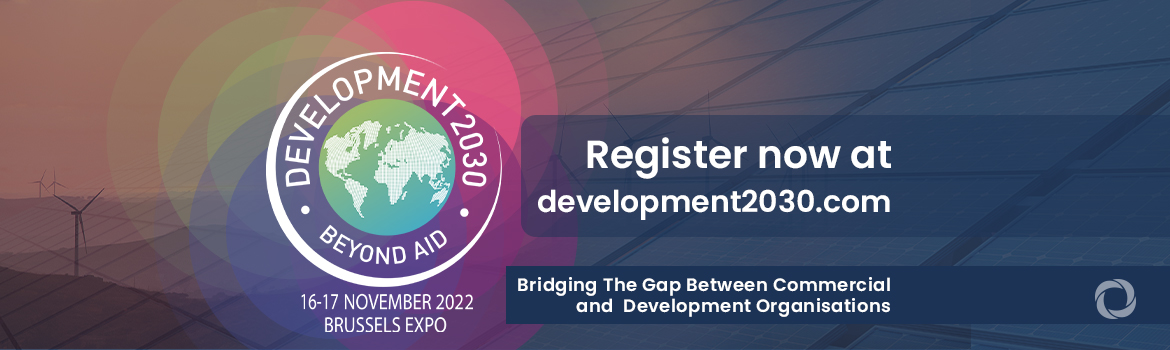
📅 16-17 November 2022
Brussels Expo
With an ever-increasing pressure to ensure the global public and governments worldwide continue to support overseas development assistance, it is imperative for the international community to adapt to the changing landscape if we are to achieve the Sustainable Development Goals.
The Development2030 event will consider how best we can do this, through identifying the key existing and emerging players, and analysing their role in creating long-term impact for low- and middle income countries. It is THE place for the overseas development community to build meaningful relationships, get inspired and meet like-minded individuals committed to achieving the 2030 goals.
Get Shortlisted for the Donor Funded Projects. Tips from Top Recruiters | Invitation to a Webinar

📅 29 September 2022
For experts who wish to work in the field of international development on donor-funded projects, the first and most important step is when a recruiter evaluates their CV. What are the most important elements of a successful CV (resume)? How can an expert ensure that their CV stands out in a competitive field? Can experts with little experience get shortlisted for big projects? And is it essential to tailor one’s CV for every project or donor?
All these questions and more will be answered during a webinar held by DevelopmentAid jointly with Anastasia Bahu, currently a Recruitment Advisor at Agriconsulting Europe. With years of experience matching experts to donor-funded jobs, Ms. Bahu will explain exactly how to write, format, and target your CV in order to get shortlisted for projects.
Whether you’re just starting out as an expert in the field of international development or are an experienced professional looking to expand your opportunities, our webinar will take you through all the do’s and don’ts for how to get noticed by recruiters and have your CV successfully shine a light on your skills and qualifications.
DevelopmentAid cordially invites you to attend the webinar “Get Shortlisted for the Donor Funded Projects. Tips from Top Recruiters” which will take place online on September 29, 2022, at 1600 CEST (Brussels time zone) or 10:00 AM Eastern (Washington, D.C. time zone).
At the conclusion of the webinar, all logged-in participants will receive a certificate of attendance.
Key takeaways
- How recruiters evaluate CVs for donor-funded projects
- Learn about the six most commonly used CV templates
- Should you tailor your CV for each project/donor?
- Everything you need to know about Working Certificates
- How to get your CV to stand out in a competitive field
- Learn how experts with little or no experience can get hired for projects
- The most important elements to NOT include in your CV
- Learn what the hiring process looks like from a recruiter’s perspective