

Add us as your preferred source on Google to see more of our content in Search.
 Add to Preferred Sources
More than 600 million people could lose one meal a day, UNICEF warns of unprecedented numbers of child deaths in Somalia, and Child poverty across eastern Europe and Central Asia soars by 19%. Here is what you missed from last week’s headlines in the international development sector.
More than 600 million people could lose one meal a day for the next 6 months
Drawing on a recent report from Gro Intelligence and CRU Group on the impacts of the Ukraine Conflict on global fertilizer supplies, CARE estimates that more than 620 million more people around the world could lose a meal a day over the next sixth months.
In their report, Gro Intelligence and CRU Group indicated that a global fertilizer shortage and the resulting spike in prices will lead to a total loss of 72 trillion calories of food produced in 2022 alone.
According to CARE, that calorie loss would be the equivalent of one missed meal a day for tens of millions of people who are already facing severe insecurity. In its analysis, CARE also found that, while 288 million men could lose one meal per day, nearly 332.8 million women would lose a meal a day.
750 million globally now affected by undernourishment
Without concerted action, current levels of ecological degradation will worsen, intensifying existing conflicts, becoming a catalyst for new conflicts, and increasing forced migration. It marks the annual launch of the Ecological Threat Report (ETR), produced by the Institute for Economics and Peace (IEP), featuring exclusive research from the Lloyd’s Register Foundation World Risk Poll.
Each year, the ETR analyses ecological threats to assess which countries are most at risk from conflict, civil unrest, displacement caused by ecological degradation, and climate-related events. The main finding from the ETR is that without concerted action, current levels of ecological degradation will worsen, intensifying existing conflicts, becoming a catalyst for new conflicts, and increasing forced migration.
The report analyses ecological risk, societal resilience, and peace for 228 countries and territories, 3,638 administrative districts, and 250 cities, assessing their ability to manage their challenges between now and 2050. It also highlights 27 ‘hotspot’ countries, home to an estimated 768 million people, which face the worst ecological threats and have the lowest societal resilience. 23 of the 27 are in sub-Saharan Africa and MENA.
UNICEF warns of unprecedented numbers of child deaths in Somalia
In Somalia, every single minute of every single day, a child is admitted to a health facility for treatment of severe acute malnutrition. The latest admission rates from August show 44,000 children admitted with severe acute malnutrition. That is a child per minute.
A child whose mother has walked for days to get her child to help. A child whose body is fighting to survive. A child whose life hangs in the balance. Severely malnourished children are up to 11 times more likely to die of diarrhea and measles than well-nourished children. With rates such as these, Somalia is on the brink of a tragedy at a scale not seen in decades.
And, of course, the children behind this staggering, appalling statistic are those who actually make it to a treatment center. In a country where access to the most vulnerable is continually hampered by terrorism and threats to aid workers, fear many thousands more children are not reaching the support they need.
DevelopmentAid Editorials
Unrest in Iran: Generational change may help the protesters to prevail| Experts’ Opinions
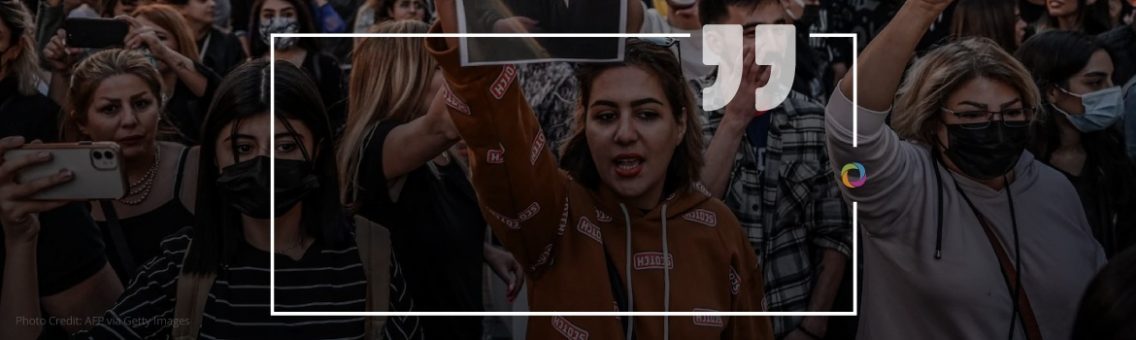
While in some parts of the world women are uncertain about the hairstyles they want to have, in another covering one’s head no matter what hairstyle is worn could save a life.
This is one of the reasons why this autumn is being marked by massive protests in Iran after the death of 22-year-old Mahsa Amini who was apprehended in Tehran and taken to a “re-education center” for apparently not wearing her hijab properly.
Thousands of women from all over the world went out onto the streets to protest and also cut their hair as a sign of solidarity. According to reports from Iran Human Rights, at least 90 have been killed in the latest Iranian protests and over 1,000 people are believed to have been detained. We approached several Iranian international experts from the DevelopmentAid database to find out more about the current situation in the country.
Ten ways to reduce poverty in the world

Poverty is currently one of the world’s most contemplated and complex issues. Indeed, being a state when people do not have proper access to resources such as nutrition, education, sanitation, and healthcare or, simply put, when their basic needs not satisfied, poverty affects billions of people of all nationalities, races, and ages.
A lack of money and natural resources is only one aspect of poverty. It also manifests through hunger, restricted or no access to proper education, no access to clean drinking water, poor literacy rates, high newborn and maternal death rates, massive unemployment, social prejudice and marginalization, a lack of involvement in the process of decision-making and the absence of a sense of insecurity.
Are there any solutions to end poverty? There are, in fact, many.
Here’s what else has happened
Uganda: As Ebola cases and related deaths continue to rise and with the Ugandan president recently issuing strict directives including a curfew and movement restrictions in the high-risk districts, the International Rescue Committee (IRC) is calling for the protection of women and girls throughout the response. Currently, up to 60 cases, 23 confirmed deaths, and 20 probable Ebola-related deaths have been reported.
ICG: A strained global supply of cholera vaccines has obliged the International Coordinating Group (ICG) — the body which manages emergency supplies of vaccines — to temporarily suspend the standard two-dose vaccination regimen in cholera outbreak response campaigns, using instead a single-dose approach.
USDA and USAID: Secretary of Agriculture Tom Vilsack and USAID Administrator Samantha Power released the U.S. government’s Global Food Security Research Strategy, underscoring the U.S. government’s commitment to ending hunger and malnutrition and building medium to long-term sustainable resilient food systems. The new research strategy emphasizes priority objectives and the use of data to help strengthen the impact of U.S. food security assistance and, with America’s leadership, generate sustainable solutions for addressing the root causes of hunger and malnutrition, which are both inextricably linked to entrenched, extreme poverty.
Palestine: The latest report by UNCTAD on its assistance to the Palestinian people shows that the economy of the Occupied Palestinian Territory grew by 7.1% in 2021, following an 11.3% contraction in 2020 in the aftermath of the COVID-19 shock. But with a significant decline in budgetary support from the international community, the fiscal crisis facing the Palestinian Authority worsened, and the economy is yet to make up for the huge losses it incurred since early 2020.
Reports
True value of climate finance is a third of what developed countries report – Oxfam
Many rich countries are using dishonest and misleading accounting to inflate their climate finance contributions to developing countries – in 2020 by as much as 225%, according to investigations by Oxfam. Oxfam estimates between just $21-24.5 billion as the “true value” of climate finance provided in 2020, against a reported figure of $68.3 billion in public finance that rich countries said was provided (alongside mobilized private finance bringing the total to $83.3 billion). The global climate finance target is supposed to be $100 billion a year.
“Rich country contributions not only continue to fall miserably below their promised goal but are also very misleading in often counting the wrong things in the wrong way. They’re overstating their own generosity by painting a rosy picture that obscures how much is really going to poor countries,” said Nafkote Dabi, Oxfam International Climate Policy Lead.
“Our global climate finance is a broken train: drastically flawed and putting us at risk of reaching a catastrophic destination. There are too many loans indebting poor countries that are already struggling to cope with climatic shocks. There is too much dishonest and shady reporting. The result is the most vulnerable countries remaining ill-prepared to face the wrath of the climate crisis,” says Dabi.
Child poverty across eastern Europe and Central Asia soars by 19 per cent
The war in Ukraine and rising inflation have driven an additional four million children across eastern Europe and Central Asia into poverty, a 19 per cent increase since 2021, according to a new UNICEF study published.
The impact of the war in Ukraine and subsequent economic downturn on child poverty in eastern Europe and Central Asia – which features data from 22 countries across the region – shows that children are bearing the heaviest burden of the economic crisis caused by the war in Ukraine. While children make up 25 per cent of the population, they account for nearly 40 per cent of the additional 10.4 million people experiencing poverty this year.
The Russian Federation accounts for nearly three-quarters of the total increase in the number of children living in poverty due to the Ukraine war and a cost-of-living crisis across the region, with an additional 2.8 million children now living in households below the poverty line. Ukraine is home to half a million additional children living in poverty, the second largest share, followed by Romania, with an additional 110,000 children, the study notes.
Events
The list of major upcoming events in the development sector in October 2022

Keep up-to-date on key events about emerging funding strategies, environmental policies, climate change, technological development, labor standards, and energy issues in the development sector via our compiled list.
Track events hosted by reputable international organisations, donors, NGO’s and IFIs that bring together the biggest change-makers and stakeholders in international development cooperation.
Save the date to register and attend the upcoming events in October 2022.
Download the comprehensive schedule of major online events.
GMCC Bitesize Session – Aid Funded Business Opportunities | Virtual

📅 26 October 2022
As part of the commitment to support businesses in Greater Manchester to navigate their international trade journey, the Greater Manchester Chamber of Commerce (GMCC) is pleased to launch a free series of Bitesize Sessions. The purpose of these sessions is to provide support and advice to businesses trading internationally during this time of change.
These sessions will provide an overview of a different topic each time including general export and import processes, border controls, and export documentation, etc.
Introduction to the Market System Development | Training

📅 24-27 October 2022
Online, Zoom
Trust Consultancy & Development offers a 4-days online course on Introduction to the Market System Development for experienced practitioners working in a development context and looking forward to applying more systems approaches into their programs.
This virtual course will provide an overview of the Market Development (M4P and Value Chains) for upgrading the competitiveness of a sector for inclusive growth. This 12-hours training will cover Market System Development principles and provide guidance on how to start building your programs around systems thinking and market development.
The participants are required to attend all training sessions to be delivered the certificate at the end of the training.
After this training, the participants will be able to use and implement market development to their programs to increase their sustainability and scale.
Development2030 | Beyond Aid
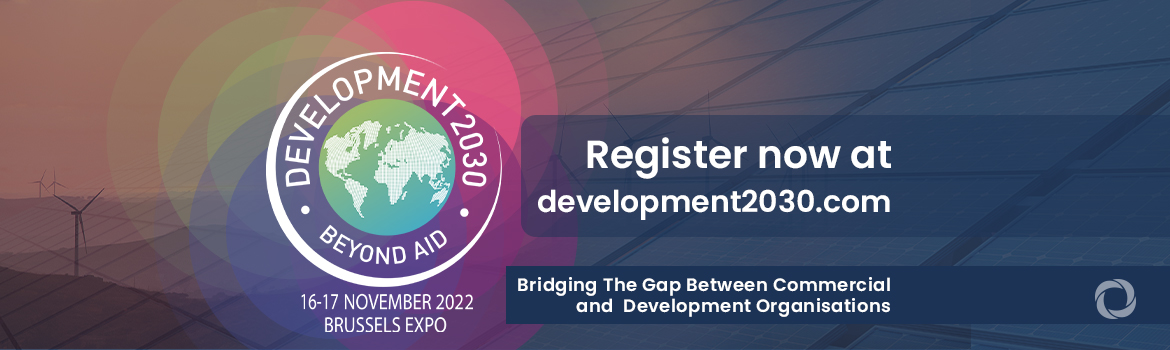
📅 16-17 November 2022
Brussels Expo
With ever-increasing pressure to ensure the global public and governments worldwide continue to support overseas development assistance, it is imperative for the international community to adapt to the changing landscape if we are to achieve the Sustainable Development Goals.
The Development2030 event will consider how best we can do this, by identifying the key existing and emerging players and analysing their role in creating long-term impact for low- and middle-income countries. It is THE place for the overseas development community to build meaningful relationships, get inspired and meet like-minded individuals committed to achieving the 2030 goals.