

Add us as your preferred source on Google to see more of our content in Search.
 Add to Preferred Sources
Air and sea surface temperatures hit new records, World Refugee Day and Guterres calls for continuation of ‘vital’ food and fertilizer agreement. Here is what you missed from last week’s headlines in the international development sector.
Air and sea surface temperatures hit new records
A spate of new reports from the climate community has highlighted extraordinary temperatures both on land and at sea. Global-mean surface air temperatures for the first days of June 2023 were the highest – by a considerable margin – for the time of year in the data record of the European Union’s Copernicus Climate Change Service (C3S) operated by ECMWF. This is after one of the warmest Mays on record.
Global sea surface temperatures hit a new high in May for the second consecutive month and in June are tracking at unprecedented levels for this time of year, in particular in the North Atlantic. Antarctic sea ice extent reached a record-low monthly value in May, the third time in 2023 that the monthly value has reached a record low.
The extraordinary sea surface temperatures are ringing alarm bells, according to Dr. Anthony Rea, Director of Infrastructure at the World Meteorological Organization and head of the Global Climate Observing System.
World Refugee Day: As crises swell, funding for millions of displaced people has overwhelmingly failed to materialize
CARE International warns that financial support for millions of refugees worldwide has overwhelmingly failed to materialize since the beginning of 2023. Almost six months into the year, the global funding level for the refugee response stands at only 22 percent of the requested 10 billion US dollars for 2023, according to the Refugee Funding Tracker.
“Millions of people have been forced to leave their homes due to conflict and natural disasters, with large numbers finding refuge in some of the world’s poorest countries,” said Delphine Pinault, CARE United Nations Geneva Representative. “At a time of multiple crises driven by conflict, climate change, economic instability, and rising inflation, we call on the international community to live up to its commitments and immediately increase funding to care for and support all refugees and other displaced people, no matter where they come from or where they are fleeing to. Women and children constitute the majority of the displaced worldwide and face high protection risks, including gender-based violence, trafficking, and various forms of exploitation and abuse when .”
There are currently more displaced people worldwide than ever before. Almost 110 million have been forcibly uprooted, with a majority being internally displaced. The countries hosting the most refugees are Türkiye (3.6 million), Iran (3.4 million), Colombia (2.5 million), Germany (2.1 million), and Pakistan (1.7 million).
Ukraine war: Guterres calls for continuation of ‘vital’ food and fertilizer agreement
The Secretary-General said he was disappointed by the “slowing pace of inspections” under the UN-brokered Black Sea Initiative – the grain and fertilizer deal which has allowed millions of tonnes of food exports to leave Ukraine.
Russia confirmed that for 60 days it would continue to be a part of the Initiative and the complementary Memorandum of Understanding on food and fertilizer exports from Moscow, in late May – but the deal in effect expires on 17 July.
The UN-brokered the deal guaranteeing safe passage for grain cargo ships, along with Türkiye in July last year, which is managed from Istanbul by a Joint Coordination Centre (JCC) staffed by UN and Turkish representatives along with Russia and Ukraine.
DevelopmentAid Editorials
UN slashes aid budget to Afghanistan by $1.4 billion
The UN Office for the Coordination of Humanitarian Affairs (OCHA), announced that it had revised its 2023 budget for Afghanistan down to $3.2 billion from $4.6 billion earlier this year, primarily due to the Taliban de-facto authorities (DFA) banning women from working for NGOs and UN agencies.
In December 2022, the Taliban DFA announced a ban on Afghan women from working for NGOs, but up until April of this year, women were still allowed to work for UN agencies. OCHA’s recent statement revealed that the gender ban has added even more complexity to “an incredibly challenging protection environment,” which will make it more difficult than ever to deliver aid to the war-torn country.
Read the full article.
Russia’s war against Ukraine among main factors impacting human rights in the EU – Fundamental Rights Report 2023
Russia’s war against Ukraine has greatly influenced the state of human rights in the European Union over the past year, the recently published Fundamental Rights Report 2023 by the Fundamental Rights Agency (FRA) noted. As the number of refugees dramatically increase, ensuring their rights within the EU and keeping a lid on the raging waves of hatred have become increasingly challenging.
Read the full article.
Maximizing success with Tenderwell as your project management tool
Project management tools are designed to streamline and simplify an entire project lifecycle, from start to finish. These specialty tools allow businesses to more efficiently manage a project, keep track of progress (and challenges), supervise budgets, and collaborate with team members. Project acquisition and management tools also can provide real-time feedback and data analysis, helping managers to make informed decisions more quickly and thus reduce the risk of delays or cost overruns.
Indeed, it is by centralizing all project-related data and activity in one platform that project acquisition and management tools such as Tenderwell help teams to work together more efficiently and cohesively, leading to better project outcomes, improved productivity, and, of course, increased profitability for the businesses that use them.
Read the full article.
Here’s what else has happened
Ukraine: The Food and Agriculture Organization of the United Nations (FAO) and the World Food Programme (WFP) have launched a joint programme in collaboration with mine action partner Fondation Suisse de Déminage (FSD) to support smallholder farmers and rural families most affected by the war.
South Sudan: Thousands of people fleeing conflict in Sudan are arriving in areas of South Sudan where inadequate water, sanitation, food, and shelter may soon become catastrophic, Doctors Without Borders/Médecins Sans Frontières (MSF) warned, calling on the medical and humanitarian community to launch a coordinated response.
FAO: The Food and Agriculture Organization of the United Nations (FAO) has welcomed the approval by UN member states of a landmark legally binding agreement, under the UN Convention on the Law of the Sea, for the conservation and sustainable use of marine biological diversity in international waters, covering nearly two-thirds of world’s ocean.
Belize: The World Health Organization (WHO) has certified Belize as malaria-free, following the country’s over 70 years of continued efforts to stamp out the disease.
Global Gateway: In Lusaka, Commissioner for International Partnerships, Jutta Urpilainen, announced the resumption of budget support for Zambia and launched three programmes worth €110 million under Global Gateway. The announcement was made alongside President Hakainde Hichilema and Minister of Finance and National Planning Situmbeko Musokotwane.
Reports
Renewables could power almost 80% of Ukraine’s economy by 2050, says UN report
The war in Ukraine, which has caused immense suffering and resulted in the destruction of critical infrastructure, demands urgent action to rebuild the country and its energy system.
Today, Ukraine heavily depends on fossil fuels, which accounted for some 70% of its primary energy supply in 2020. The Russian invasion has resulted in the occupation (the Zaporizhzhya nuclear power plant and about 44% of total thermal power capacities) and destruction of critical energy infrastructure triggering a sharp decline in total energy supply, while electricity demand had fallen by 40% by October 2022.
In view of their high untapped potential in the country, bioenergy, hydro, solar and wind generation could constitute the building blocks of Ukraine’s future energy system, contributing up to nearly 80% of total energy generation by 2050. Provided key strategies and investments are put in place, and complemented by nuclear, renewables could propel Ukraine towards a carbon-neutral future. These are the main findings of the pathway scenarios developed by UNECE, based on its UNECE Carbon Neutrality Toolkit.
Global trade growth returns but outlook for 2023 is poor
During the first quarter of 2023, trade growth was positive for both goods and services, according to UNCTAD’s latest Global Trade Update. After the downturn in the second half of 2022, world merchandise trade rebounded in both volume and value.
Annual Report: Islamic Relief reached more people than ever before in 2022
In 2022 humanitarian crises upended the lives of many communities Islamic Relief supports. Against this backdrop of rising need, the latest Annual Report shows IRW assisted more people than ever before. The organization reached 17.3 million people in 40 countries through emergency responses, development work and campaigning.
Despite the rising cost of living worldwide, the supporters continued to show incredible generosity. Their commitment to helping vulnerable people enabled us to raise a record £234.2 million to fund the life-saving and life-changing work.
The Annual Report, published shows how Islamic Relief continued to assist vulnerable people affected by crisis while helping individuals and communities take significant steps towards self-reliance.
Events
How to Identify and Mitigate Procurement Fraud and Corruption Risk. Top Tips from Stephen Tosh | Webinar
DevelopmentAid, in collaboration with Stephen Tosh, invites you to attend the online webinar, How to Identify and Mitigate Procurement Fraud and Corruption Risk, featuring top tips from Stephen, which will take place on 29 June 2023 at 3 pm (Brussels)/9 am (Washington DC).
Key takeaways
- Procurement fraud and corruption risks
- Risk mitigation
- The 4-pillar framework approach to counter procurement fraud
Speaker
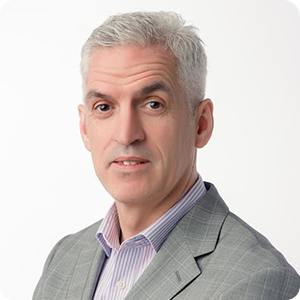 Stephen Tosh, Company Director at Global Risk Alliance Ltd and the author of Procurement Fraud and Corruption: How to identify and mitigate procurement fraud and corruption risk, is a qualified anti-corruption practitioner with knowledge of international criminal law and anti-corruption legal frameworks, with experience in both the public and private sectors.
Host
 Elizaveta Gładun, External Relations & Events Coordinator at DevelopmentAid.